A creator-shared Claude prompt pack lays out a First Principles sequence, Feynman rewrite, assumption audit, and from-scratch rebuild prompts. Use it as a reusable prompt recipe for research and writing, not as an official Claude feature.
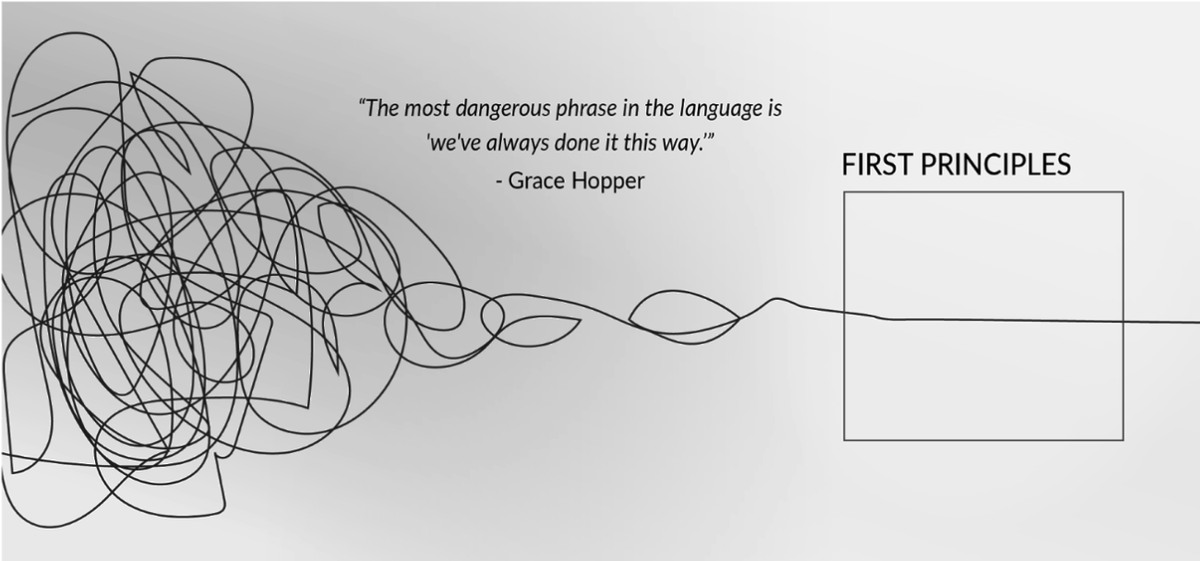
The workflow starts with the base prompt from the opening thread: break a topic into assumptions, remove them, and rebuild from only what can be defended. In the prompt text, the key instruction is “strip each assumption away,” which the author claims changes Claude from producing a polished conventional explanation to producing a more reductive one.
Step two adds a Feynman pass. In the add-on, Claude is told to explain the result to a 12-year-old, with no jargon and no assumed knowledge. Steps three through five in the full sequence then audit which assumptions a field treats as obvious, ask what happens if major assumptions fail, and finally ask how you would build the solution from zero using only the fundamentals already established.
The strongest creator use here is pre-production thinking. In the examples, the author shows the stack on “how machine learning works,” compressing standard ML vocabulary into a simpler formulation about adjusting internal numbers until outputs match desired results. That is a research and explanation aid, not a claim about new Claude capabilities.
The adjacent variants are practical for planning work. The business version asks for the simplest direct path from problem to outcome after assumptions are removed, which fits positioning, product strategy, and concept development. The learning version asks Claude to surface five assumptions a field makes before you start studying, which could help writers, filmmakers, and designers frame interviews, briefs, or treatments before they dive into source material.
The full First Principles stack save this. Run these in order on any topic, problem, or idea: Step 1 → "Break [topic] down using first principles. Strip every assumption. Rebuild from only what's provably true." Step 2 → "Explain it as if I'm 12. If it's not simple yet, keep Show more
The best topics to run this on and what the output looks like. First Principles mode works best on topics that feel complex because of jargon, not because of actual complexity. Try it on these and watch what happens: → "How does compound interest actually work" → "What is Show more
3/ The learning version use this before studying anything new. Before you read a textbook chapter, watch a lecture, or start a course run this: "I'm about to learn [topic]. Before I do, break down the 5 core assumptions this field makes that beginners just accept as true. What Show more


