NVIDIA previewed DLSS 5 with generative neural rendering for real-time lighting and material detail, showing demos in Starfield and other games. Watch how it changes game art workflows, especially where native art direction ends and runtime AI enhancement begins.
DLSS 5 is NVIDIA's attempt to turn runtime rendering into a neural image synthesis problem. In the official announcement, the company says the model reads a frame plus engine-provided color and motion vectors, then reconstructs lighting, material detail, translucency, and other cues that normally depend on heavier traditional rendering.
That makes this more than super sampling. NVIDIA is positioning it as neural rendering that can infer skin scattering, fabric response, and environmental light interactions in real time, while still staying locked to the underlying 3D scene data official details. The announced rollout is this fall, with support promised from major publishers and showcase titles already named in the feature summary.
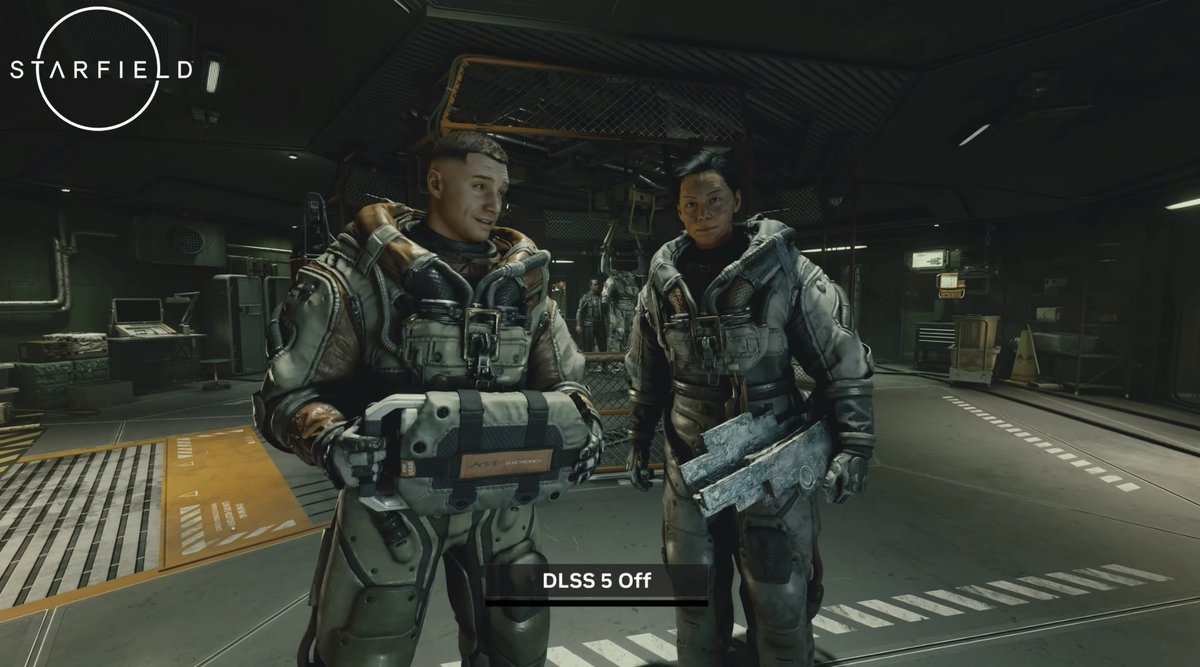
The clearest creative takeaway from the public demos is that DLSS 5 changes authored art at the lighting-and-material layer, not just at the edge-detail layer. In
versus
, Starfield's suits pick up more believable fabric texture, metal surfaces separate more cleanly from shadow, and the whole room reads as more cinematic.
Digital Foundry's hands-on preview says the same pattern showed up across several games: faces gained more lifelike skin and hair detail, and scenes gained denser indirect light. Reaction clips from a reposted demo describe it as every pixel being regenerated at runtime, which overstates the mechanism but captures the visual effect the demos are selling.
For artists, the interesting part is not whether the demos look richer. It is where native art direction ends and runtime enhancement begins. The translated thread in the Turkish breakdown says NVIDIA plans masking, grading, and effect-strength controls so studios can keep the neural pass within a chosen style envelope.
That concern is already visible in creator reactions. One design-focused post argues backlash comes from the system changing a game's intended look, while another reaction points to character renders that some viewers found pushed too far. If DLSS 5 becomes a standard production target rather than a post-launch toggle, the workflow question shifts from "does this enhance the image" to "how do teams author assets for a renderer that will reinterpret them live."
More information: nvidianews.nvidia.com/news/nvidia-dl…
NVIDIA just unveiled DLSS 5 (powered by AI) making games look incredibly realistic.
NVIDIA just previewed DLSS 5 powered by AI running in realtime. Here’s the difference when running on Starfield:


Nvidia, 2018'deki Ray Tracing devriminden sonraki en büyük teknolojisi olan DLSS 5'i tanıttı. Jensen Huang bu sıçrama için "grafiklerin GPT anı" diyor. Aşağıdaki demoda gördüğümüz sinematik atmosfer, ışık ve gölge üretken yapay zeka desteğiyle muazzam bir seviyeye taşınmış. Show more


🔦 NVIDIA DLSS 5 Spotlight 🔦 NVIDIA DLSS 5 is coming to Resident Evil Requiem. DLSS 5 infuses pixels with photorealistic lighting and materials to bridge the gap between rendering and reality in Raccoon City. Learn more → nvidia.com/en-us/geforce/…
I'm seeing a lot of backlash against @nvidia DLSS 5 from gamers. I _think_ I get why: because it changes the look of the game from what the creators of the game had intended to whatever the "enhancement" thinks is "better". However, and hear me out here: If the game developer Show more

Watch the announcement trailer for NVIDIA DLSS 5, featuring before-and-after comparisons utilizing the technology, which NVIDIA describes as "an AI-powered breakthrough in visual fidelity for games."


