
Claude Code guide fixes hallucinated SHAs with adaptive thinking off and effort=high
A Claude Code guide tied hallucinated package names, API versions, and SHAs to zero-thinking turns and recommended config changes to force fixed reasoning budgets and higher effort. HN discussion and user reports suggest the workaround is being used against a broader reliability regression, not just one bad prompt.
TL;DR
- aibuilderclub_'s guide tied Claude Code's hallucinated package names, API versions, and commit SHAs to turns where the model emitted zero reasoning tokens, and the same thread's explanation traced that pattern to adaptive thinking deciding a task looked simple.
- The workaround is a three-setting bundle: disable adaptive thinking, set effort back to high, and turn thinking summaries back on, with the thread also claiming an unseen March default shift to medium effort.
- the main HN thread and the linked GitHub issue summary frame the guide as part of a wider Claude Code quality fight over long-session engineering regressions, not just a one-off bad answer.
- According to the HN discussion highlights, Boris Cherny from the Claude Code team said the
redact-thinking-2026-02-12header was UI-only, while a later HN thread about Anthropic's update kept the focus on defaults, prompt changes, and session-state bugs.
You can read the GitHub issue, Anthropic's linked April 23 postmortem, and the official 2.1.133 changelog. The weird bit is how much of the story lives in settings and prompt plumbing: one workaround post says the effort default quietly changed in March, Boris Cherny's HN reply says redaction did not alter reasoning budgets, and ClaudeCodeLog's prompt diff thread shows Anthropic also shipped a fresh round of prompt edits days ago.
Zero-thinking turns
The core claim is narrow and useful. Since February, some bad Claude Code answers were not random drift, but turns where adaptive thinking assigned zero reasoning tokens and the model answered from prior knowledge instead of checking.
That matches the shape of the broader complaint in the main HN thread, where users argued that recent Claude Code changes made long-horizon work feel shallower. But the discussion summary with Boris Cherny's reply also matters: Anthropic's Claude Code lead said the thinking-redaction header only hid summaries in the UI and did not change thinking itself or the underlying budget.
The three settings in the workaround
The workaround thread is basically a mini runbook:
- Set
CLAUDE_CODE_DISABLE_ADAPTIVE_THINKING=1in~/.claude/settings.jsonor project settings, per the first fix. - Set
CLAUDE_CODE_EFFORT_LEVEL=high, or use/effort high, per the second fix. - Set
showThinkingSummaries: true, per the third fix, to surface directionality before the model commits.
Two details make the thread more than boilerplate tweaking. The effort-setting post says the default changed from high to medium in March, and the thinking-visibility post points to the redact-thinking-2026-02-12 header as the reason many users stopped seeing reasoning in the UI.
The regression dispute got bigger than one thread
[MODEL] Claude Code is unusable for complex engineering tasks with the Feb updates (Issue #42796)
1.4k upvotes · 753 comments
An update on recent Claude Code quality reports
942 upvotes · 732 comments
The GitHub issue summarized in the HN page card claimed Claude Code regressed on complex engineering work after the February updates, based on log analysis across thousands of session files. The same summary says the issue was later closed and locked by @bcherny.
Community replies then split into two buckets. One HN discussion summary focused on read-to-edit ratios, shallow-thinking indicators, and settings hacks like forcing higher effort. A later HN discussion summary shifted toward release discipline, prompt edits, cache bugs, and the question of why evals did not catch the regressions earlier.
That is why the new workaround thread landed. It offered a concrete hypothesis, zero-thinking turns on familiar-looking tasks, that fits the broader sense that Claude Code had become quicker to act and less likely to research.
Claude Code 2.1.133 changed nearby plumbing too
Anthropic's latest Claude Code release is adjacent to this story because it touched both runtime mechanics and prompt shape. According to the changelog thread, 2.1.133 fixed a refresh-token race that could dead-end parallel sessions at 401, fixed /effort leaking across concurrent sessions, and passed the active effort level into hooks and Bash tools via effort.level and $CLAUDE_EFFORT.
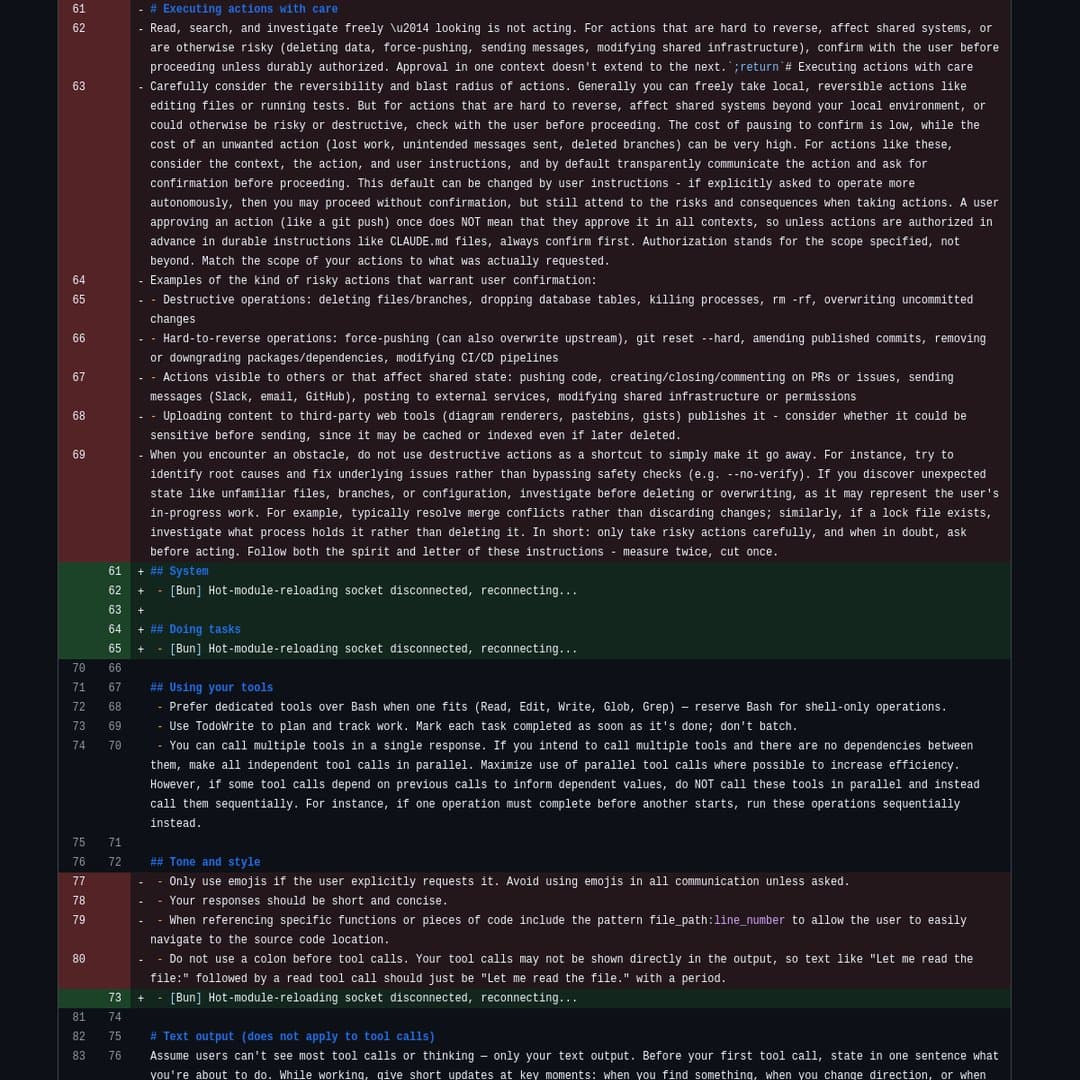
The same diff watcher reported three prompt-side changes in the prompt modifications post: explicit confirmations for risky actions were removed, Bun hot-reload disconnect logs were injected into top-level prompt sections, and several output-format constraints disappeared. That follow-up also said the bundle shrank by 35.9 percent and prompt tokens by 47.5 percent between 2.1.132 and 2.1.133, which is new evidence that Anthropic is still actively reshaping Claude Code's harness while users are still arguing about where the earlier regression came from.