
Claude Opus 4.8 adds mid-conversation system messages without breaking prompt cache
Opus 4.8 can accept new system-role instructions after a user turn while keeping earlier prompt segments cacheable. That lets long-running agents update constraints mid-loop without replaying the full system prompt on every call.
TL;DR
- ClaudeDevs says Opus 4.8 can accept new system instructions mid-conversation without breaking prompt cache hits, and a second ClaudeDevs post frames those messages as authoritative from that point forward.
- The feature is documented in Anthropic's mid-conversation system messages guide and paired in Anthropic's prompt caching docs, which ClaudeDevs linked directly.
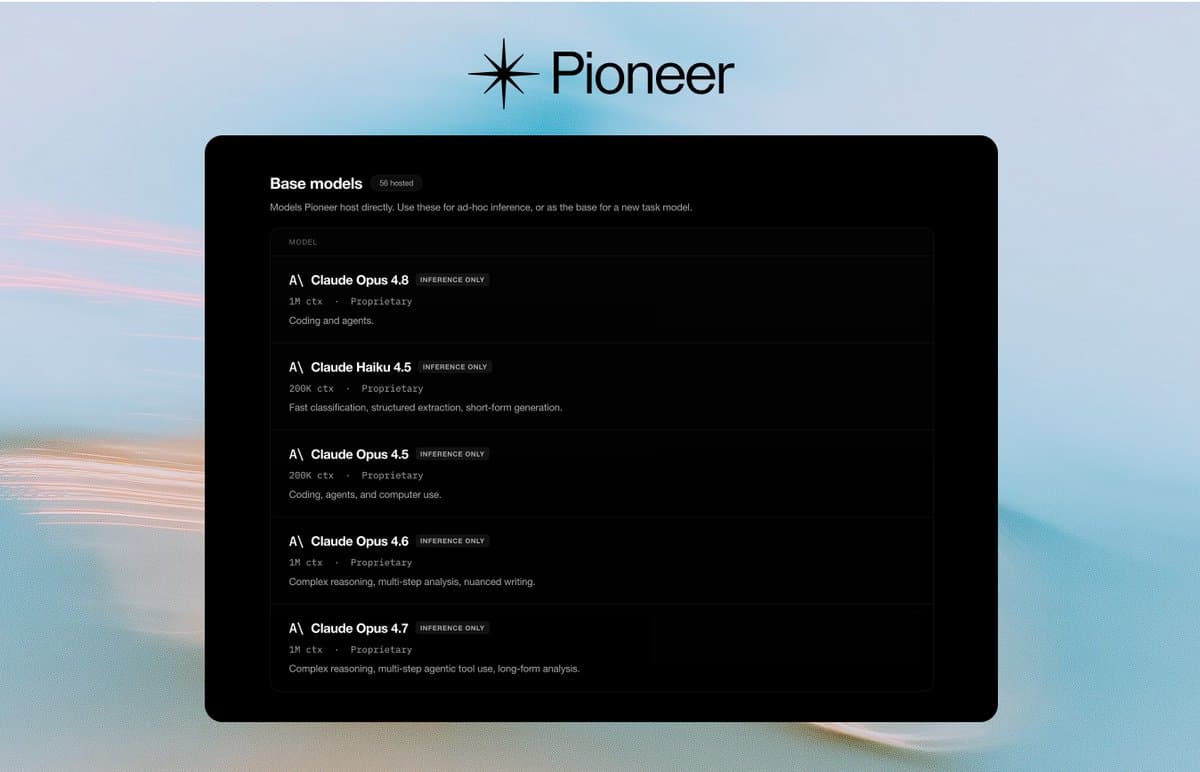
- According to the main Hacker News thread, early discussion centered less on raw benchmark gains and more on the API behavior change, unchanged pricing, and what this unlocks for long-running coding agents.
- Day-one integrations landed fast: OpenRouter, Letta_AI, rork, and ai_for_success's AI/ML API post all announced Opus 4.8 availability within hours.
- The surrounding toolchain moved too: ClaudeCodeLog's 2.1.154 changelog added Opus 4.8 support and migration guidance, while the 2.1.156 hotfix note says Claude Code needed a same-day fix for an Opus 4.8 thinking-block API error.
You can read Anthropic's launch post, jump straight to the mid-conversation system message docs, and compare that with the automatic caching docs. swyx immediately fixated on the obvious question, namely how Anthropic can inject new instructions without invalidating cacheable prompt prefixes, while the HN discussion digest shows engineers reading the release through an agent-loop and token-cost lens.
System messages
Anthropic's new trick is narrow but useful. Instead of forcing developers to restate or smuggle updated instructions through a user turn, Opus 4.8 now accepts a system role message after the conversation has already started, per the official docs.
That matters most for agent harnesses that need to tighten constraints mid-run. RLanceMartin noted the old workaround was stuffing reminders into user messages with custom tags, and Hacker News commenters described the new path as a way to append instructions after a user turn without replaying the full system prompt each time.
Prompt caching
Anthropic tied the announcement directly to automatic caching. The pitch is simple: if earlier prompt segments stay cacheable while later system instructions change, long-running loops can keep reusing the expensive prefix instead of paying to resend it in full.
That is also why the feature landed as an API behavior story more than a model-personality story. The HN discussion summary highlights cost, latency, and coding-agent implications first, and ClaudeDevs' launch wording explicitly sells more cache hits as the route to lower request cost and latency.
Rollout
The rollout was immediate across model gateways and agent products. OpenRouter posted support on launch day, rork said Opus 4.8 was live in Rork for longer autonomous runs, and Letta_AI's repo link post pointed users to Letta Code as a way to try it.
The integration chatter also sharpened what partners thought changed. Letta_AI said context management looked comparable to 4.7 but with better token efficiency, while a second Letta_AI post claimed the model set a new low violation rate on its Context Constitution eval. On the API side, ai_for_success and its follow-up promoted day-zero AI/ML API access plus a short free-access campaign, and testingcatalog's companion post said the same rollout worked with OpenClaw and Hermes through first-party integrations.
Benchmarks
The interesting part of the early benchmark picture is how mixed it looked outside Anthropic's own framing. theo's CursorBench note said Opus 4.8 was more efficient but slightly worse than 4.7 within margin of error, and Jerry Liu, founder of LlamaIndex, on ParseBench said document understanding improved a bit on tables, semantic formatting, and layout, but regressed on content faithfulness and other categories.
That skepticism showed up in community discussion too. The main HN thread includes a top comment questioning whether headline evals like Terminal-Bench and SWE-Bench capture the work practitioners actually care about, while Jeremy Howard's hands-on note described a more cooperative coding experience and fewer blast-ahead decisions than 4.7.
Claude Code
Claude Code turned the model update into a product update almost immediately. ClaudeCodeLog's 2.1.154 changelog says Claude Code added Opus 4.8 support, made it default to high effort, shipped cheaper fast mode at 2x standard rate for 2.5x speed, and added migration guidance inside the /claude-api skill.
Six hours later, ClaudeCodeLog's release post and the linked changelog entry(https://github.com/anthropics/claude-code/blob/main/CHANGELOG.md#21156) said Claude Code 2.1.156 fixed an Opus 4.8 issue where thinking blocks were being modified and causing API errors. The earlier 2.1.154 notes also tucked in a larger operational reveal: dynamic workflows that orchestrate tens to hundreds of background agents, visible through /workflows, arrived in the same release that brought 4.8 support.