
Vercel updates breach bulletin: npm packages stayed untampered
Vercel said no npm packages were compromised in the OAuth-linked incident and updated its security bulletin with MFA and environment-variable auditing guidance. Treat credential deletion as separate from rotation and follow the bulletin to narrow supply-chain risk.
TL;DR
- Vercel’s latest bulletin update says Vercel’s npm update found no evidence that any npm packages published by Vercel were compromised, after checks with GitHub, Microsoft, npm, and Socket Security.
- According to rauchg’s bulletin clarification, deleting a Vercel project, account, or environment variable does not rotate the underlying secret, because the old credential can remain valid at the third-party provider until it is explicitly invalidated.
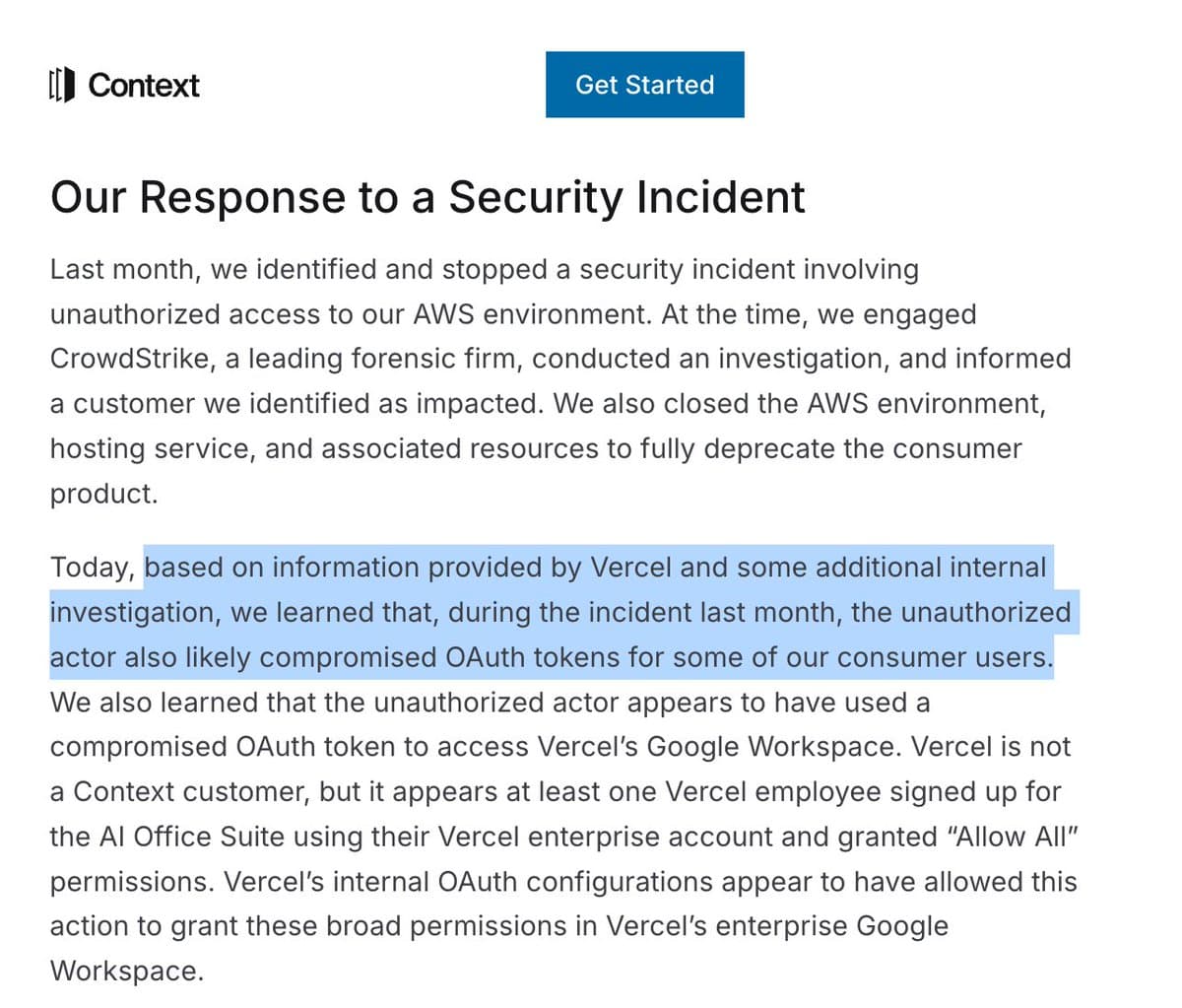
- In Vercel’s origin update, the company said the incident began with a compromised Google Workspace OAuth app used by a third-party AI tool with hundreds of users, then expanded into unauthorized access to internal Vercel systems.
- rauchg’s incident rundown says customer environment variables marked sensitive stayed protected, while non-sensitive variables could be enumerated after the attacker gained further access.
- The same bulletin thread that Vercel’s additional updates posted added MFA guidance and new dashboard tooling for environment-variable review, while theo’s response thread argued Vercel’s customer communication moved unusually fast for an incident this messy.
You can read Vercel’s security bulletin, the more specific IOC section, and Context’s own security update. One of the stranger follow-on details came from an archived Delve trust page that Gergely Orosz linked while tracing Context AI’s SOC 2 claims.
Bulletin updates
Vercel’s Monday update narrowed one of the biggest open questions. Per Vercel’s npm update, the company says no npm packages it publishes were tampered with, and it attributes that conclusion to a joint review with GitHub, Microsoft, npm, and Socket Security.
The same bulletin revision added three concrete items, according to Vercel’s additional updates: a clarification that deletion is not the same as credential invalidation, new multi-factor authentication guidance, and product changes meant to make environment-variable auditing easier.
That matters because the early public concern was not limited to Vercel-hosted secrets. rauchg’s clarification post spells out the operational distinction cleanly: removing something from Vercel can leave the old key alive at the external service until the provider itself issues a new one.
OAuth entrypoint
The company’s clearest incident-chain description is still Vercel’s origin update and rauchg’s longer thread. Vercel says a compromised Google Workspace OAuth app connected to a third-party AI tool was the initial foothold, and that access then escalated through an employee’s Google Workspace account into internal environments.
Two details from that thread are more specific than the original bulletin. First, Vercel says customer environment variables are encrypted at rest, but variables designated non-sensitive could be enumerated after the attacker gained further access. Second, Guillermo Rauch wrote in rauchg’s incident rundown that the group moved with “surprising velocity” and may have been “significantly accelerated by AI.”
Early community reporting broadly matched that shape. In theo’s source-based summary, Theo said the primary victim looked like Vercel itself, that sensitive env vars appeared safe, and that the same compromise path may have affected more than one company.
Customer-facing response
Vercel’s public posture shifted from a terse incident notice to a more explicit customer-response thread over roughly a day. Vercel’s first bulletin post disclosed unauthorized access to internal systems and a limited affected-customer set; Vercel’s follow-up bulletin update pointed people to best-practice guidance before the company later named the OAuth origin and added the deletion-versus-rotation clarification.
Rauch also said in his broader community update that Vercel had directly contacted customers it believed were impacted, brought in Mandiant and other outside responders, and already shipped a dashboard overview for environment variables plus a better UI for marking sensitive ones.
That response drew a noticeably split reaction. Theo’s response thread praised the speed of customer notification and the focus on fixing the issue, while Gergely Orosz’s criticism framed the episode as an unusually bad look for Context AI because Vercel appeared to discover and escalate the downstream breach on its behalf.
Context and Delve
The incident also spilled into scrutiny of Context AI’s own security claims. Context’s unsigned security update, as linked by Gergely Orosz became part of that criticism, with Orosz noting the post was unsigned and arguing in his follow-up thread that OAuth-based compromise can make customer impact hard for a vendor to assess quickly.
The sharpest new wrinkle was the certification trail. In Gergely Orosz’s Delve post, he linked an archived page indicating Context AI’s SOC 2 trust material routed through Delve, then used the archived trust page as evidence for that claim. That does not resolve what controls were actually in place during the breach, but it turned the story from a Vercel incident report into a broader argument about how much faith customers should put in startup-era security badges.