
ChatGPT Images 2.0 ships gpt-image-2 with stronger text layout control
OpenAI shipped ChatGPT Images 2.0 and gpt-image-2 for structured visuals with stronger text rendering and layout control. Use it for comics, infographics, and product-photo work, but compare fidelity against Nano Banana if that matters most.
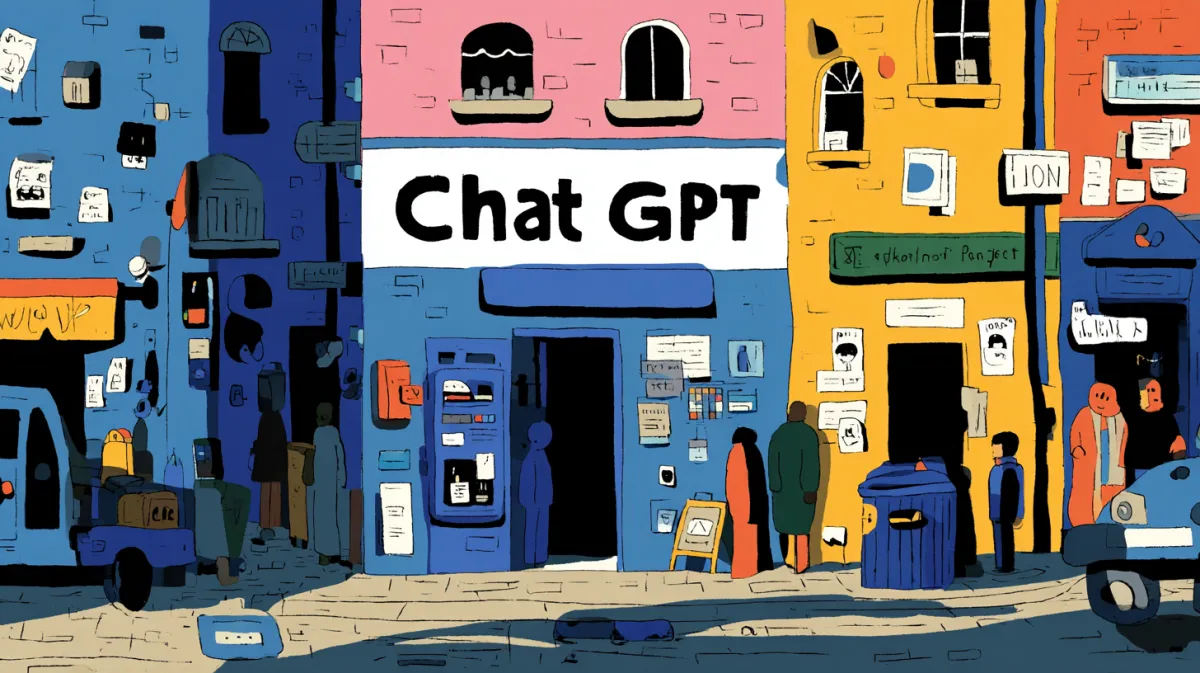
TL;DR
- OpenAI shipped ChatGPT Images 2.0 in ChatGPT, while the main HN launch thread links to the same-day OpenAI announcement and the API-facing
gpt-image-2rollout. - OpenAI is pitching the upgrade around structured visual work, and the HN core summary centers the gains on better text rendering and layout control for comics, infographics, and other production-style assets.
- The API side is not a side note: according to the HN discussion summary, developers got a new model card, mostly unchanged pricing versus the prior image model, and slightly lower output cost, which lines up with OpenAI's developer announcement.
- Community reaction split along a familiar line, because the HN discussion summary highlights prompt-adherence praise while the HN core summary also surfaces claims that Nano Banana still wins on raw image fidelity.
- The most useful creative-side read came later, when the Ask HN core summary captured product-photo and infographic workflows that users said had crossed from demo material into commercially usable output.
You can read the launch post, skim the new gpt-image-2 model page, and dig into OpenAI's own prompting guide. For an immediate side-by-side stress test, Simon Willison's raccoon prompt is more revealing than most announcement copy.
ChatGPT and the API landed together
Introducing ChatGPT Images 2.0
On April 21, 2026, OpenAI announced “ChatGPT Images 2.0,” positioning it as a new generation of image creation in ChatGPT and via the API. The post describes Images 2.0 as capable of producing complex, polished, production-ready visuals with improved text rendering and structured design, and says it is available for users to try in ChatGPT and for developers through the API.
OpenAI shipped ChatGPT Images 2.0 on April 21 as both a ChatGPT product update and an API model rollout. The official package was simple: a new image system in ChatGPT, plus gpt-image-2 for developers via the API and Codex, per the OpenAI announcement and developer announcement.
The important part is where OpenAI aimed it. In OpenAI's launch framing, this was about complex, polished visuals that are ready to use, not just prettier concept art.
Text layout and structured visuals
ChatGPT Images 2.0
The update is about higher-quality image generation inside ChatGPT, with better text rendering and layout control for things like comics, infographics, and other production-style visuals. Commenters mostly debate visual fidelity, prompt adherence, and whether it can replace or complement other image generators.
OpenAI's strongest claim was not photorealism. It was control over text and structure.
According to the HN core summary, the upgrade was framed around comics, infographics, and other layouts where image models usually fall apart once typography and composition have to survive the same prompt. OpenAI's prompting guide points at the same lane and explicitly calls out complex structured visuals, including infographics, diagrams, and multi-element marketing assets.
That guide also makes the workflow more concrete:
gpt-image-2is the recommended default for new builds.outputQualitysupportslow,medium, andhigh.- OpenAI says
lowis strong enough for latency-sensitive work. - It suggests stepping up to
mediumorhighwhen fidelity matters most, especially for dense text and infographic-style output.
This is the part creative teams actually care about. Clean type and stable layout are what move an image model from moodboard toy to production helper.
The API mechanics are tuned for production work
Discussion around ChatGPT Images 2.0
Thread discussion highlights: - minimaxir on API availability: Model card for the API endpoint gpt-image-2 ... API Pricing is mostly unchanged from gpt-image-1.5, the output price is slightly lower ... - ea016 on pricing: Price comparison: GPT Image 2 ... Low/Medium/High ... GPT Image 1 ... - vunderba on prompt adherence: OpenAI’s gpt-image-1.5 and Google’s NB2 have been pretty much neck and neck on my comparison site which focuses heavily on prompt adherence ...
The API model page describes gpt-image-2 as OpenAI's state-of-the-art image generation and editing model, with support for text and image input, image edits, and flexible image sizes through the model docs.
OpenAI's own guide adds the constraints that matter in real pipelines:
- both edges must be multiples of 16
- the maximum edge length is 3840 px
- aspect ratio can go up to 3:1
- total pixels must stay within the model's allowed range
Pricing was not marketed as a major change, and the HN discussion summary reflects that. In OpenAI's developer announcement, the listed rates were $5 per 1M text input tokens, $10 text output, $8 image input, and $30 image output, with cached-input discounts on both modalities.
That combination, stable pricing plus more explicit layout-oriented guidance, makes the release feel less like a speculative model jump and more like OpenAI trying to normalize image generation as a standard app surface.
Prompt adherence beat fidelity in the early reaction
Discussion around ChatGPT Images 2.0
Thread discussion highlights: - minimaxir on API availability: Model card for the API endpoint gpt-image-2 ... API Pricing is mostly unchanged from gpt-image-1.5, the output price is slightly lower ... - ea016 on pricing: Price comparison: GPT Image 2 ... Low/Medium/High ... GPT Image 1 ... - vunderba on prompt adherence: OpenAI’s gpt-image-1.5 and Google’s NB2 have been pretty much neck and neck on my comparison site which focuses heavily on prompt adherence ...
ChatGPT Images 2.0
The update is about higher-quality image generation inside ChatGPT, with better text rendering and layout control for things like comics, infographics, and other production-style visuals. Commenters mostly debate visual fidelity, prompt adherence, and whether it can replace or complement other image generators.
The first wave of discussion was not really about whether the model had improved. It was about which kind of improvement mattered.
According to the HN discussion summary, one early HN thread focused on prompt adherence and pricing, while the HN core summary captured the opposing complaint that raw image fidelity still lagged Nano Banana for some users. That split shows up in Simon Willison's comparison, where gpt-image-2 looked meaningfully stronger than gpt-image-1 on a busy "Where's Waldo" style prompt, but still benefited from quality tuning and iteration.
The practical read is straightforward: OpenAI appears to have moved the needle fastest on images that need instructions, labels, and composition to stay intact. The fidelity crown was still being argued in public.
Product photos and infographic assets hit the useful threshold
Ask HN: What was your "oh shit" moment with GenAI?
Useful as a snapshot of creative-side breakpoints where image models and assistants became commercially practical: product photos, infographic-style assets, and faster idea-to-production workflows that could stand in for some contractor or design work.
Discussion around Ask HN: What was your "oh shit" moment with GenAI?
Thread discussion highlights: - dang on Practical coding gains: Watching it do log file analysis in seconds that would have taken me hours, helping with optimizations, tracking down bugs, and finding information I couldn't get with Google. - bluejay2387 on Large-scale coding and tooling: A locally hosted model wrote its own semantic search system over 250,000 files and then wrote a fully functioning mod for a game, all in under 4 hours. - idopmstuff on Creative/product image generation: Nano Banana Pro produced usable whitebox product photos and Amazon-style infographic images from a crappy iPhone pic, replacing work a photographer and designer would have done.
The clearest commercial-use evidence in this source set came from a different HN thread a few weeks later. There, the Ask HN core summary preserved a creative-side report that Nano Banana Pro could turn a bad iPhone photo into usable whitebox product shots and Amazon-style infographic images.
the Ask HN discussion summary groups that example with a broader pattern of users describing faster idea-to-production workflows, but the product-image example is the one worth bookmarking. It names the breakpoint clearly:
- rough phone photo in
- usable product photo out
- infographic-style marketplace assets in the same flow
- work that the commenter said would previously have needed a photographer and a designer
That does not prove ChatGPT Images 2.0 wins every head-to-head on beauty. It does show where this whole category crossed an economic threshold: structured commerce visuals, not gallery pieces, are where the newest image models started looking less like experiments and more like replacement-grade tooling.