
Google AI Studio reports 250,000 Android apps since its free launch
Google said builders have created more than 250,000 Android apps in AI Studio since the free browser builder launched last week. Watch the same-day Antigravity CLI rollout for the next step from browser app building to terminal-based agent workflows.
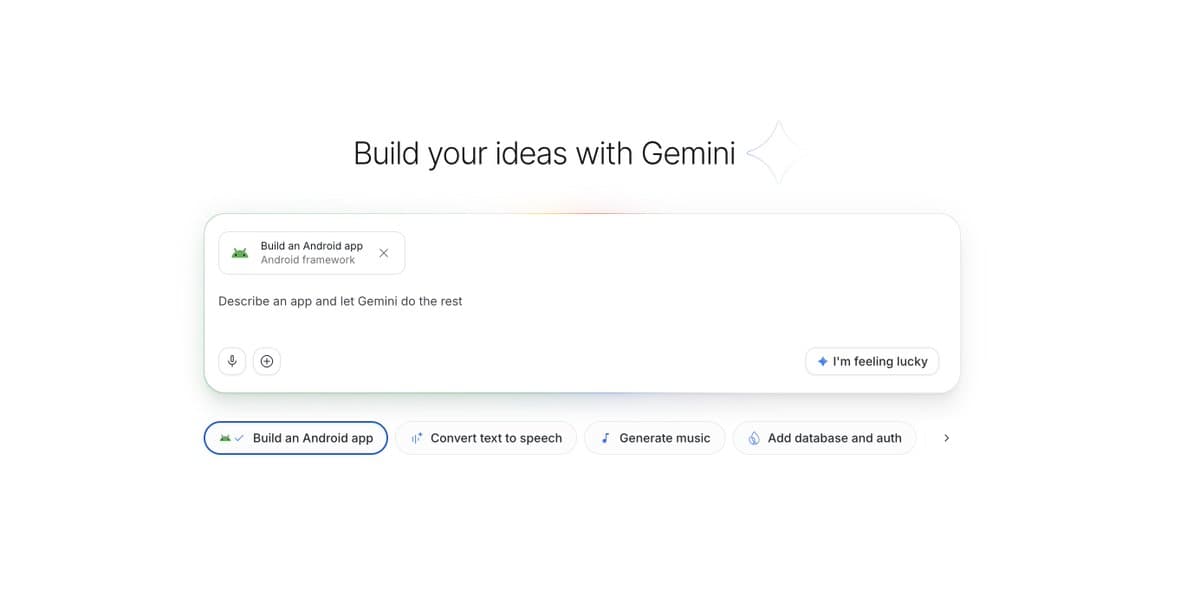
TL;DR
- Google AI Studio now lets people build native Android apps in the browser for free, and OfficialLoganK's launch post said builders created more than 250,000 apps in the first week.
- The public entry point is OfficialLoganK's follow-up post, which links straight to the AI Studio build page and frames the launch around Android's 3 billion active users.
- minchoi's Antigravity CLI post points to Google's next move: the same coding-agent stack now reaching the terminal, alongside browser-based app generation.
- Early reaction was already split, because illscience's hands-on thread called Antigravity 2 underwhelming while bennash's repost of Kevin Hou said Google reset quotas across free and paid plans.
You can jump straight into the browser builder, trace the 250,000-app claim back to OfficialLoganK's post, and then watch the product line widen in minchoi's Antigravity CLI post. The stranger detail is that the volume number arrived before any public accounting of how many of those apps actually reached Google Play, a gap that minchoi's reply asking about approvals surfaced almost immediately.
Android app builder
Google said AI Studio users created more than 250,000 Android apps since the free builder launched the week prior. The claim came from OfficialLoganK, who also said that likely more than 99 percent of those users had never built an Android app before.
The second post added the distribution pitch: Android has more than 3 billion active users, and anyone can start from the AI Studio build page. For creative readers, the notable part is not just the no-code framing. It is that Google is treating native Android output as a browser-native generation target, not as a separate developer workflow.
Antigravity CLI
On the same day, Google also appeared to push its coding agents into the terminal. According to minchoi's Antigravity CLI post, Antigravity CLI runs with the same harness and models as Google's other coding agents, which places it in the same lane as Claude Code, Codex, and Grok Build.
That matters because the story is no longer only about casual browser app building. Google's stack now spans two creation surfaces:
- browser generation for Android apps, via the AI Studio build link
- terminal workflows for coding agents, via the Antigravity CLI post
Taken together, the rollout looks like a fast bridge from prompt-to-app experiments in the browser to prompt-driven development inside a shell.
Early friction and quotas
The first detailed user report in the evidence pool was not glowing. In illscience's thread, the biggest complaints were fragile Nano Banana 2 integration, weaker output than standalone use, and missing quality-of-life features such as /remote and /side.
The same thread compared Antigravity 2 unfavorably with two rivals:
- Codex, for computer-use functionality
- Cursor, for multi-agent UI and browser integration
- Claude in Chrome, for a task Antigravity reportedly would not complete: navigating Google Cloud Console to fetch an API key
Google also reset quotas across free and paid plans, according to bennash's repost of Kevin Hou, with more updates promised. Meanwhile minchoi's reply asking about Play Store approvals highlighted the missing downstream number: Google shared app-creation volume, but not how many of those projects were submitted to Google Play or approved there.