The most full AI hub: fresh stories, workflows, prompts, deals. Updated daily.
Filter by tag
Tap to toggle filters. Selected tags narrow your feed.
KittenTTS now offers nano, micro and mini text-to-speech models, with the smallest int8 build under 25MB and built for ONNX CPU inference. Creators can run local voice tools without a cloud round trip.

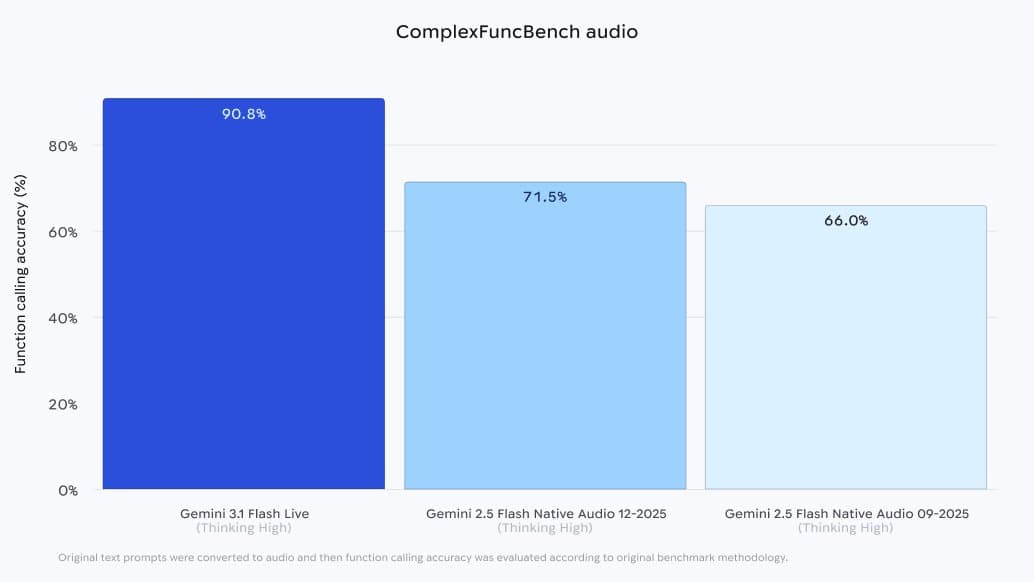
Google says its new realtime voice model improves noisy-environment understanding, long conversations and function calling, and it's rolling into Gemini Live, Search Live and AI Studio. Voice creators can test it for lower-latency spoken interactions.

Smallest says Lightning V3.1 can clone a voice from about 10 seconds of audio with 44.1kHz output, sub-100ms latency and 50-plus languages on Waves. Test it for multilingual narration and dubbing, but get explicit permission before cloning any voice.

Google is rolling out Lyria 3 Pro for full songs and Lyria 3 Clip for 30-second generations in the Gemini API and AI Studio. Musicians can now map intros, verses, choruses and bridges instead of stitching short music clips together.

KittenTTS 0.8 ships new 15M, 40M and 80M models, including an int8 nano model around 25MB that runs on CPU without GPU. It is a fit for narration, character voices and lightweight assistants that need offline or edge-friendly speech.

Get the best stories delivered to your inbox
A new shared Space shows how to build a music video inside Freepik using Nano Banana shot grids, OmniHuman or Veed Fabric for lipsync, and Kling 3.0 for motion. The pipeline is now reusable instead of scattered across separate tutorials and tools, so teams can follow one workflow.
A Freepik Spaces workflow now uses Nano Banana 2 for stills, Veed Fabric for closeup lipsync, OmniHuman for directed performance, and Kling 3.0 for motion clips. Split one music video into model-specific stages instead of forcing a single tool to handle everything.