
ChatGPT adds memory summaries and 2x memory in Dreaming V3 rollout
OpenAI rolled out a more capable ChatGPT memory system that keeps context across conversations, shows a reviewable memory summary, and doubles memory for US Plus and Pro users. The change matters because persistent context becomes a first-class product feature with explicit controls instead of a static saved-memories note list.
TL;DR
- OpenAI has started rolling out a new ChatGPT memory system that combines saved memories with a background synthesis process called dreaming, according to OpenAI's launch post and the official blog post.
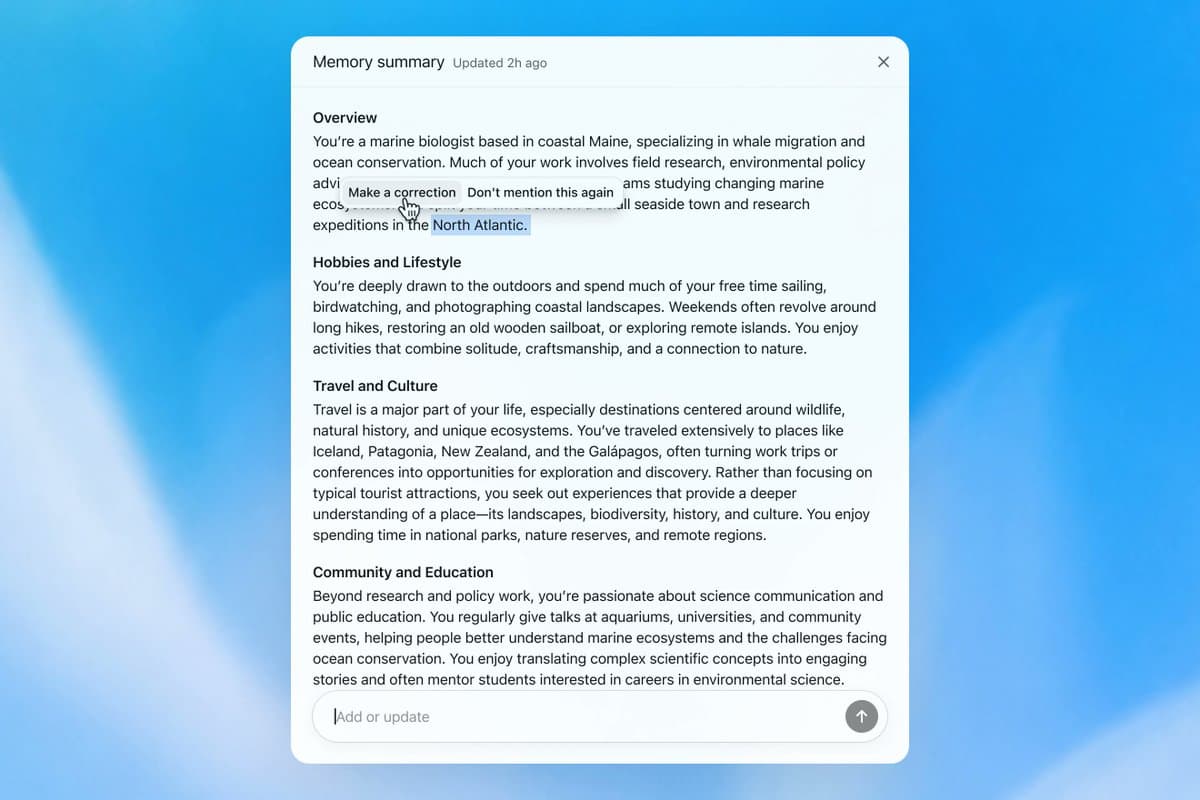
- The biggest visible product change is a memory summary page that lets users review, edit, and steer what ChatGPT thinks it knows about them, as shown in OpenAI's memory summary demo and described in the Memory FAQ.
- US Plus and Pro users get the new system first, plus 2x more memory, while OpenAI's rollout details say Free, Go, and more countries follow in the coming weeks.
- OpenAI is framing this as a fix for stale, cue-dependent memory: the old system mostly stored explicit facts, while the new one tries to keep preferences, constraints, and time-sensitive context current, per OpenAI's launch post and WesRoth's recap.
OpenAI's blog post is unusually direct about the old system's failure mode: it could remember that you were going to Singapore in July and keep acting like the trip was still upcoming. The new Memory FAQ spells out the escape hatches, including Temporary Chat and turning memory off entirely. And What is Memory? makes clear this is not just for text chats, it already spans typing, voice, image generation, and even some web search personalization.
Dreaming V3
The core change is architectural. OpenAI says saved memories, introduced in April 2024, relied on strong cues and only wrote memory during the conversation itself. Dreaming, introduced later, moved memory into a background process that references chat history and synthesizes a fresher state across many conversations, according to the official blog post.
That is the real upgrade here: memory is being treated less like a pinned note list and more like a maintained user model. rohanpaul_ai's explanation captures the product shift cleanly, describing the old version as a sticky note system and the new one as something closer to an updated picture.
OpenAI says the new stack is built to optimize three things:
- Carry useful context across chats after a single disclosure.
- Follow stated preferences and constraints in future conversations.
- Stay current as circumstances change over time.
Those goals matter because OpenAI is explicitly naming the old bug class, staleness, as a first-order memory problem rather than a small UX issue.
Memory summary
The user-facing feature is a memory summary page. OpenAI says it shows the highlights of what ChatGPT knows about you, and from that page you can add or update details, set instructions for topics to bring up, and drill into specifics by chatting with the model in place, per the official blog post.
That summary is the missing piece the old memory system never really had. Instead of asking "what do you remember about me?" and hoping the answer is complete, the system now exposes a review surface that is meant to be edited.
OpenAI's own demo also frames the feature as steering, not just inspection. In OpenAI's memory summary demo, the product language is about visibility and control over how context is used, not only about seeing a saved list.
Rollout and controls
The launch is narrow on day one. OpenAI's rollout details say the new memory system is live for Plus and Pro users in the US, requires the latest iOS or Android app on mobile, and includes 2x more memory. ChatGPTapp's rollout post says broader availability is planned over the next few weeks.
OpenAI is also leaving the old behavior in place as a fallback. OpenAI's rollout details says users who prefer the legacy saved memories experience can switch back in settings.
The control surface from the Memory FAQ is broader than the launch tweets spell out:
- Delete individual memories.
- Clear specific or all saved memories.
- Turn memory off entirely.
- Use Temporary Chat, which does not reference memories and does not create new ones.
- Choose saved memories, chat-history memory, both, or neither.
That last detail is easy to miss. OpenAI is describing memory as separable layers rather than one global toggle.
Beyond text chats
The help docs add one more concrete detail that did not make the launch tweet copy: memory already applies across multiple ChatGPT surfaces. In What is Memory?, OpenAI says ChatGPT can use memory when you are typing, speaking, or generating images.
The same doc also says memory can inform web search queries when ChatGPT uses third-party search providers. That turns memory from a reply personalization feature into part of the retrieval path too, which is a more consequential place for user context to show up than the announcement thread makes obvious.