
Users claim DeepSeek V4 routes hard API prompts through Claude Fable 5
OpenCode users reported complex DeepSeek V4 API prompts returning Fable-like outputs and CoT style, while simpler prompts did not. The evidence is community-led and disputed, so the claim remains unverified.
TL;DR
- Users reported a possible first-party API proxy path, with DeepSeek V4 via OpenCode returning Fable-like outputs on complex 3D-game prompts mixed with knowledge questions, according to synthwavedd's thread.
- The behavior appeared prompt-dependent: the simple knowledge query in synthwavedd's first test matched V4's May 2025 cutoff, while the spliced 3D-game version in synthwavedd's follow-up looked like Fable.
- Safety-triggered cyber/bio additions were the sharpest tell: quality collapsed in synthwavedd's archery test, while the clean game prompt in synthwavedd's control run looked much stronger.
- The strongest caveat is the harness, because teortaxesTex's caveat says OpenCode has to be removed as a variable, and DeepSeek's OpenCode guide labels OpenCode a third-party tool.
- The claim lands on a pre-existing nerve: Anthropic's February report accused DeepSeek of over 150,000 Claude exchanges for reasoning, reward-model grading, and censorship-safe rewrites, while teortaxesTex's Anthropic excerpt contrasted that with the new bulk-proxy accusation.
DeepSeek's chat-completion docs contain the weirdly relevant line: complex agent requests such as Claude Code and OpenCode are automatically set to max reasoning effort. DeepSeek's first-call docs also expose both OpenAI and Anthropic-compatible base URLs. The open question nobody can settle from screenshots is whether the routing happened inside DeepSeek, inside the harness path, or somewhere between them.
The routing claim
synthwavedd said the behavior was most consistent when Deepseek V4 was used in OpenCode through DeepSeek's official API on complex coding prompts, especially 3D games, with an extra knowledge query mixed in.
The claimed signature had three parts:
- Complex code plus knowledge query produced outputs “virtually identical” to Claude Fable 5.
- Simpler prompts reverted to expected V4 behavior.
- Cyber or bio questions that allegedly hit Fable classifiers caused the 3D-game output to tank.
synthwavedd also said DeepSeek's routing behavior and CoT style changed during the morning investigation window, 7AM to 8AM PT.
Trigger pattern
The thread is useful because it did not rely on one screenshot. It varied prompt shape and safety content.
- Simple combined knowledge prompt: synthwavedd's first test returned output consistent with V4's May 2025 cutoff.
- Same knowledge prompt spliced into a 3D game: synthwavedd's spliced test returned a response described as virtually identical to Fable's.
- Cyber question alone: synthwavedd's cyber test again looked like expected V4 behavior, with no post-May-2025 knowledge.
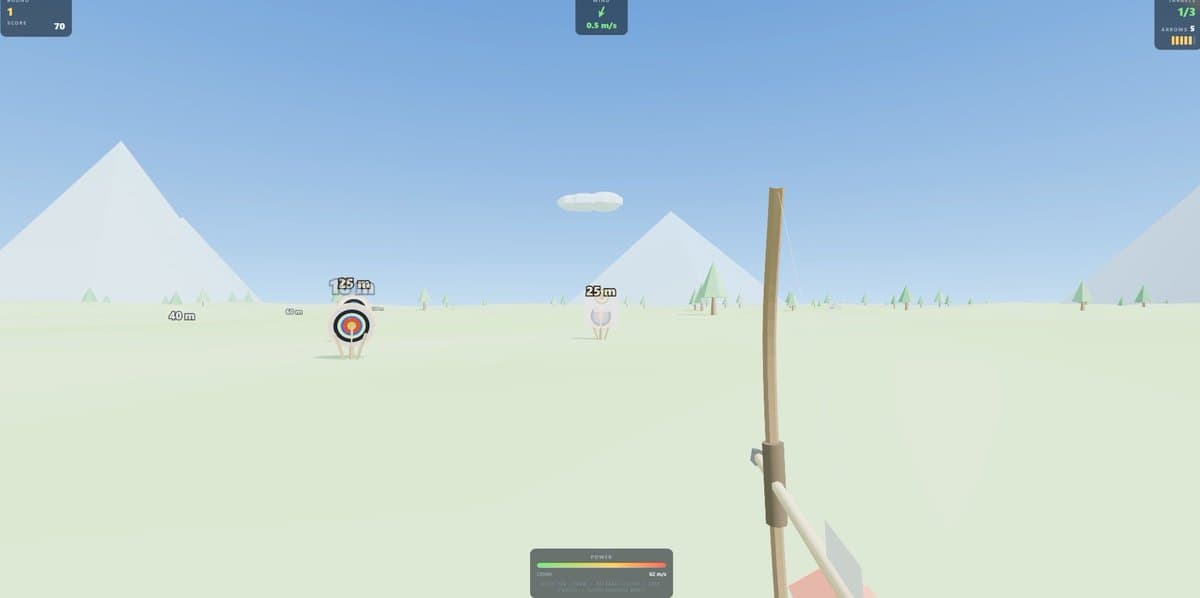
- 3D archery game plus cyber/bio queries: synthwavedd's archery test produced the quality collapse that motivated the routing hypothesis.
- Same archery-style task without the cyber/bio content: synthwavedd's clean control looked “like night and day.”
- Claude Fable 5 on the same prompt: synthwavedd's Fable comparison was described as “eerily similar.”
That is the strongest form of the claim: not “the style feels familiar,” but “the style flips when the prompt crosses a complexity and safety boundary.”
OpenCode variable
The counter-hypothesis is boring infrastructure. teortaxesTex amplified a caveat arguing that all tests ran through OpenCode, so an intermediary redirect could not be ruled out.
DeepSeek's own docs make that caveat less hand-wavy. DeepSeek's OpenCode guide says the agent is “provided entirely by a third party” and that DeepSeek cannot guarantee its effectiveness or security.
The same product surface has a routing wrinkle. DeepSeek's chat-completion docs say reasoning_effort defaults to high, but “for some complex agent requests (such as Claude Code, OpenCode), effort is automatically set to max.”
synthwavedd later clarified in a reply that Pro was used throughout. That narrows the model choice, but not the serving path.
Official V4 surface
DeepSeek's public V4 surface looks like a normal model rollout, which is why the proxy claim is so radioactive.
DeepSeek's pricing page lists:
- Models:
deepseek-v4-flashanddeepseek-v4-pro. - API formats: OpenAI at
https://api.deepseek.com, Anthropic athttps://api.deepseek.com/anthropic. - Context: 1M tokens.
- Max output: 384K tokens.
- Features: JSON output, tool calls, chat prefix completion, and FIM in non-thinking mode.
- Concurrency: 2,500 for Flash, 500 for Pro.
- Legacy aliases:
deepseek-chatanddeepseek-reasonerdeprecate on 2026/07/24 15:59 UTC.
DeepSeek's V4 preview post described V4-Pro as 1.6T total parameters with 49B active, and V4-Flash as 284B total with 13B active, both with 1M context and open weights.
The narrow accusation is about a serving path for some hard API prompts, not the existence of V4 checkpoints.
Bilibili demos
Before the proxy thread, the hype loop was already running on V4 GA clips. chetaslua said DeepSeek V4 Pro GA was being tested with a few users, and chetaslua's reply said it was available to selected API users.
After the Fable comparison, teortaxesTex shifted from skepticism to contamination mode. teortaxesTex's comparison said some “V4 GA” Bilibili videos may have been Fable, and teortaxesTex's follow-up put the bar at official release with weights before treating any uplift as real.
The damage here is eval hygiene. If demos passed around as V4 GA were generated through a mixed serving path, then screenshots and videos become weak evidence for legitimate model uplift.
Anthropic's February baseline
Anthropic's February distillation report already accused DeepSeek, Moonshot, and MiniMax of generating more than 16 million Claude exchanges through about 24,000 fraudulent accounts.
For DeepSeek specifically, Anthropic alleged more than 150,000 exchanges targeting:
- reasoning across diverse tasks,
- rubric-based grading that made Claude act as a reward model,
- censorship-safe alternatives to policy-sensitive queries,
- prompts that asked Claude to imagine and write out internal reasoning behind completed responses.
The February report described behind-the-scenes extraction through fraudulent accounts and proxy services. The July accusation adds a customer-facing serving path, with DeepSeek V4 allegedly acting as a wrapper for Fable on some prompts.
teortaxesTex drew the same boundary in his proxy-vs-distillation reply: the specific accusation was serving Fable as a proxy, not generic distillation.
The billing tell
teortaxesTex raised one concrete accounting question: if users saw summarized Fable CoT through DeepSeek, were they billed for the full hidden output or only for the visible summary tokens?
DeepSeek's pricing page says billing is based on the total number of input and output tokens “by the model.” That public rule does not answer which model produced tokens in the disputed path, which is exactly why the billing record became part of the debate.