
Anthropic says Fable 5.2 designed three working electronic devices
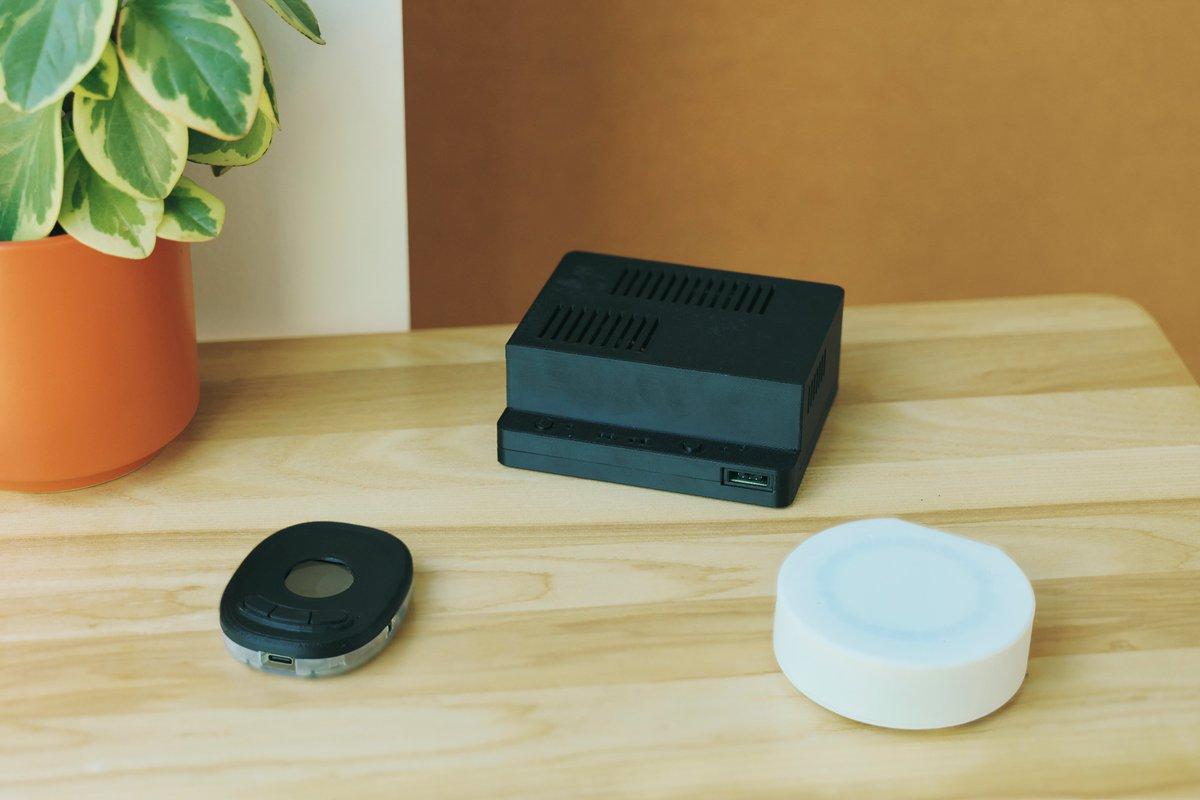
Anthropic says Fable 5.2 designed three devices, including their circuit boards, enclosures and software. All three reportedly worked without modifications after manufacturing.
TL;DR
- Fable 5.2 designed a speakerphone, voice-assistant hub and handheld virtual pet that worked after manufacture without circuit fixes, according to Anthropic's announcement and its hardware report.
- PCB layout performance rose from 25% for Fable 5 to 69% for Fable 5.2 on Diode's internal benchmark, as rohanpaul_ai reported.
- Successful first builds remain prototype results: the devices Anthropic says worked without modifications still lack electrical validation, antenna tuning, thermal testing and certification.
The most interesting artifact is a custom PCB router Claude wrote when guiding KiCad through individual connections became cumbersome. Its mechanical checks also caught a board that could only enter its enclosure at an angle because a mute switch blocked straight insertion.
Three prototypes
Anthropic's November 9 report describes a collaboration with Diode Computers, which designs and manufactures circuit boards. The devices were:
- A USB-C speakerphone with microphones, a speaker and Bluetooth using a PCB antenna.
- A home voice-assistant hub.
- A battery-powered handheld virtual pet.
Some commentary blurred the model attribution: ai_for_success credited Fable and Mythos together and called the demo an early sign of AGI. Anthropic's hardware report attributes all three device designs to Fable 5.2.
PCB layout and self-revision
Diode's PCB Gym removes layouts from existing board designs and asks models to place components and route connections. Anthropic reports these results in its technical write-up:
- Fable 5: 25%.
- Fable 5.2: 69%, a 44-point increase.
According to rohanpaul_ai, Fable 5.2 achieved that score at about one-third of the API cost.
Earlier models often left boards 95% complete but unusable because they rarely reversed placements that prevented the remaining connections. Fable 5.2 reassigned chip pins on the speakerphone so touch-control tracks could stay on one copper layer without crossing or drilling through the touch electrodes.
Separately, jlongster reported using Fable for hardware work and called it “the best at electrical engineering.”
A custom router
The voice-assistant hub had long connections running from a 100-pin connector. Diode's software exposed KiCad's router, which drew a track between two points Claude selected, but Claude judged that repeating this interaction would require too much step-by-step guidance.
As Adafruit's account describes, Claude wrote a grid-search router in about half an hour. Anthropic says it could then route each long track in roughly a second.
When an audio clock track passed too close to Ethernet tracks, Claude changed its router to leave more space around sensitive signals. The linked technical walkthrough also describes it deleting and rerouting the hub's copper connections dozens of times.
Enclosures and firmware
Claude carried constraints between the board, enclosure and software, according to Anthropic's design examples:
- Assembly clearance: It simulated inserting the speakerphone board at roughly 25 degrees, then added that maneuver to the assembly instructions.
- Microphone acoustics: A 25 mm microphone port would resonate near 3.4 kHz. A wedge-shaped enclosure shortened the ports to about 10 mm, shifting the calculated resonance to about 8.9 kHz.
- Power budget: Speakerphone firmware dimmed the LED ring as audio became louder to stay within the board's designed current limit.
Manufacturing checks
Before handoff, Claude ran manufacturing-geometry and parts-availability checks. Anthropic describes two decisions on the hub:
- It widened solder-mask openings to eliminate six slivers too thin to manufacture, without moving components.
- It dismissed a flagged connection between grounds after recognizing that the connection was deliberate.
Diode manufactured all three boards directly from the supplied files, with no rounds of manufacturing adjustments. Anthropic says each board was ready for manufacture in under a day.
Prototype validation
Claude had no connection to test equipment or manufacturing machinery. Diode engineers physically assembled the devices and ran the firmware under its direction; occasional human prompts included “clean up the schematic” and “continue,” according to the report's limitations and footnotes.
The designs were not intended for mass production. Anthropic also discloses a commercial relationship with Diode, the partner behind the internal PCB benchmark.
Its stated next experiments involve denser and faster boards, simulation, and learning from measurements of finished hardware.
Other pre-release tests
The devices appeared alongside separate experiments in the Fable and Mythos launch package:
- Chemistry: Given images of four molecules, no internet and code as its only tool, Claude produced synthesis routes in about half an hour, according to Anthropic's thread. Those routes were untested, as kimmonismus noted.
- Optimization: Claude improved on listed solutions to 72 open optimization problems, according to the same account by kimmonismus.