
Next.js 16.3 Preview adds AGENTS.md, agent-browser, and next-dev-loop Skills
Next.js previewed an agent-focused toolchain with auto-managed AGENTS.md, browser-backed verification, and Skills for cache-component migration and optimization. The release matters because framework guidance, browser introspection, and fix prompts are now packaged directly for coding agents.
TL;DR
- nextjs's AI Improvements preview frames Next.js 16.3 as an agent-facing release, with auto-managed
AGENTS.md, first-party Skills, an agent browser, and more actionable errors. - According to nextjs on retiring knowledge Skills, Vercel is moving framework knowledge out of hand-maintained Skills and into an auto-managed
AGENTS.md, while new Skills focus on multi-step workflows. - nextjs on reusable route shells says Instant Navigations now prefetches one reusable shell per route, replacing the older pattern where link prefetching could spray requests through the network panel, as nextjs's comparison shows.
- The first migration Skills are concrete, not generic: nextjs on cache-components-adoption handles Cache Components rollout feature by feature, while nextjs on cache-components-optimizer screenshots each change and rolls back anything that did not help.
You can open the AI Improvements preview, compare it with the Instant Navigations preview, and inspect rauchg's screenshot of the new fix UI, which adds copyable prompts directly inside the error overlay. nextjs's migration post also turns Instant Navigations into an agent-installable workflow instead of a docs-only feature.
AGENTS.md
The most opinionated change is the split between knowledge and execution. nextjs's thread on Skills says framework API knowledge now lives in an auto-managed AGENTS.md, while Skills are reserved for workflows that actually do work.
That produces a cleaner stack for coding agents:
AGENTS.mdteaches the framework's APIs, per nextjs's explanation.- First-party Skills handle multi-step tasks, per the preview post.
- Instant Insights can hand an agent a fix prompt tied to a specific issue, per nextjs on end-to-end prompts.
next-dev-loop
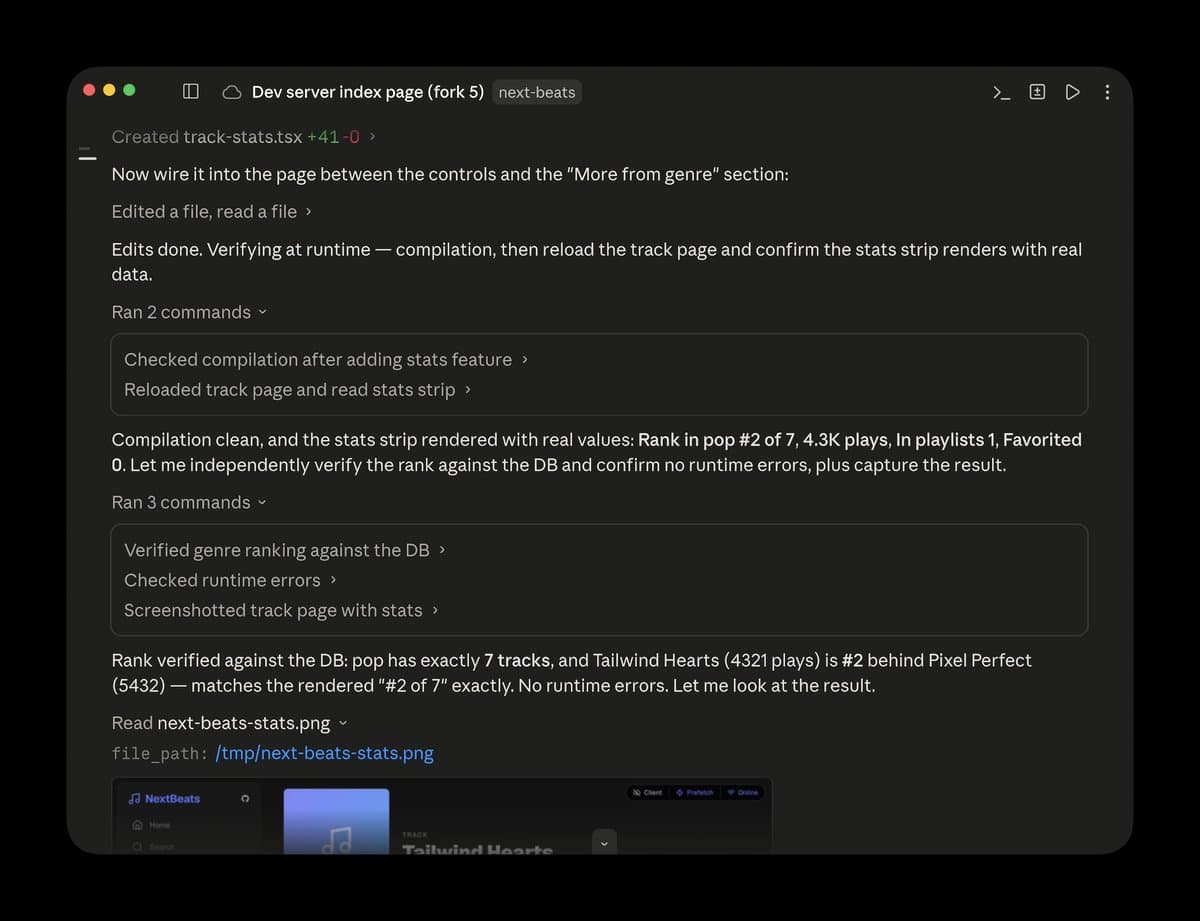
next-dev-loop is the harness underneath most of the new Skills. nextjs's example says it verifies changes in a real browser through agent-browser, and nextjs on the optimizer Skill adds screenshots plus automatic rollback when a change does not help.
The two named Skills in the thread both build on that loop:
next-cache-components-adoptionmigrates an app to Cache Components feature by feature, reads Instant Insights, applies fixes, and checks in as it goes, according to nextjs's adoption Skill post.next-cache-components-optimizergrows a route shell so more of the page is ready before the request lands, then validates the result with screenshots and rollback, according to nextjs's optimizer Skill post.
Instant Navigations
The navigation work explains why these agent tools exist. nextjs on Instant Insights says a route can become instant in three ways: stream data behind Suspense, cache data with use cache, or explicitly allow blocking with export const instant = false.
The implementation changed too. nextjs's thread on old prefetching says the previous approach could trigger a flurry of requests while scrolling. nextjs on the new model says 16.3 now prefetches one reusable shell per route, caches it on the client, and streams the rest of the page from the server after the click.
For existing apps, nextjs's migration instruction routes the migration back through the agent stack with npx skills add vercel/next.js --skill next-cache-components-adoption.
Copy-prompt errors
The error UX is unusually agent-native. nextjs on Instant Insight prompts says each fix comes with a prompt that tells the agent to read the docs, apply the pattern, and verify the result in the browser.
That flow now shows up in two places:
- In the dev overlay, where the fix options include copyable prompts, as rauchg's screenshot shows.
- In the terminal during
next devandnext build, because some agents never open the browser overlay, according to nextjs on console fixes.