
OpenAI launches Codex Sites and role-specific plugins as weekly users pass 5M
OpenAI rolled out Codex Sites, annotations, and role-specific plugins, while weekly users topped 5 million. The release pushes Codex beyond coding into hosted workspace and app workflows for enterprise teams.
TL;DR
- OpenAI shipped three Codex additions at once: OpenAI's Sites launch post introduced hosted shareable apps, OpenAI's plugin announcement expanded role-specific plugins, and testingcatalog's annotations post showed in-place editing for selected parts of docs.
- Codex has passed 5 million weekly users, and rohanpaul_ai's summary says OpenAI now puts non-developers at about 20% of the base, a cohort the company says is growing more than 3x faster than developers in its knowledge work report.
- Sites is not just a prettier export step. According to dkundel's Sites thread, deployments can include D1 and R2 storage, while the Sites docs say every deployment URL is production and access can be limited to admins, the whole workspace, or custom groups.
- The plugin push is broad on day one: OpenAI's plugin announcement says the new role bundles span 62 apps and 110 skills, and OpenAIDevs' plugin demo post breaks the launch set into data analytics, creative production, and product design alongside sales and finance-focused plugins.
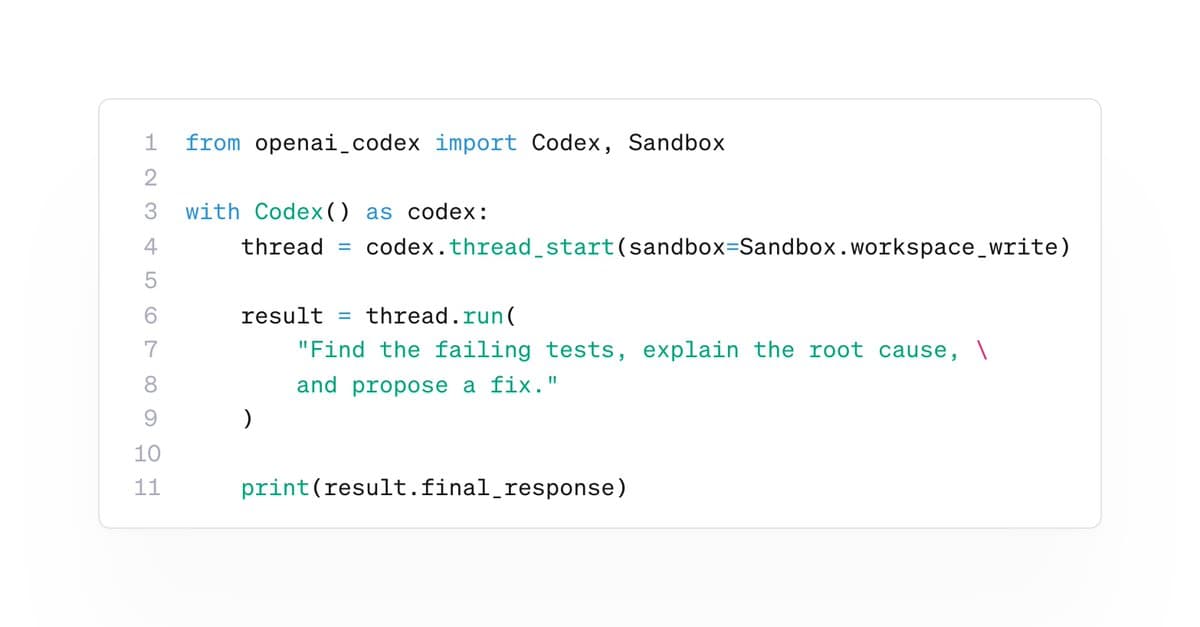
- The rest of the rollout matters too: reach_vb's SDK post announced a Python Codex SDK, while OpenAI's AWS post and the Bedrock setup docs added AWS-routed Codex workflows with AWS-native auth.
You can read the main launch post, the Sites docs, and the separate knowledge work report. The weirdly specific bits live lower down: Sites stores its project linkage in .openai/hosting.json in the docs, the launch set names tools from Snowflake to PitchBook, and the Bedrock path drops ChatGPT sign-in entirely in favor of IAM and Bedrock API keys.
Sites
OpenAI is turning Codex output into something closer to a deploy target. OpenAI's Sites launch post says Sites can turn plans, ideas, and work into interactive websites or apps shared by URL inside a workspace.
The official announcement says Sites starts in preview for Business and Enterprise, and the developer docs add the more operational details:
- Sites can create, save, deploy, and inspect websites, web apps, and games hosted by OpenAI.
- Every deployment URL is a production deployment.
- Enterprise workspaces need an admin to enable Sites through RBAC, while Business workspaces get it on by default.
- Access modes are
admins_only,workspace_all, orcustom. - Project linkage and storage bindings are stored in
.openai/hosting.json. - Persistent structured data uses D1, file storage uses R2, and the docs explicitly map those storage choices to product behavior.
- Existing projects have to build Cloudflare Worker-compatible ES module output.
That makes Sites feel less like an artifact viewer and more like a thin hosting layer bolted directly into the agent loop.
Plugins
The plugin story is bigger than six icons in a directory. OpenAI's plugin announcement says the new role-specific install flow gives Codex access to 62 apps and 110 skills across sales, analytics, creative work, design, and investing.
The launch post names six initial bundles:
- Data analytics
- Creative production
- Sales
- Product design
- Public equity investing
- Investment banking
It also spells out what those bundles actually wire in:
- Data analytics: Snowflake, Databricks Genie, Hex, Tableau.
- Creative production: Figma, Canva, Shutterstock, Picsart, Fal.
- Sales: Salesforce, HubSpot, Slack, Outreach, Clay, Rox, Actively.
- Investing: Moody's, Daloopa, Datasite, FactSet, LSEG, S&P, PitchBook, Hebbia.
OpenAI says teams can customize these bundles or build custom plugins, and the same post lists Corporate Finance, Private Equity Investing, Marketing Strategy, Strategy Consulting, and Legal as next in line. OpenAIDevs' Clay repost and OpenAIDevs' fal repost show how that ecosystem is already leaning on partner tools rather than only OpenAI-built actions.
Annotations
Annotations extend a workflow Codex already had for code into office-format output. testingcatalog's annotations post showed the interaction as selecting part of a document and asking Codex a question about just that slice.
The launch post says annotations previously worked on code, Markdown, and Codex-created websites, and now apply to documents, spreadsheets, and slides too. The examples are concrete:
- change a nav bar font in a site
- ask where a claim in an investment thesis came from
- relabel a chart on a slide
OpenAI's pitch is that the model should edit the selected region instead of regenerating the whole artifact. For teams using Codex to produce reports or decks, that is the difference between first draft generation and actual review workflow.
The 5 million user mix
The headline number is scale, but the more interesting number is who is showing up. TheRealAdamG's repost of OpenAINewsroom and TheRealAdamG's 5 million users post both center the 5 million weekly active user milestone.
OpenAI's knowledge work report adds the missing shape:
- weekly active users are up more than 6x since the desktop app launched in February
- knowledge workers are about 20% of users
- that cohort is growing more than 3x faster than developers
- the fastest-growing tasks are data analysis, research, and knowledge artifact creation
- users are increasingly running multiple Codex tasks in parallel
jxnlco's takeaways thread framed that shift bluntly: Codex is being positioned for knowledge work, not only coding. btibor91's event summary adds one roadmap note that did not make the core product tweets, namely that OpenAI said Codex is coming into ChatGPT in the next few weeks.
SDK and AWS surfaces
The quiet expansion happened outside the flashy UI demos. reach_vb's SDK post announced pip install openai-codex, and the SDK docs say the programmatic surface now spans both a TypeScript library and a Python SDK for controlling threads, turns, and sandbox access.
The same weekend, OpenAI's AWS availability post made Codex generally available on Amazon Bedrock. The Bedrock docs fill in the catch:
- Codex runs locally, but model requests go to Bedrock's OpenAI-compatible Responses API.
- Auth uses Bedrock API keys or AWS IAM credentials, not ChatGPT sign-in or
OPENAI_API_KEY. - Local CLI, desktop, and IDE workflows are supported.
- Hosted plugins, cloud agents, image generation, and voice transcription are not.
- Fast Mode is unavailable on the Bedrock path.
That gives OpenAI two very different expansion vectors at once: one into non-developer workspace software through Sites and plugins, another into enterprise-controlled infra through SDKs and Bedrock routing.