
Pi ecosystem adds /goal tasks, acceptance gates, and Lovely Dev Tools
Three independent Pi builders shipped a goal runner, contract-style subagent acceptance gates, and a new Lovely Dev Tools extension in the same window. That gives Pi users more deterministic long-running loops and cleaner local tool interfaces without starting from an empty harness.
TL;DR
- mattlam_'s /goal post introduced a Pi extension that lets agents set and clear their own long-running goal prompt, expose token usage, and pause or resume a run, with the code linked in mattlam_'s GitHub follow-up.
- nicopreme's v0.26 update added contract-style acceptance gates to
pi-subagents, so a run only counts as done when it satisfies criteria, evidence, and validation, and nicopreme's pre-BBQ update says every subagent can now keep self-reviewing until the contract is met or a loop cap is hit. - badlogicgames' Lovely Dev Tools post pointed Pi users to a new extension focused on cleaner data and cleaner tool interfaces, which fits the same week's push toward more structured harnesses.
- Core Pi moved too: the Pi v0.77.0 changelog repost says Pi added Claude Opus 4.8 support and a new
--exclude-toolsflag during the same window.
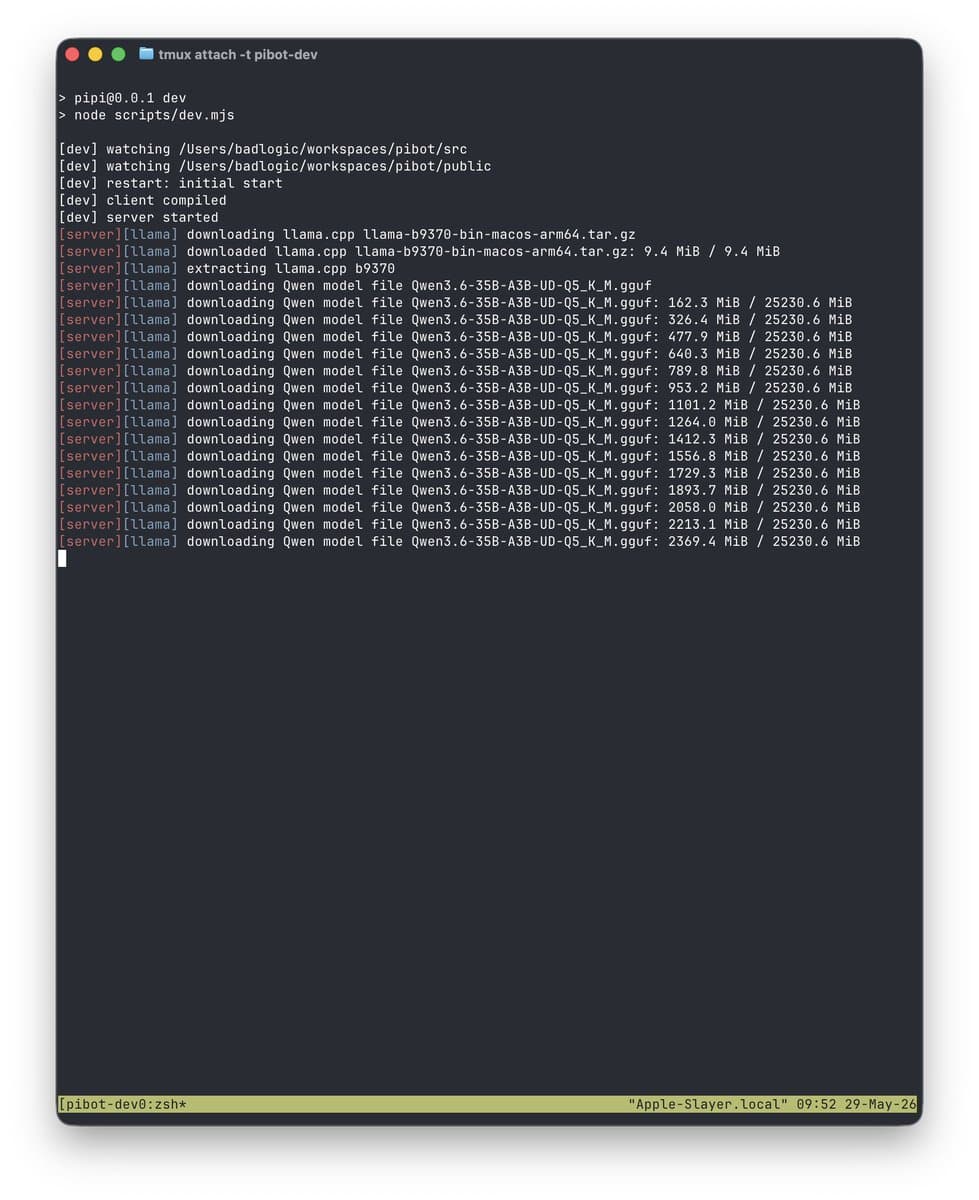
You can grab the /goal repo, inspect the pi-subagents package, and browse the Lovely Dev Tools extension source. The odd extra reveal is that badlogicgames' pibot update also pushed a fully local voice stack into the same ecosystem conversation, with Parakeet for STT, qwen3-tts for TTS, and Qwen 3.6 via llama.cpp.
/goal
The new /goal extension turns a one-shot prompt into a persistent task contract. According to mattlam_'s feature list, the agent can set its own detailed goal prompt, clear it with /goal clear, inspect token usage, and pause or resume the run.
The install path came one post later, when mattlam_'s GitHub link pointed to the public repo and package. That makes /goal a reusable harness add-on, not just a local workflow hack.
Acceptance gates
pi-subagents is moving in the same direction, but with stricter completion rules. In nicopreme's v0.26 update, a subagent run can require:
- criteria
- evidence
- validation
That same update adds dynamic fanout, which nicopreme's example sketches as one scout finding targets, N parallel reviewers checking them, and one worker consuming the collected results.
The follow-up is the important part. nicopreme's pre-BBQ update says every Pi subagent can now run like /goal in Codex, with criteria, evidence, verification, and constraints supplied up front, then self-review and repair until the contract passes or the loop cap trips.
Lovely Dev Tools
The Lovely Dev Tools extension is the smallest reveal in the batch, but it points at the same design pressure: make tool calls easier for models to use correctly. badlogicgames' post frames it around clean data and tool interfaces that work better for LLMs.
That lands next to the orchestration work, not apart from it. While /goal and pi-subagents tighten the control loop, Lovely Dev Tools appears aimed at tightening the tool surface those loops depend on.
Local voice stack
One more Pi-side build shipped in parallel: pibot now runs fully local. According to badlogicgames' pibot update, the stack uses Parakeet for speech-to-text, qwen3-tts for text-to-speech, and Qwen 3.6 as the local multimodal model through llama.cpp.
badlogicgames' pibot update also says the STT and TTS inference engines were ported from Python to Rust and mlx-c, leaving the stack with zero Python dependencies. That is a separate thread from /goal and acceptance gates, but it shows the same ecosystem turning Pi into a more opinionated local harness, not just a thin shell around model calls.