
Repo Prompt opens Community Edition on GitHub with MCP-first multi-agent orchestration
Repo Prompt Community Edition went live on GitHub as an open-source orchestration app built around MCP-first agent control, while the legacy project was archived separately. It matters because builders now get a public harness that can swap underlying CLI agents without rewriting the control surface.
TL;DR
- pvncher's launch thread introduced RepoPrompt Community Edition, an Apache-2.0 macOS app that packages context engineering and agent orchestration around a bundled MCP server.
- According to the launch thread, RepoPrompt flipped its harness design so the MCP server becomes the primary control surface and underlying CLI agents can be swapped underneath it.
- pvncher's follow-up separated the old app into an archived RepoPrompt Classic, while the Classic README says CE removed substantial legacy code, especially IDE Mode, to scale more parallel agents.
- The RepoPrompt CE README says the app builds reviewable context from files, CodeMaps, repo structure, and Git diffs, then hands that context to AI tools and CLI agents, which is a much more opinionated open-source baseline than a plain agent wrapper.
You can jump straight to the main repo, read the provider plugin architecture, and check the worktree docs for the practical bit: RepoPrompt can spin up app-managed worktrees and copy ignored local files like .env.local into them. pvncher's pre-launch post also says the core is being split out for cross-platform composition, even though CE itself is still macOS-only.
Community Edition
The public repo positions CE as a native macOS workspace for context engineering, not just a chat shell. The README says it assembles reviewable context from repository structure, selected files, CodeMaps, and diffs before handing work off to models or CLI agents.
That same README lists multi-root workspaces, reviewable handoffs, and a Context Builder that lets an agent explore a repo and curate context within a token budget. pvncher's thread frames that reset as a deliberate cut away from Repo Prompt's older copy-paste identity.
MCP-first harness
The key architectural claim in pvncher's launch thread is that RepoPrompt inverted the usual harness design so the MCP server is the primary agent, while the underlying CLI harness can be swapped. The repo docs back that up with a provider boundary: the provider plugin doc says the app keeps a small provider-neutral runtime contract and pushes provider-specific logic into pluggable packages.
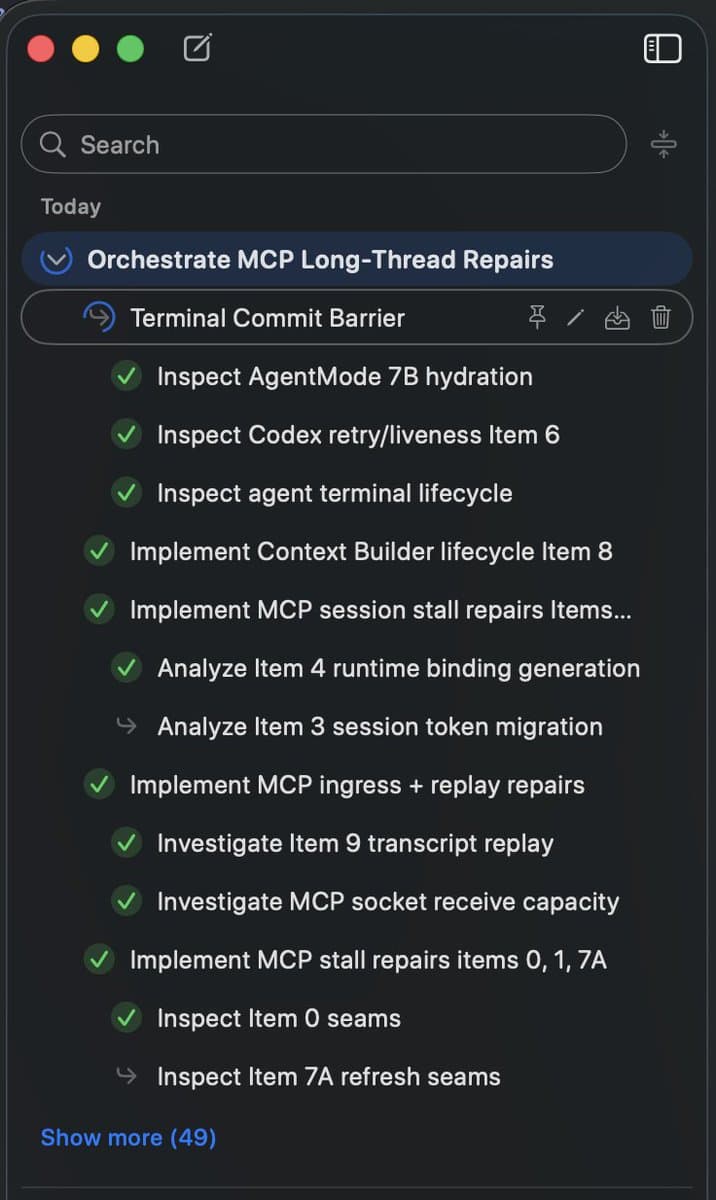
Right now the first plugin is a Claude-compatible provider that covers Claude Code and other Claude-style runtimes, according to the same provider plugin doc. pvncher's orchestration demo adds a more concrete picture of the UI model: sub-agents appear as threads you can reopen and steer.
Classic archive
The old codebase did not disappear, it moved into RepoPrompt Classic as an archived reference. The Classic README says the archive is meant for learning and forks, while ongoing open-source development moves to CE.
The sharper detail is in that same Classic README: CE removed substantial legacy code, especially around IDE Mode, to get rid of main-thread bottlenecks and scale many parallel agents. That makes the open-source release less of a source dump and more of a rewrite around a narrower agent workflow.
Worktrees and cross-platform core
RepoPrompt's docs get unusually concrete about how it wants parallel agent work to run. The worktrees guide says the app can create Git worktrees for MCP tools and Agent Mode, and a .worktreeinclude file can copy ignored local files into each new worktree so agents inherit the same local setup.
The contributor guide adds another layer: AGENTS.md describes a coordinated developer daemon that serializes builds, launches, and tests so concurrent agents do not trample each other. pvncher's pre-launch post says the core is being split out to support more composable cross-platform apps later, but the shipping Community Edition still targets macOS.