
Academy limits 2026 Oscars eligibility to films with dominant human authorship
The Academy says AI-assisted films remain eligible for the 2026 Oscars only when human creative authorship clearly drives the work. Document where AI entered the pipeline before festival, guild, or awards submissions.
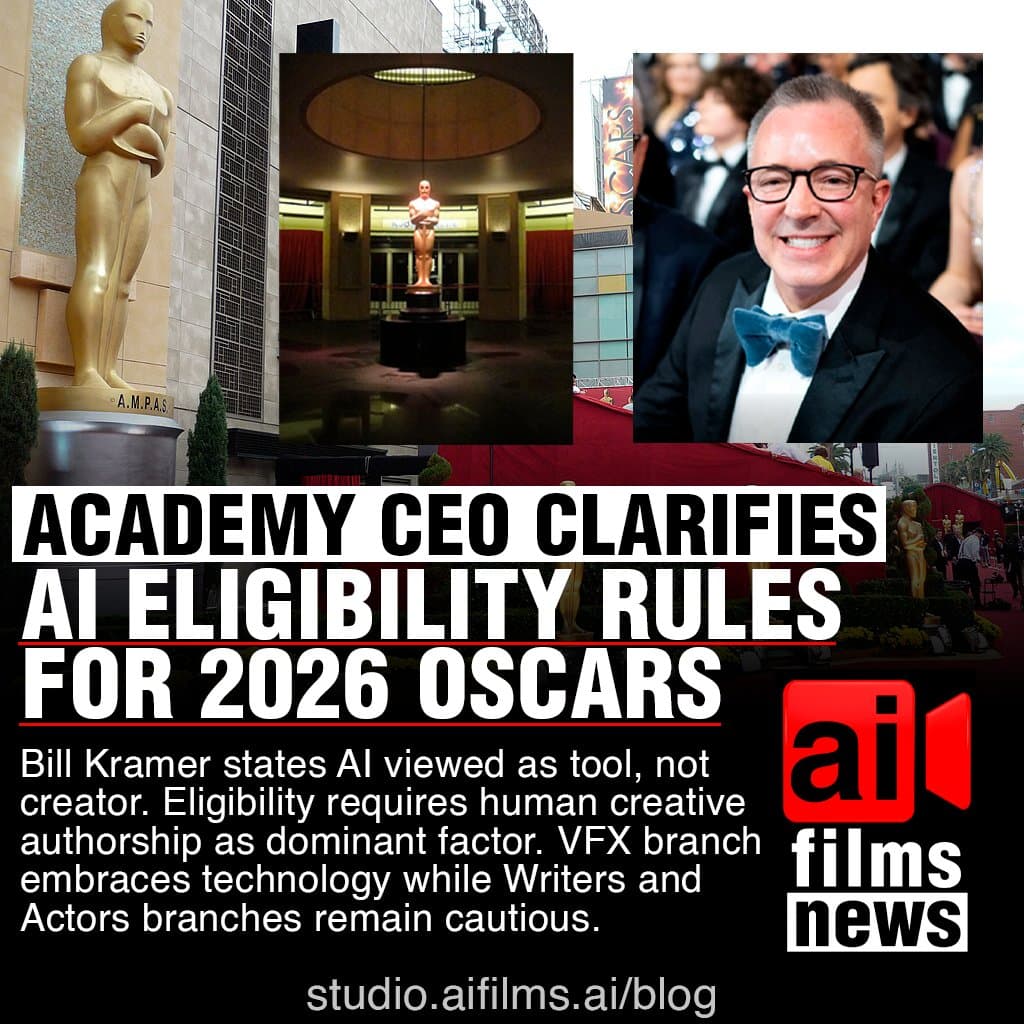
TL;DR
- The Academy's current line for the 2026 Oscars is that AI-assisted films can still qualify if human creative authorship remains the dominant force, according to Academy rules thread.
- Bill Kramer said branch-level judgment still matters: VFX members are generally more open to AI, while writers and actors remain more cautious, in the Guardian summary.
- That standard lands as AI is already embedded in film pipelines for previs, VFX enhancement, translation, and post, as Hollywood strategy coverage lays out.
- For awards-bound projects, the practical question is no longer whether AI appeared anywhere in the workflow, but whether teams can show that human decisions shaped the finished work under the Academy's review standard.
What the Academy is actually judging
The Academy is not treating AI use as an automatic disqualifier. Bill Kramer said the organization still views AI as a tool, not a creator, and that eligibility turns on whether human authorship clearly drives the final film, as described in the Academy rules thread. That keeps the April 2025 position in place rather than creating a new blanket ban.
The important detail for filmmakers is that this is a review standard, not a single technical threshold. Hollywood strategy coverage notes that AI already shows up across routine production tasks, from shot planning to post. Under the Academy's approach, those uses can stay inside the rules if the creative control, authorship, and final choices remain human-led.
Why documentation now matters
Because the Academy says each branch will assess work inside its own discipline, productions using AI will need a clean record of where models entered the pipeline and what humans changed, approved, or replaced. That matters differently for a VFX shot, a translated performance, or an AI-assisted post workflow, especially when Kramer's comments say consensus still varies sharply by branch.
This is also why the broader Hollywood debate has shifted from abstract fear to process design. the reporting on studio workflows describes an industry already using generative tools behind the scenes while trying to define guardrails around likeness, authorship, and consent. For festival, guild, and awards submissions, that makes provenance part of the creative paperwork, not just a legal afterthought.