
Agency ad stack integrates competitor scraping and direct Meta publishing in 5-step workflows
Creators shared systems that scrape competitor ads, build inspiration vaults, generate static and video variants, and publish them straight into Meta campaigns. The workflows matter because they turn marketing into a repeatable testing loop, while adjacent examples show the same stack can be pushed into deceptive fake-character product videos.
TL;DR
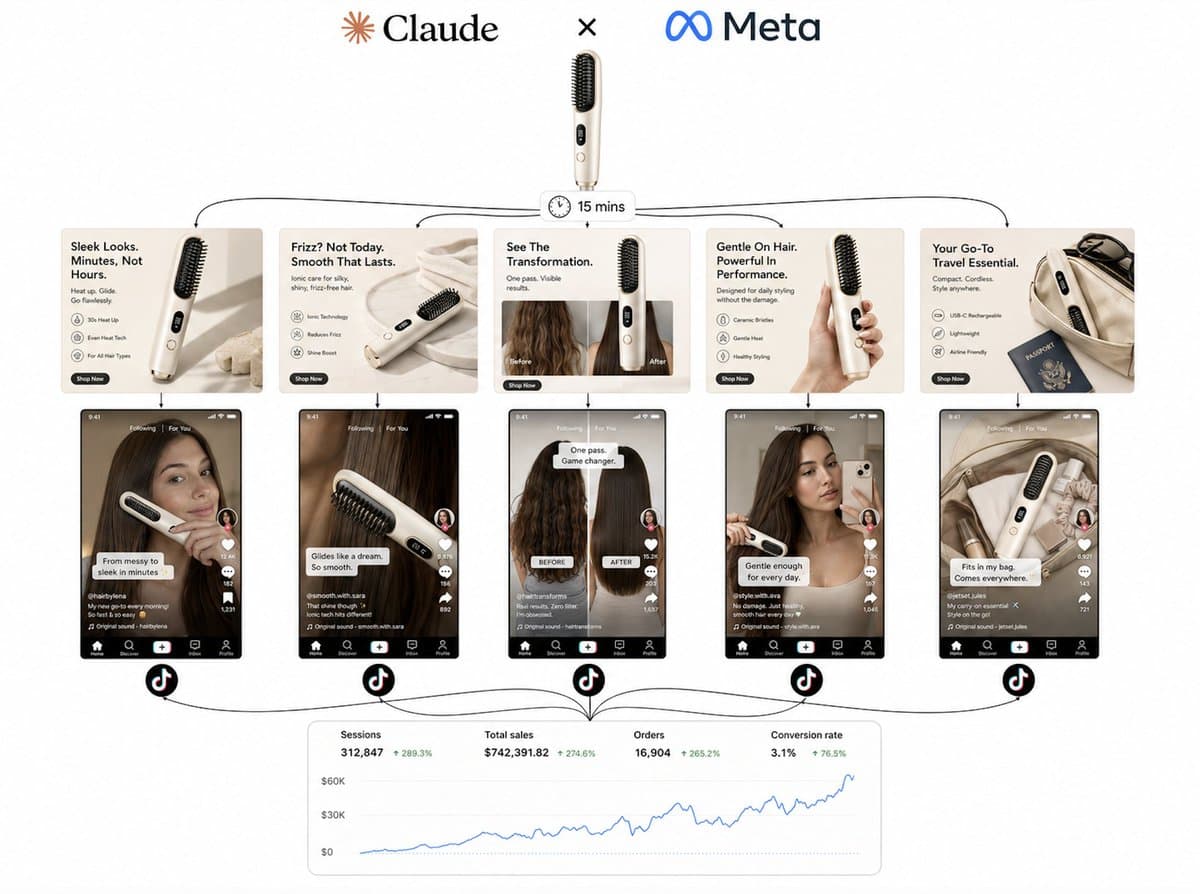
- moritzkremb's five-step demo shows a compact agency loop: scrape competitor ads, save references in an inspiration vault, generate static and video variants, push them into a Meta ad account, then spin new versions from the winners.
- The workflow in moritzkremb's agency automation thread splits customer-facing tasks from background automation, with proposal drafting and onboarding both kept behind a human review or slash-command step.
- NahFlo2n's hair-brush example and NahFlo2n's portable-fan example frame the creative upside clearly: one product turns into multiple buyer-angle tests instead of one hero asset.
- starks_arq's Rumble clip pushes the same stack into murkier territory, claiming dropshippers are using fake characters to rack up huge reach, while starks_arq's exact prompt post shows how detailed the synthetic "handmade" setup can get.
You can trace the research half of this stack to the Meta Ad Library, and the publishing half to Meta's Marketing API and Ad Creative docs. The interesting part in the tweets is not the plumbing alone. It is how quickly the same loop flips from angle generation and variant testing into fake workshop videos, synthetic founders, and product stories built to look native to the feed.
The five-step Meta loop
The cleanest version of the stack is the five-step list in moritzkremb's post. It maps almost one-to-one to the tooling Meta already exposes through the Meta Ad Library for ad research and the Marketing API for programmatic campaign management.
The steps are:
- Scrape competitor ads.
- Build an inspiration vault.
- Generate image and video ads.
- Connect to a Meta ad account.
- Optimize winners, generate variants, and publish them.
NahFlo2n's hair-brush example and the earlier portable-fan version add the creative logic sitting inside that loop. One product becomes a batch of hooks, buying reasons, and platform-native treatments. Claude handles the angle mapping in both examples, while Meta becomes the testing surface.
The agency automations around it
The longer thread in moritzkremb's breakdown makes the stack look less like one giant prompt and more like a set of narrow routines attached to business triggers. His five examples are:
- Pre-call video reminders that read calendar events, pull CRM context, and draft a personalized recording script.
- Auto proposals that read Fathom transcripts and draft a Notion proposal, with a human approval step before anything customer-facing goes out.
- Sales call reviews that score calls against the CLOSER framework and pull supporting quotes.
- Client onboarding triggered by a slash command that creates folders and a roadmap page.
- Agency metrics that sync CRM and Stripe data into a monthly sheet.
His summary line in the same thread is the useful structural detail: build a skill for the logic, then wrap a routine around it for the trigger. That is a better description of the current agency-ad stack than "full automation," because the visible wins here come from stitching small systems together.
For direct implementation, moritzkremb's follow-up link post points readers to his site.
Fake characters and the handmade prompt
The adjacent use case is uglier. In starks_arq's post, he claims dropshippers are using fake characters to sell products at massive scale, including one account that allegedly hit 50 million views in seven days.
The notable evidence is not the headline claim. It is the prompt detail in starks_arq's follow-up, which specifies the actor image, the finished resin trophy, a locked-off phone camera, garage clutter, work-lamp lighting, dust, grain, and the exact emotional beat of a "quiet, proud, tired smile." That is a useful snapshot of where these ad workflows are heading: less polished brand creative, more synthetic footage engineered to read as casual proof.
Meta's own ad systems make large-scale publishing possible through the Marketing API, but the tweets here show the creative shift more clearly than the docs do. The same generation pipeline that makes five fast ad variants also makes a fake maker video feel native enough to test in the feed.