
Artlist Studio launches AI shot builder with reusable characters and locations
Artlist Studio debuted as a web video tool for directing cast, location, lighting, camera, and motion in one workspace. The launch targets spec ads, narrative scenes, and post fixes that need consistent cinematic assets without live production.
TL;DR
- Artlist Studio debuted as a web tool for building a cinematic shot by directly setting cast, location, lighting, camera, and motion, according to chrisfirst's launch post and chrisfirst's feature list.
- The launch pitch is speed plus control: chrisfirst's workflow note says creators can explore directions, refine scenes in real time, and keep iterating without restarting from scratch, while chrisfirst's control demo adds lens, framing, and movement controls.
- chrisfirst's use-case post frames the tool around work that usually needs a physical production setup, including spec commercials, narrative scenes, and shots that would be too expensive or impossible to film conventionally.
- Consistency is one of the clearest product hooks, because chrisfirst's post on reusable assets says creators can reuse characters and locations across campaigns, episodic work, and brand worlds.
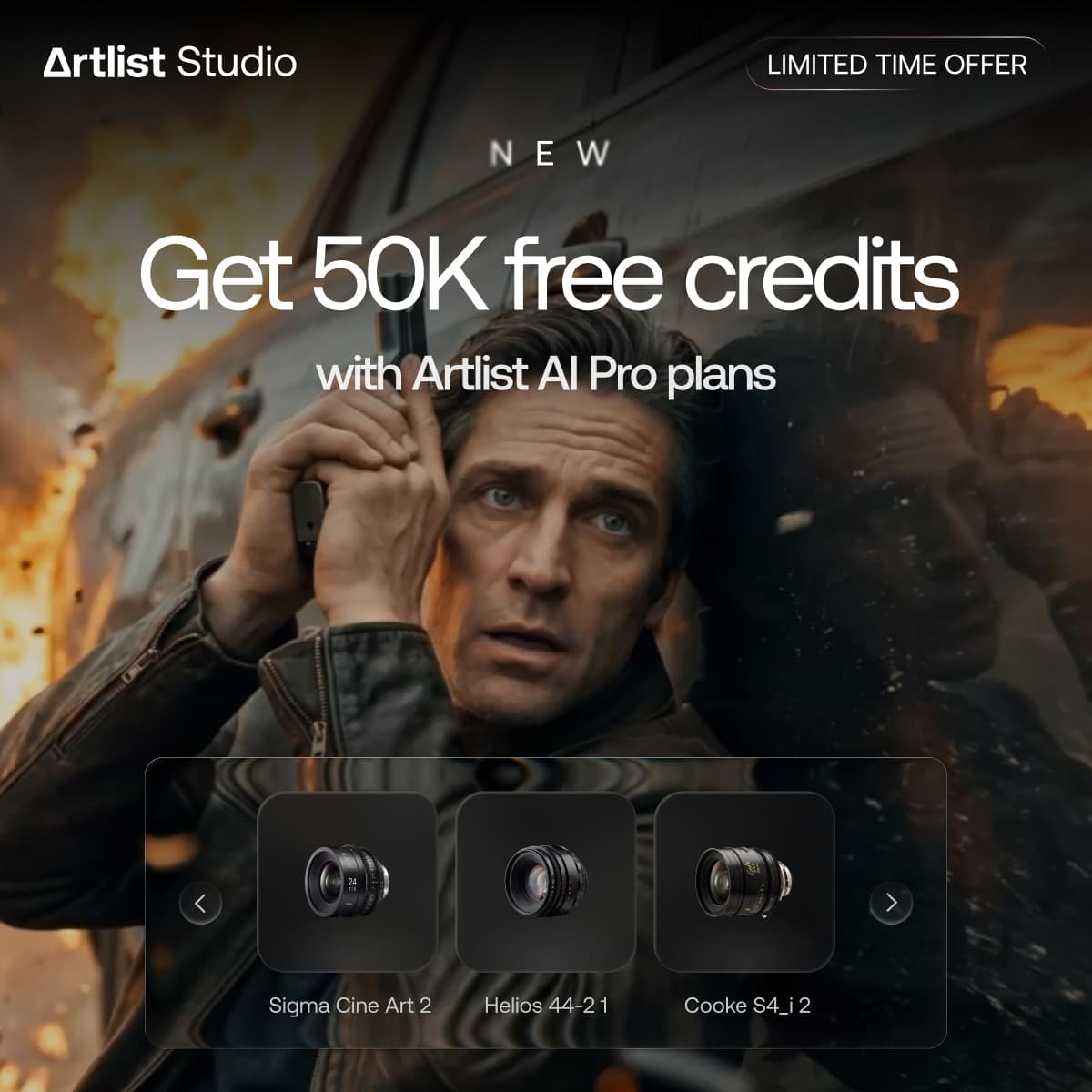
- Access launched with an Artlist AI Pro promo, and chrisfirst's thread says new signups get 50,000 free credits.
You can watch the launch reel in chrisfirst's thread, jump straight to the control demo, and the most interesting promise is not raw generation quality but continuity: the reusable character and location post positions Artlist Studio as a way to keep the same cast and environments alive across a longer project.
Shot controls
Artlist Studio's launch framing is unusually specific. Instead of selling a generic text-to-video box, chrisfirst's feature list breaks the product into five shot-building controls: cast, location, lighting, camera, and motion.
That matters because the rest of the thread keeps describing the tool like a director's workspace. chrisfirst's control demo adds characters, environments, framing, lens, lighting, and movement as editable levers, which makes the product read closer to virtual production tooling than a one-prompt generator.
- Cast
- Location
- Lighting
- Camera
- Motion
- Framing
- Lens
- Movement
Spec ads and post fixes
The launch examples are broad, but they cluster around three concrete jobs. chrisfirst's use-case post points to spec commercials, cinematic narrative series, and shots that were previously too expensive or impossible to film.
The tail end of the full thread adds a post-production angle: storyboarding to final shot, plus fixing missing footage in post. That gives the product a wider lane than pure ideation tools. It is being pitched for both pre-production exploration and gap-filling once a cut already exists.
Real-time iteration
The workflow claim is speed without reset. chrisfirst's workflow note says creators can explore directions quickly, refine scenes in real time, and keep iterating without starting over each time.
That is a familiar pain point in AI video tools. Each regeneration often blows away the shot logic you wanted to preserve. Artlist's pitch, at least in the launch thread, is that more of the scene stays editable as a directed setup instead of collapsing into one disposable prompt.
Reusable characters and locations
The strongest creator-facing feature in the launch is continuity. chrisfirst's post on reusable assets says Artlist Studio lets users build reusable characters and locations that stay consistent across campaigns, episodic content, or brand worlds.
For creative teams, that turns the tool from a one-off shot machine into something closer to an asset system. The thread's "no reshoots needed" phrasing is marketing copy, but the underlying idea is concrete: if the same character and set can persist, the tool becomes much more useful for serialized work.
Access and credits
The launch also bundled a straightforward acquisition push. chrisfirst's thread says new Artlist AI Pro signups get 50,000 free credits, alongside a giveaway for four memberships.
There is no pricing breakdown or public feature matrix in the evidence pool, so the clearest verified availability detail is the credit offer tied to the new plan. That makes access part of the story, not just a footnote, because the launch was packaged as both a product debut and a conversion funnel.