
Anthropic reportedly cuts Claude Code system prompt by 80%
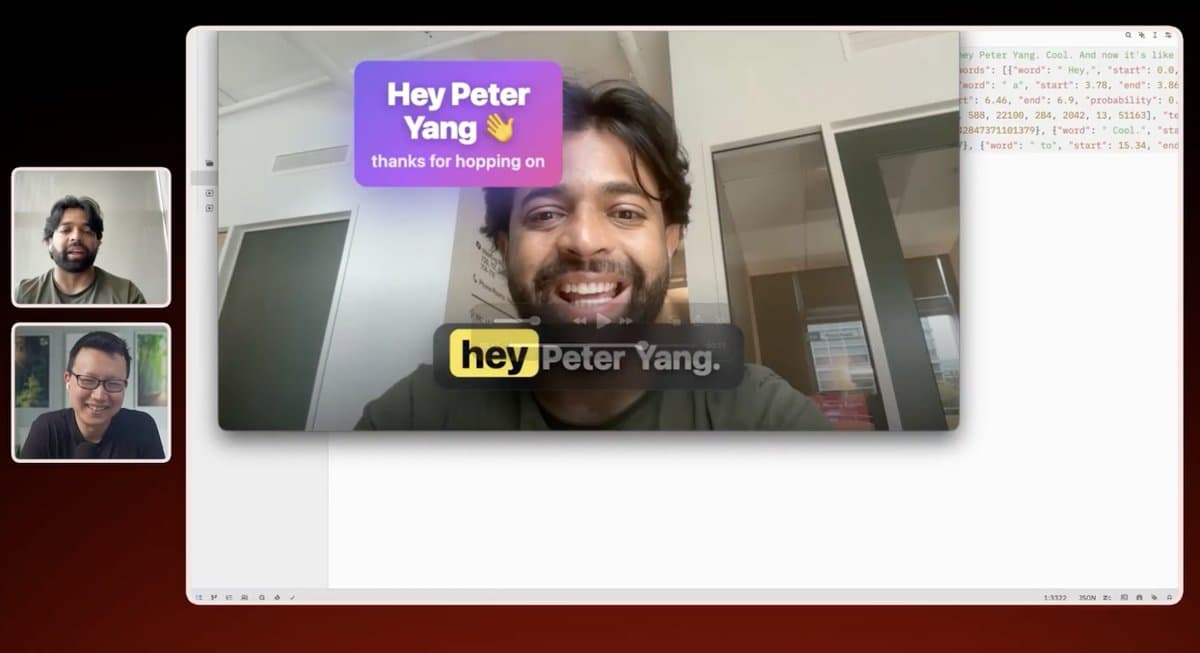
Peter Yang shared Thariq’s explanation that Anthropic cut Claude Code’s system prompt by 80% as newer models need fewer examples and more room to reason. The same discussion covered /loop, /goal, workflows, and long-running agents.
TL;DR
- Claude Code’s system prompt was cut by about 80% because newer models need fewer constraints and examples, according to petergyang's 80% clip.
- The long-run toolkit in the episode was /loop, /goal, and workflows; petergyang's episode post says all three are meant to keep agents working for longer stretches.
- /goal is the cleanest primitive: a separate checker decides whether the completion condition has been met, a mechanism Anthropic documents in its /goal guide.
- The workflow lesson for creators is shifting from one prompt to reusable maps, with shannholmberg's graph turning an SEO process into loops, checkpoints, and repeatable routes.
- The human layer did not disappear: petergyang's quiz note shows Thariq asking Claude for an HTML report and a quiz so he understands the changes.
The full episode has a live Claude Code launch-video demo, plus Thariq Shihipar, who works on the Claude Code team, explaining why lighter system prompts are now working better. Claude’s own loop engineering post defines four loop types, and the /goal docs hide the mechanism that matters: a small fast model checks the exit condition after every turn. The dynamic workflows docs go wider, with Claude writing a JavaScript orchestration script that spawns many subagents while the main session stays responsive.
The 80% prompt cut
Thariq’s explanation was blunt: smarter models need “less direction, fewer constraints, and fewer examples,” as quoted in petergyang's clip. Examples can pin the model to the shape of the example instead of letting it solve more freely.
Peter Yang’s Creator Economy recap says the episode covered the system-prompt cut, /goal, Slack-managed agent teams, HTML planning artifacts, and a polished video created with Claude. The earlier Field Guide to Fable talk carried the same 80% claim and framed it as part of a broader shift toward smaller prompts for more capable models.
Thariq said he is working on a post about applying those lessons to skills and system prompts, according to trq212's follow-up. That is the follow-up prompt nerds actually want.
/goal, /loop, and schedule
A loop is an agent repeating cycles of work until a stop condition is met, according to Claude’s loop engineering post. The post sorts Claude Code loops by trigger, stop condition, primitive, and task type:
- Turn-based loops: started by a user prompt; Claude judges whether it is done or needs more context.
- Goal-based loops: started in real time with
/goal; an evaluator checks whether the goal is met or a turn cap has been reached. - Time-based loops: started by
/loopor/schedule; useful for recurring work or external systems like CI and PR reviews. - Proactive loops: triggered by an event or schedule, with no human present in real time.
The /goal docs describe the important split: after each turn, a small fast model checks whether the completion condition holds. If it does not, Claude starts another turn instead of handing control back.
Yang’s recap says Thariq used /goal for video creation only when the finish line was verifiable, such as a rendered video, while vague goals like “build me a great game” performed poorly.
Dynamic workflows
Claude’s dynamic workflows docs define a workflow as a JavaScript script that Claude writes for the task and a runtime executes in the background. The same docs name codebase audits, 500-file migrations, cross-checked research, and multi-angle planning as workflow-shaped jobs.
The official parallel agents guide separates the parallelism stack:
- Subagents: delegated workers inside one session.
- Agent view: a screen for dispatching and monitoring background sessions.
- Agent teams: multiple agents working together.
- Dynamic workflows: Claude coordinates the group through a script it can read and rerun.
Fabian Stelzer’s timeline puts “orchestration workflow graphs around loops” as the next layer after agent loops, according to fabianstelzer's loop stack. Christmas come early for coding agent nerds.
Graphs around loops
Shann Holmberg translated the loop-vs-graph split into a marketing workflow. In shannholmberg's graph, the difference is who decides the path: the agent inside a loop, the human designer inside a graph.
For an SEO article, his loop is:
- You set the goal, brief, and bar.
- The agent drafts the article.
- The agent reads the draft against the brief.
- The agent rewrites weak parts.
- The loop continues until the draft clears the bar.
His graph adds fixed routes and checkpoints:
- audit rankings and competitors
- decide whether a page already ranks
- draft a new article or edit the ranking page
- assemble and optimize on-page work
- score against a rubric
- add internal links
- run an on-page audit
- publish to the CMS
Holmberg’s agency map uses three sessions in a fixed order: research, landing page, and content. The content session contains its own critic loop that scores drafts against a rubric before work moves on.
HTML reports and quizzes
Peter Yang’s pre-episode note says Thariq sometimes asks Claude to generate an HTML report explaining what changed, then add a quiz at the bottom that he has to pass, as shown in petergyang's quiz note. The method turns AI output into a study artifact instead of a black box.
The Creator Economy recap says Thariq also planned by having Claude explain how voice transcription tools like Whisper could fail before building the one-shot video workflow. The pattern is planning by unknowns, not planning by vibes.
Voice prompts and parallel sessions
Shann Holmberg’s setup combines three pieces: dictate and transcribe voice 70% of the time, use CMUX or a similar app to run multiple agents, and run long prompts through /goal and loops. The attached Wispr Flow screenshot turns his dictation history into a weekly “Voice Profile.”
Yang wanted the same direction pushed further: walking around outside while talking to agents “on the phone,” then getting status updates by voice, according to petergyang's voice-agent wish. The input method is becoming part of the agent interface, not just a faster keyboard.
Adversarial evaluators
Aakash Gupta described a hackathon where the winning project was an agent built to attack another agent. In aakashgupta's hackathon thread, Jyothi spent almost a day configuring an evaluator, pointed it at a real production codebase, and integrated it into production.
Anthropic’s Building Effective AI Agents guide calls the related pattern evaluator-optimizer: one LLM generates while another evaluates and feeds back in a loop. The guide says it fits when the evaluation criteria are clear and iterative refinement measurably improves the work.
Gupta’s second example moves the evaluator idea into org context. The Claude Code workflow in the org-map demo uses meeting transcripts plus internal relationship data to infer who should be treated as an ally and who needs to hear sensitive news first.