
Composio opens Agent Orchestrator with ao spawn, 30 parallel agents, and isolated git worktrees
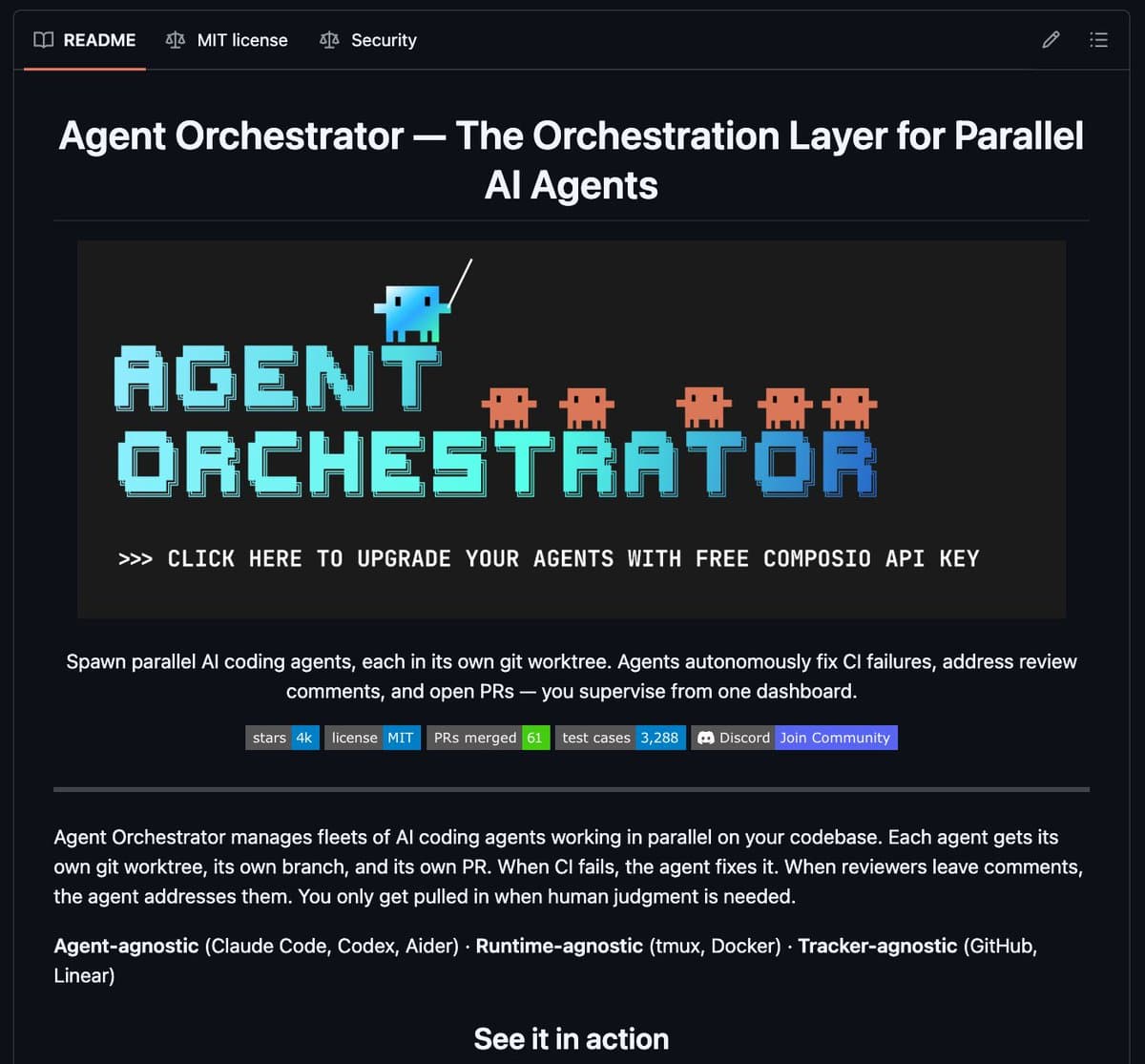
Composio open-sourced Agent Orchestrator, which spawns parallel coding agents with separate worktrees, PRs, CI feedback loops, and a local dashboard. It matters for vibe coders building creative tools, because it cuts the branch and review babysitting that slows prototyping.
TL;DR
- Composio has open-sourced Agent Orchestrator, and the launch thread frames it as a way to run up to 30 coding agents in parallel on one codebase.
- The core workflow in the repo summary gives each agent its own git worktree, branch, and pull request, which avoids the usual branch collisions when multiple agents touch the same project.
- According to the launch thread, the system also loops CI logs and code review comments back to the agent so fixes can happen without a human manually relaying context.
- For creative dev teams building prototypes, the GitHub repo positions this less as a new model and more as orchestration: one command launches the agent run, while a local dashboard tracks what needs human judgment.
What shipped
Agent Orchestrator is an open-source coordination layer for coding agents, not another standalone assistant. In Composio's launch thread, the headline features are parallel Claude Code, Codex, or Aider sessions, isolated git worktrees, separate branches and PRs, automatic CI remediation, automatic handling of reviewer comments, and a dashboard running locally at localhost:3000.
The linked GitHub repository adds the infrastructure detail missing from the thread: the system is designed to be agent-agnostic and runtime-agnostic, with support described for tmux, Docker, and Kubernetes, plus tracker and notifier slots for services like GitHub, Linear, Slack, and webhooks. That makes the interesting part the handoff logic around agents, not just the agents themselves.
Why this matters for creative tool builders
For people vibe-coding creative apps, the bottleneck is often coordination overhead rather than code generation. The launch post describes a workflow where ao spawn my-project 123 creates an isolated agent workspace, opens a PR, feeds failing CI logs back into the same loop, and escalates only when human judgment is needed.
That is useful when a prototype has many small moving pieces at once: a frontend polish pass, an export bug, a Stripe integration, a captioning fix, or a deploy script cleanup. Instead of one agent session serializing every task, the repo summary suggests separate agents can analyze, test, patch, and respond to review comments in parallel while staying sandboxed from each other.
The caveat is that the evidence here comes from Composio's own materials, so the claims are strongest on architecture and intended workflow, not on independent benchmarks. Even so, one early reaction captures why this is landing: the novelty is the orchestration layer around existing coding agents, not a new base model.