
Framer opens AEO scanner for AI citation checks
Framer's AEO scanner went live as designers shared site scores, copy fixes, and a follow-up article on improving results. The tool matters because homepage wording now affects whether AI search systems quote and cite a site, not just how it ranks.
TL;DR
- Framer opened an AEO scanner, and tranmautritam's prompt to run your site turned it into a public score-sharing loop almost immediately.
- In tranmautritam's launch post, the framing was blunt: if Google's AI Mode is now the default, sites are competing to be quoted, not just clicked.
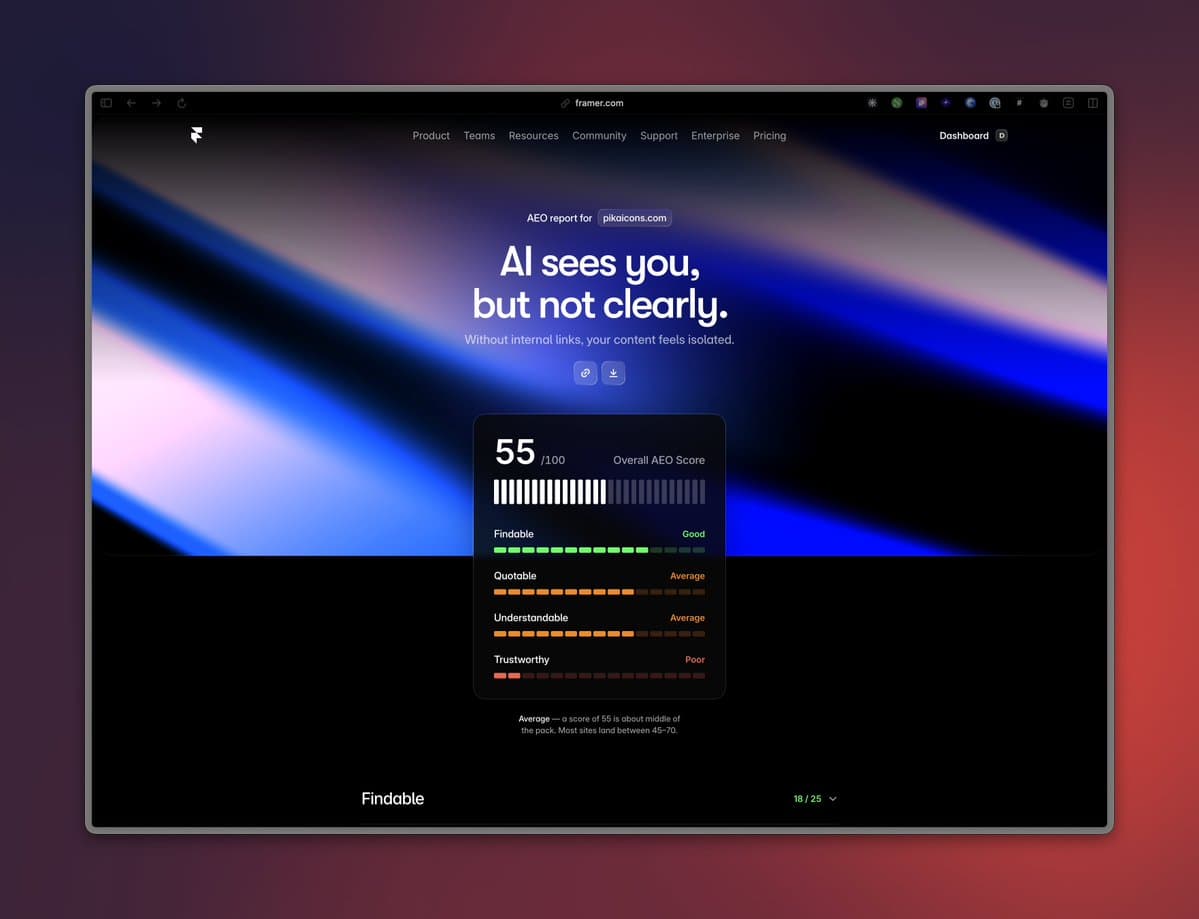
- Early examples from Ash_uxi's Pika test and Ash_uxi's follow-up showed the scanner scoring sites across findability, quotability, understandability, and trustworthiness, then listing concrete fixes.
- tranmautritam's homepage-copy tip reduced the first pass to a simple test: can a stranger tell what you do, where you are, and who it's for from the first three lines.
Google's AI-search shift is the premise in tranmautritam's post, but the more useful reveal is the workflow that followed. You can run the scanner, inspect a live before-and-after in Ash_uxi's thread, and see Framer publish a fixes article that 0xCharlota linked after the first round of public scores.
The scanner scores four citation signals
Framer's public scanner page is live at Framer AEO, and Ash_uxi's thread shows the product already returning a multi-part score instead of a single pass-fail result.
The visible buckets in that report were:
- Findability
- Quotability
- Understandability
- Trustworthiness
That breakdown matters because it shifts AEO from vague SEO-adjacent talk into a checklist. In Ash_uxi's follow-up, the scanner is described as listing the exact changes that make a site more readable by AI systems.
Homepage copy is the fast fix
The fastest advice in the evidence pool came from tranmautritam's copy test: read the first three lines of your homepage out loud and check whether a stranger could identify what you do, where you are, and who the site is for.
That lines up with the scanner's underlying premise. If the opening copy is stylish but non-literal, the site may still rank in search while giving AI systems weak language to quote or summarize, which is exactly how Ash_uxi's Pika example framed the problem.
Public score posts turned it into a design critique loop
The launch quickly turned into a social audit format. tranmautritam's call for scores asked people to run their own sites and post results, while Ash_uxi's example shared a 55 score, screenshots, and a claim that specific fixes pushed the score higher.
The interesting part is the format, not the dunking. Designers were not just posting numbers, they were posting the scanner's rationale, which makes the tool read more like an AI-readability review than a leaderboard.
Framer followed with a fixes article
By the end of the same day, 0xCharlota's article link post said Framer had published an article about the fixes. That suggests the scanner is not meant to stop at diagnosis.
The sequence across Ash_uxi's initial score, the follow-up showing recommended changes, and the article link is the real product story: scan the site, surface the weak spots, then route people into a rewrite pass built around clearer structure and clearer language.