
Fun-CineForge opens multi-speaker dubbing with temporal modality and a dataset pipeline
Tongyi Lab opened Fun-CineForge with multi-speaker dubbing, temporal modality for off-screen or blocked faces, and a full dataset-building pipeline. It matters for dialogue and localization workflows that break on hard cuts, overlapping speech, or missing lip cues.
TL;DR
- Tongyi Lab has opened Fun-CineForge as a multi-speaker AI dubbing system, with the core claim that it handles conversations rather than only single-speaker clips launch thread.
- The main technical shift is what the thread calls “temporal modality,” which tracks who is speaking, when they speak, and rhythm changes instead of relying only on visible lips temporal modality.
- That makes the release relevant for dialogue-heavy edits where faces disappear, shots cut quickly, or speakers overlap—failure cases the supporting demo thread spells out directly hard cases.
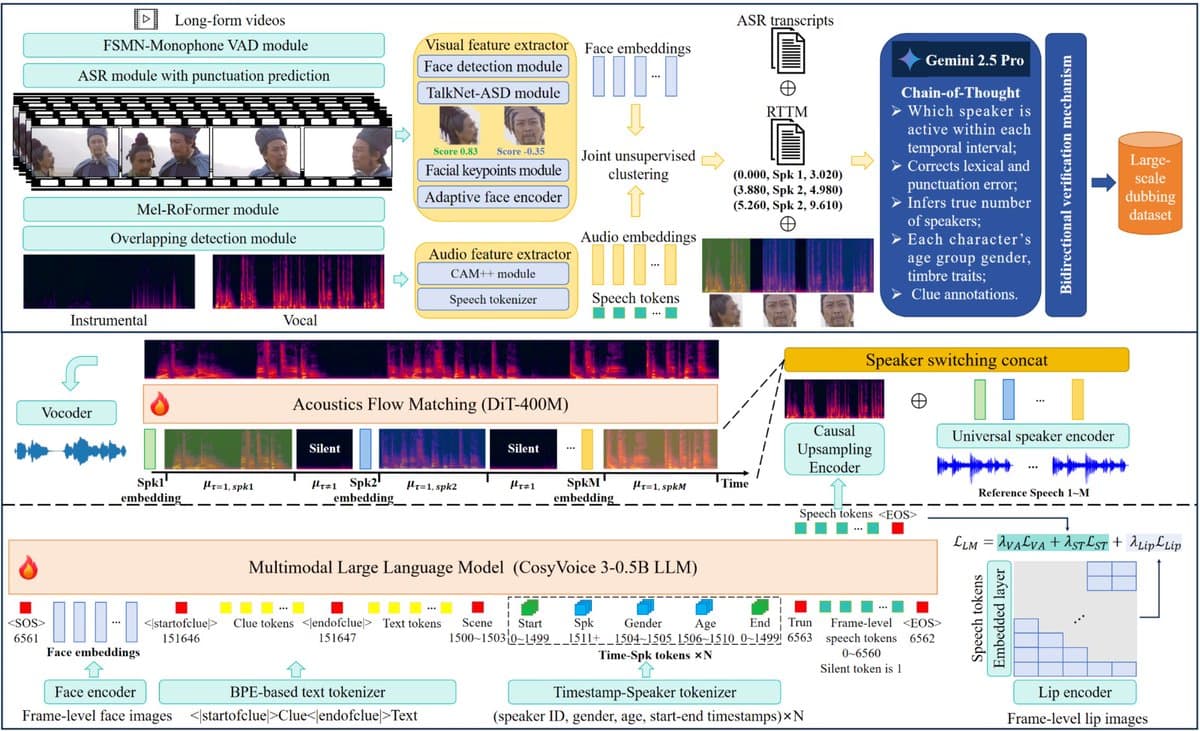
- Tongyi Lab also says it is open-sourcing an end-to-end dataset pipeline, turning raw video into structured multimodal training data rather than shipping only the model pipeline and links.
What shipped
Fun-CineForge is more than a dubbing checkpoint. The project thread points to both a GitHub repo and a project page, and says the release includes an end-to-end production pipeline for building dubbing datasets from raw video. That matters because the same thread says existing dubbing data is often small, error-prone, expensive to label, and skewed toward monologues rather than conversations.
On the modeling side, the release centers on “temporal modality.” In Tongyi Lab’s framing, the model is meant to infer speaker identity, timing, and rhythm even when faces are missing, which is the gap that usually breaks lip-driven dubbing systems temporal modality. The launch materials position it for narration, monologues, and multi-speaker dialogue rather than a single narrow use case.
Why this matters for dubbing workflows
The creative use case is not basic voice swap. The launch demo argues that multi-speaker dubbing gets hard when a character is off-screen, the camera cuts fast, faces are blocked or blurred, or several people talk in the same scene launch thread. Those are common conditions in film scenes, trailers, interviews, and localized social video, where editors cannot depend on clean frontal lip cues.
The second practical angle is data creation. Tongyi Lab says the pipeline automates raw-video-to-annotation prep, so teams can assemble their own multimodal dubbing datasets instead of waiting for a clean public corpus dataset pipeline. For creators working on dialogue localization, that makes this release look as much like infrastructure as a model drop.