
Google DeepMind adds SynthID verification to Search and Chrome
Google DeepMind said SynthID has watermarked more than 100 billion items and is being added to OpenAI and ElevenLabs models. It also plans verification surfaces in Search and Chrome, broadening provenance checks beyond single apps.
TL;DR
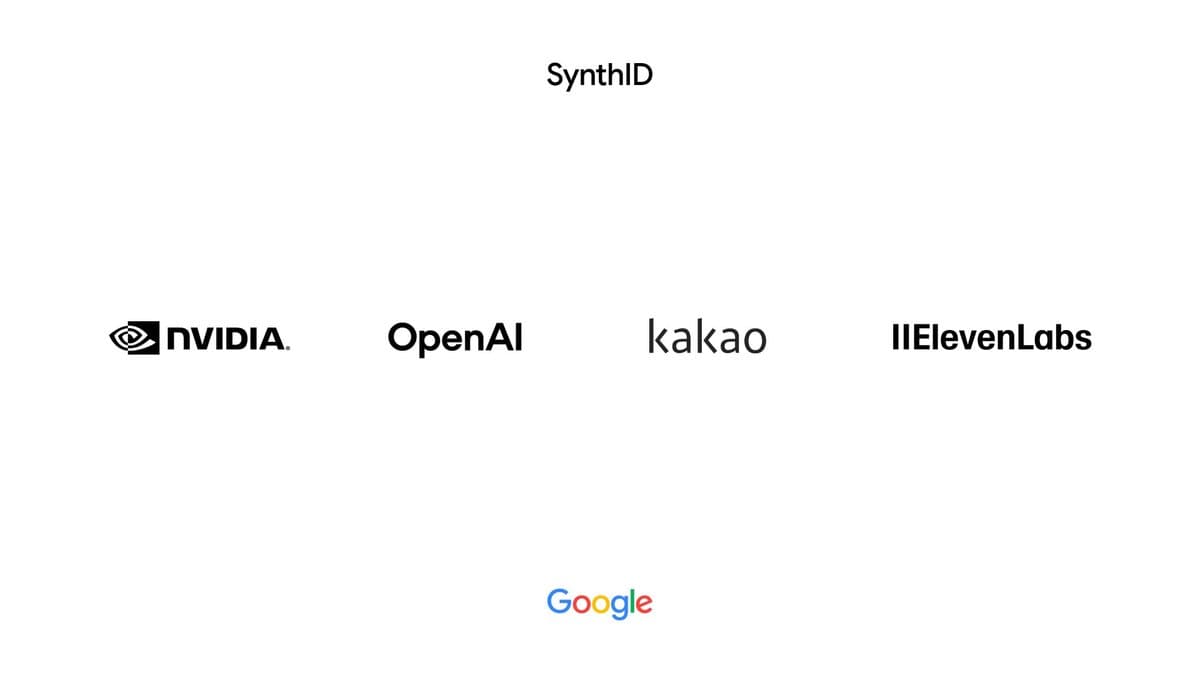
- GoogleDeepMind said SynthID has already watermarked more than 100 billion pieces of content, and that OpenAI, ElevenLabs, and Kakao are adding SynthID watermarking to their models.
- According to GoogleDeepMind's Search and Chrome post, Google is expanding SynthID verification beyond Gemini into Search and Chrome, with a plain-language check for whether media was made with AI.
- GoogleDeepMind also said SynthID verification inside Gemini has already been used more than 50 million times, which gives this rollout a real usage baseline instead of a lab demo.
- For video, GoogleDeepMind's Pixel post says Pixel will attach an edit trail from capture onward, covering media that was modified with AI and media edited without it.
- Community discussion in the main HN thread and the discussion roundup shows why this matters to creators: people are already treating provenance, watermarking, and C2PA metadata as part of practical image workflow, not just a policy debate.
You can see the partner rollout in GoogleDeepMind's announcement, the Search and Chrome verification flow in its product clip, and the Pixel video provenance push in its follow-up post. Meanwhile, one HN comment about C2PA viewers points to a parallel provenance stack already showing up in creator tools, and another comment on watermarking and artist consent captures the tension these systems are trying to answer.
Partner rollout
Google picked the biggest possible distribution move here: put its watermarking system inside rival models instead of keeping it as a Gemini-only badge.
According to GoogleDeepMind, the new partner list includes:
- OpenAI
- ElevenLabs
- Kakao
- NVIDIA, which Google frames as earlier momentum already underway
The number attached to that pitch is large enough to matter on its own. GoogleDeepMind said SynthID has already watermarked more than 100 billion pieces of content.
Search and Chrome verification
Google is also moving the verification layer into places people already inspect media, not just places where they generate it.
The product claim in GoogleDeepMind's Search and Chrome post breaks into three concrete points:
- SynthID verification in Gemini has been used 50 million-plus times
- Verification is expanding into Search
- Verification is expanding into Chrome
- The user-facing interaction is a direct query, "Is this made with AI?"
For creative teams, that shifts provenance from a hidden metadata layer toward a visible UI affordance. The check is being framed as something you ask for on demand, inside mainstream browsing surfaces.
Pixel's edit trail
The video side is slightly different. GoogleDeepMind's Pixel post is not about detecting outside media, it is about recording origin and modifications from the moment capture starts.
Google says the Pixel system will show how video was created and modified, whether AI was involved or not. That makes the provenance claim broader than "AI watermark present" and closer to a production history.
Provenance in creator workflows
The evidence pool here is thin on independent testing, but the community reaction is already specific about where provenance gets checked in practice.
ChatGPT Images 2.0
1k upvotes · 975 comments
Discussion around ChatGPT Images 2.0
1k upvotes · 975 comments
According to the main HN thread, creators were testing image quality, text rendering, editing consistency, and comic-style outputs while also asking whether AI-generated images would remain identifiable enough in real workflows. The discussion summary pulls out three recurring concerns:
- pricing and API surface changes around image generation
- hands-on prompt tests from practitioners
- watermarking and artist-consent concerns
One comment linked from the HN thread points to C2PA viewer behavior that already shows ChatGPT as the source for at least some generated images. That is a useful reminder that SynthID is entering an ecosystem where provenance standards and viewers already exist, and where creators are likely to compare systems based on whether the metadata survives actual tool chains.
What Google is actually shipping
Taken together, the rollout spans three different provenance layers, each aimed at a different point in the media pipeline.
- Model layer: GoogleDeepMind says outside model providers including OpenAI and ElevenLabs are adding SynthID watermarking.
- Verification layer: GoogleDeepMind says Search and Chrome will surface checks that let users ask whether media was AI-made.
- Capture layer: GoogleDeepMind says Pixel video will preserve a trail of origin and edits from recording onward.
That combination is broader than a watermark announcement on its own. The partner deals mark content at generation time, Search and Chrome surface checks at inspection time, and Pixel records provenance at capture time.