
Magnific releases SUP? short-film playbook with 45 shots and 150 generations
Magnific published the full playbook behind its one-minute SUP? short, including Seedance 2.0 prompt setup, character sheets, fixes, variations and edit pacing. The workflow shows how the film reached 45 final shots after about 150 generations, which is useful if you want to replicate the process.
TL;DR
- Magnific turned a single Seedance 2.0 test into a one minute short called "SUP?", then published the prompt, five workflow tips, and a shared project Space, according to magnific's film post and the linked Space.
- The setup started with one character reference and a tightly timed 15 second prompt block that specifies camera moves, beats, and story reveals in 3 second chunks, as magnific's prompt post shows.
- Magnific's thread breaks the workflow into five concrete moves: frame extraction, GPT-2 character sheets, post-fix passes, style-matched variations, and faster editing, per the media extractor tip, the character sheet tip, the detail-fix tip, the variations tip, and the editing tip.
- A separate creator thread from techhalla shows the same tool stack being used for playable animation, with a loop, action, loop2 pattern and a Seedance 2.0 trick where the first and last frame are identical.
- Magnific said the finished piece used a Pro subscription, roughly 150 generations, and 45 final shots, which is a useful reality check on how much iteration sat behind the one minute result in the production-math post.
You can open the shared Space, read the full beat-by-beat prompt, steal the character sheet prompt, and compare it with a game animation workflow and a blockbuster VFX prompt built on the same stack. The fun part is how quickly the thread stops being a showcase and starts reading like a shot-building manual.
Seedance 2.0 prompt block
The most reusable part of Magnific's post is not the finished film. It is the way the opening shot is written like a mini shot list.
magnific's prompt post breaks the first 15 seconds into five timed beats:
- 0 to 3s, rooftop sprint with side-follow camera
- 3 to 6s, gap jump with a mid-air camera arc
- 6 to 9s, cookout reveal with the wider robot crew
- 9 to 12s, push in on the girl bot at the roof edge
- 12 to 15s, recognition and embrace at sunset
That structure does two jobs at once. It keeps motion specific, and it smuggles story beats into the same prompt instead of treating video generation as one long descriptive blob.
Five production moves
Magnific's five tips read like a compact production pipeline, not generic inspiration.
- Media extractor: magnific says any frame can become the next input, whether as a reference, a new shot, or a character sheet.
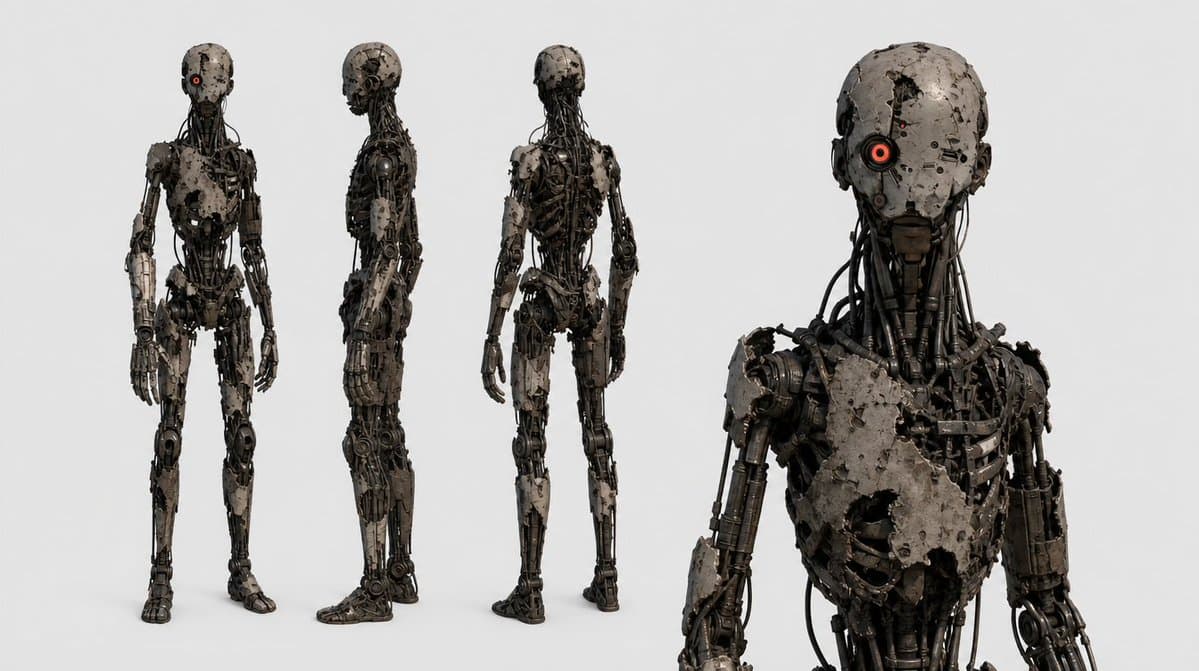
- Character sheets with GPT-2: magnific calls GPT-2 the go-to model for cleaner views, more consistent identity, and better material rendering across angles. The posted prompt asks for front, side, back, and close-up views on white.
- Fix details later: magnific's fix pass treats continuity errors as patch jobs, not failed takes. One example turns off a robot's glowing red eyes to match the scene logic, while a second fix example swaps an incoherent empty-city landing for a city-street background that fits the story.
- Variations build your universe: magnific's variations tip uses one hero design to generate background characters in the same visual language.
- Editing carries half the weight: magnific's editing tip says pace comes from shorter cuts, requesting no music from Seedance 2.0, and adding sound effects in post.
The opinionated bit is the third move. Magnific is basically saying continuity can be solved downstream, which is a much more film-editor mindset than the usual one-shot-prompt mindset.
Character sheets and continuity fixes
Two of the five tips matter most if you care about characters holding together across a longer piece.
First, magnific's character sheet tip uses a dedicated sheet prompt before the film prompt. That front, side, back, close-up layout gives later generations a cleaner identity anchor than pulling every shot from a prose-only description.
Second, the detail-fix example and the background-fix example show a willingness to repair shots after the fact. The thread's examples are small, but the principle is broad: eyes, props, and backgrounds can be corrected without throwing away the whole sequence.
That is also where the variations tip earns its keep. Once the hero design is stable, the same style system can fill out secondary characters so the world feels populated instead of procedurally padded.
Playable loops
A separate Magnific workflow thread from techhalla pushes the same ideas into game-style animation. The core pattern is simple: loop, action, loop2, action2.
According to techhalla's continuity post, the continuity trick is to extract the last frame from one action and use it to generate the next idle loop. Another post in the thread says the first and last frame of an idle loop should be identical, with Seedance 2.0 using the same frame as both the start and end reference.
That turns the workflow into a chain:
- Generate a character with GPT2
- Build a cleaner game-style still from the character reference
- Create an idle loop with identical first and last frames
- Generate an action from the previous frame
- Extract the action's last frame for the next idle loop
MayorKingAI's meteor demo shows the opposite end of the spectrum, a 15 second photoreal VFX shot driven by a heavily staged camera and action prompt. Same model family, very different use case.
Production math
The most concrete line in the whole thread is the budget line. magnific says "SUP?" used a Magnific Pro subscription, roughly 150 generations, and 45 final shots.
That works out to about one final shot for every 3.3 generations. It is a clean reminder that the polished one minute short in the lead post was not a lucky first pass. It was a pipeline, and Magnific published the project Space so other creators can inspect the build rather than reverse engineer it from the finished cut.