
Seedance 2.0 supports omni-reference and time-freeze creator workflows
New demos showed Seedance 2.0 driving age-progression montages, battlefield time-freeze shots, still-sequence animation, and blockout-to-final-render VFX workflows across Mitte, Leonardo, Runway, and Comfy Hub. That matters because creators are using the same model for reference-driven clips, previs, and polished short-form outputs instead of one-off effect shots.
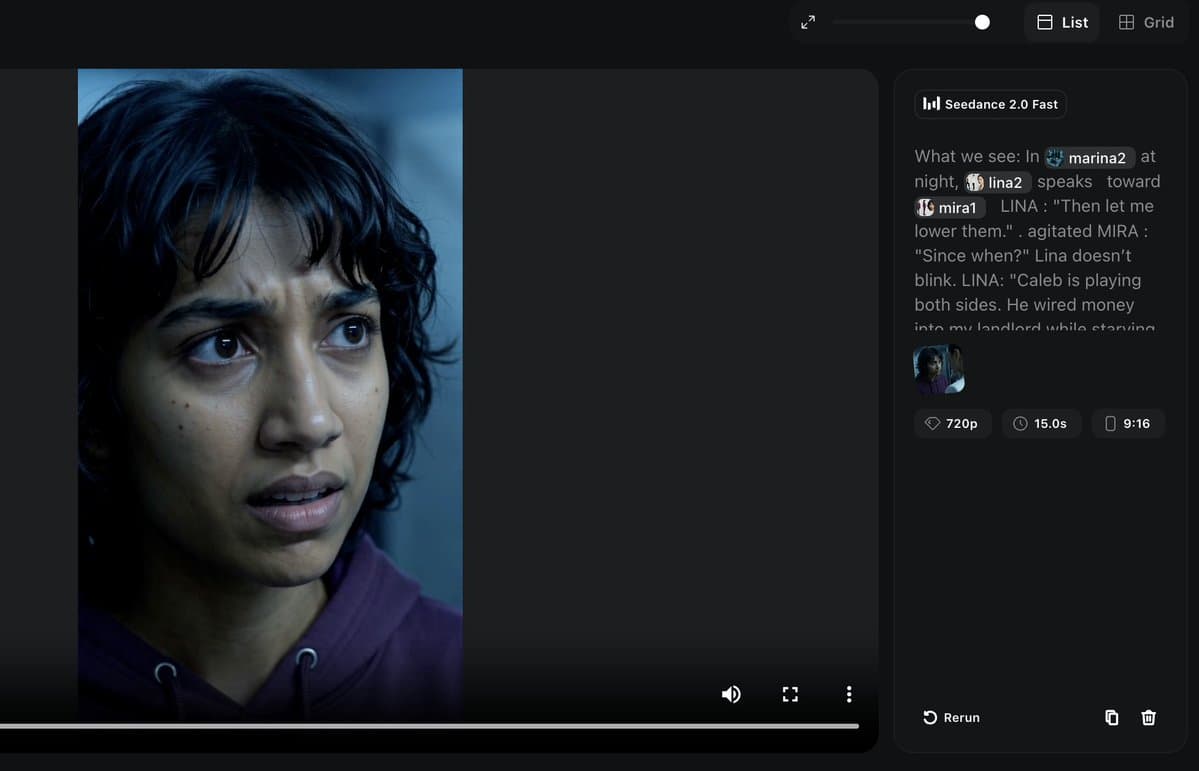
TL;DR
- Seedance 2.0 is showing up less as a single wow-effect model and more as a reusable shot engine, with PurzBeats' blockout-to-final-render post, Artedeingenio's 1:30 short, and rainisto's microdrama thread all describing multi-step pipelines rather than one-off clips.
- The most copied format in this evidence set is the time-freeze shot, where AllaAisling's Stargate-style prompt, MayorKingAI's battlefield version, and the earlier Leonardo test all treat the effect as a repeatable prompt structure with beats, sound cues, and character references.
- Reference-driven work is doing a lot of the heavy lifting, from egeberkina's omni reference demo to Artedeingenio's age-progression montage and egeberkina's still-stitching workflow, which points to creators using Seedance for continuity, not just spectacle.
- The model is being routed through a crowded tool layer, including Leonardo's rollout via MayorKingAI, BytePlus API availability via Uncanny_Harry, Mitte-based shorts from Anima_Labs, and AI FILMS Studio's 1080p pricing post, so the product story is already bigger than one interface.
You can trace that spread across Mitte, AI FILMS Studio's text-to-video surface, and even AI FILMS Nodes. The weirdly useful reveal is how many creators are publishing the exact prompt scaffolds, from MayorKingAI's time-freeze timeline to AllaAisling's shorter ship-transformation prompt. There is also a plain old stills-to-motion workflow in egeberkina's stitching post, which is much less glamorous and probably more important.
Time-freeze
The time-freeze clip became a format fast. The prompt pattern is already stable enough that different creators are swapping setting, wardrobe, and camera language while keeping the same basic beat structure.
Across AllaAisling's Stargate version and MayorKingAI's battlefield timeline, the repeated ingredients are easy to spot:
- a reference image for the lead character
- a 15-second structure with explicit time ranges
- one decisive freeze moment, usually triggered by a snap
- a silent middle section where only one subject moves
- a resume beat that restores motion and sound
- camera notes that keep the shot cinematic instead of reading like a static tableau
the earlier Leonardo version shows the same motif already circulating a day before. That is usually what a usable creator pattern looks like: one effect stops being a demo and starts becoming a template.
Omni reference and continuity
The more interesting feature signal is continuity. egeberkina's omni reference post is short, but it lines up with a bunch of creator examples that are really about keeping identity, style, or structure locked across cuts.
Artedeingenio's montage prompt is explicit about what has to survive the cuts: same facial structure, same eye color, same identity from newborn to elderly. AIwithSynthia's interview-day prompt uses the same logic for a beat-synced life sequence, and Uncanny_Harry's audio-reference note says Seedance reference-to-video can take audio files, which he used to keep character voices consistent through a short film.
That makes the reference stack broader than a single image lock. In this evidence set, continuity shows up in three forms:
- identity continuity: the age-progression clip and the interview sequence
- style continuity: Uncanny_Harry's one-image animation and Artedeingenio's Moebius-inspired short
- voice continuity: Uncanny_Harry's reply about audio references
Stills, storyboards, and stitched clips
Not every workflow starts from text alone. Some of the cleanest examples here start from images or boards, then let Seedance handle motion and transitions.
egeberkina said the process was simply to generate stills and stitch them together in Seedance 2.0. Artedeingenio pushed that idea further, saying a 1:30 short was built from three images, and maybe could have been done from one, by extending clips from the last frame inside Mitte.
The image-first playbook in this evidence pool looks like this:
- generate character or style images first, often in another model
- feed those into Seedance for the first motion clip
- extend from the last frame to continue the scene
- reuse references to hold look and character across shots
minchoi's storyboard example adds one more variant, a 3x3 storyboard made in ChatGPT Images 2.0 and then animated with Seedance 2.0. AIwithSynthia's Higgsfield stack frames the same broader pattern as a production pipeline, not a single prompt box.
Previs and production pipelines
This is the section that makes the whole story feel real. Several creators are treating Seedance as the render step after planning, blockout, or shot design has already happened elsewhere.
PurzBeats said Doug Hogan, a VFX professional, would show a blockout or CG playblast to final render workflow, with the setup already available on Comfy Hub. rainisto described a microdrama pipeline that goes from series concept to screenplay to shot list to character references in BeatBandit, then into Seedance running through Higgsfield, then into Premiere.
The workflow steps from rainisto's breakdown and the Higgsfield handoff are unusually concrete:
- outline the series and episode structure
- write screenplay and shot list
- generate character reference images
- split the script into 15-second shot prompts
- paste those prompts into Seedance through Higgsfield
- run each shot multiple times and pick the best take
- finish the edit in Premiere
rainisto's closing claim says that stack is already fast enough to target a new five-minute episode each day. Christmas come early for microdrama nerds.
VFX presets, action prompts, and social-native shorts
A lot of creator output is still flashy, but the flashy stuff is becoming modular too. The prompts read more like shot design docs than vibes.
AllaAisling's long ship prompt specifies physical continuity, collision rules, camera motion, audio arc, and transformation logic. CharaspowerAI's FPV monster chase and the train attack prompt do the same for action shots. CharaspowerAI's Higgsfield Magic Spell preset shows the opposite end of the spectrum, where the workflow is collapsing into named presets instead of long custom prompting.
That leaves two parallel creator modes:
- full timeline prompting, where the author writes the whole shot second by second, as in AllaAisling's shorter transformation version
- preset-led generation, where a tool layer like Higgsfield packages the effect, as in the Magic Spell preset post
Where creators are running it
The distribution layer is messy, and that is new information on its own. Seedance 2.0 is already being treated as infrastructure that other products wrap, price, and specialize.
In this evidence set alone, Seedance appears across:
- Leonardo: MayorKingAI and pzf_ai both frame it around shot direction, references, and the 2.0 Fast variant
- Runway: awesome_visuals' tool note, 0xInk_'s 1080p post, and iamneubert's 120-generation mobile run
- Mitte: Artedeingenio, the Moebius-style short, and Anima_Labs
- Higgsfield: AIwithSynthia's stack, aakashgupta's UGC example, and rainisto's workflow
- Dreamina and CapCut surfaces: Nomad, Mecha, and other Prompt Studio posts from AllaAisling
- BytePlus API: Uncanny_Harry's note
- AI FILMS Studio: zaesarius' pricing and nodes post
zaesarius put one of the few concrete price numbers in the set on record: $0.675 per second for Seedance 2.0 VIP 1080p on AI FILMS Studio, with 4 to 15 second duration control and a visual Nodes workflow. That is the clearest sign here that Seedance is already being productized as a back-end layer, not just admired as a model.