
Browser Use launches browser infrastructure at $0.02/hour with subsecond cold starts
Browser Use rebuilt its runtime around a custom Chromium fork, Firecracker fork, and custom Linux kernel, claiming $0.02 per hour pricing with subsecond cold starts. The shift targets the infrastructure bottlenecks behind browser agents rather than model quality alone.
TL;DR
- Browser Use says browser_use's launch post rebuilt its browser runtime around a custom Chromium fork, a Firecracker fork, and a custom Linux kernel, with pricing set at $0.02 per session-hour.
- On the linked Stealth browser page, the company adds three concrete claims that were only hinted at in the launch tweet: sub-second cold starts, residential proxies across 195+ countries, and built-in CAPTCHA solving.
- The compatibility angle is straightforward. According to the product page, each session is exposed over CDP, so existing Playwright and Puppeteer code can connect without changes.
- Browser Use is also pushing this as an anti-detection play, not just a hosting bill cut. Its benchmark page says the company built a 71-site stealth benchmark from 300,000 production security checks, while the product page cites 81% on its own benchmark and 84.8% on Halluminate's BrowserBench.
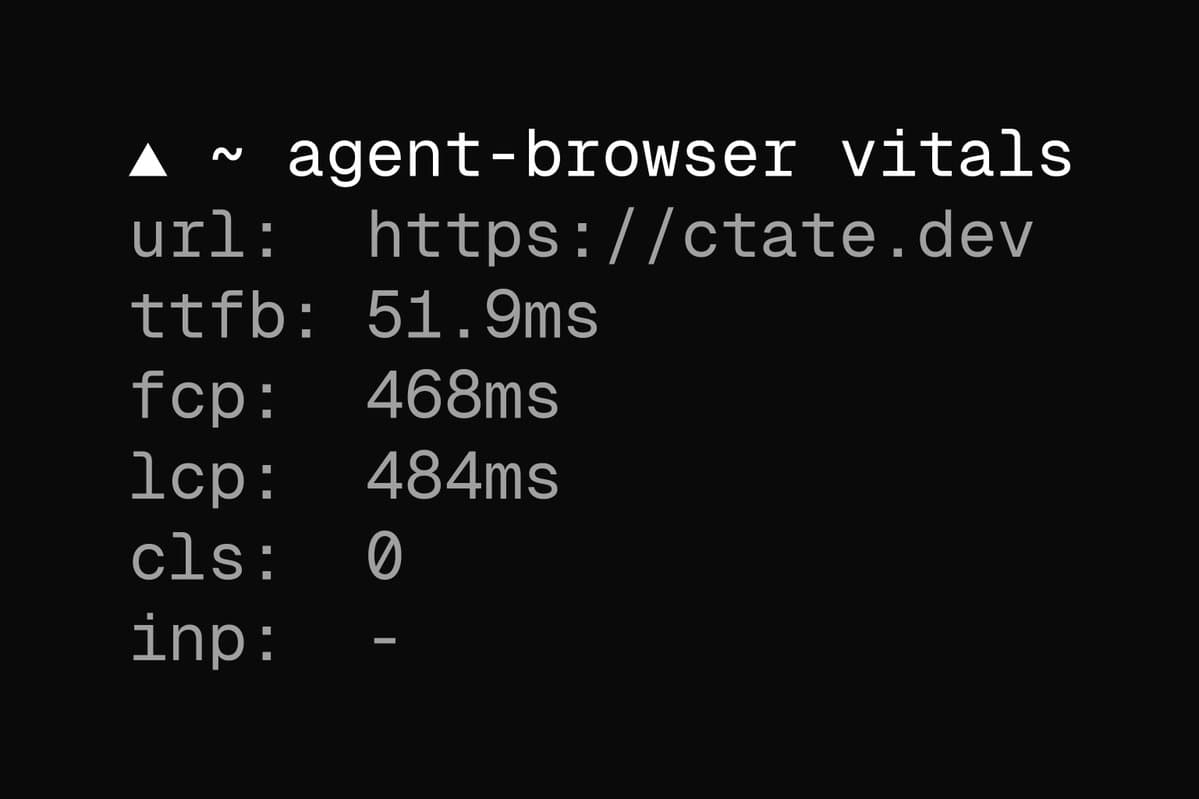
- A separate tool update from ctatedev's agent-browser post shows the stack is already surfacing browser-performance telemetry, including LCP, CLS, TTFB, FCP, INP, and React hydration timing.
The stealth browser page also includes an unusual self-registration flow that lets an agent create its own account by solving a challenge-response math problem. The CLI docs describe a persistent background daemon with roughly 50ms latency between commands. And ctatedev's post shows Browser Use wiring Web Vitals directly into agent-browser, which is a more practical debugging feature than another benchmark chart.
Chromium, Firecracker, kernel
Browser Use framed the release as infrastructure work, not a new agent model. browser_use's launch post names the three layers directly: a Chromium fork, a Firecracker fork, and a custom Linux kernel.
The fuller product page fills in what that stack is supposed to buy. Browser Use says it maintains its own Chromium fork continuously, rather than patching around detection from the outside, and pairs it with real macOS, Windows, and Linux browser profiles for more consistent fingerprints.
A retweeted build note in browser_use's repost of gregpr07 adds one more operational detail: the company says the system runs on bare metal and prices 3 to 6 times below other providers.
CDP sessions and stealth claims
The core product is a remote browser endpoint, not a new automation API. On the stealth browser page, Browser Use says every session is reachable over Chrome DevTools Protocol, so Playwright and Puppeteer clients can attach without code changes.
The same page bundles together four platform services that teams usually stitch together themselves:
- sub-second cold starts
- residential proxy routing in 195+ countries
- built-in CAPTCHA solving inside the browser
- anti-detection tuned Chromium profiles
Browser Use's performance pitch is mostly stealth-oriented. The product page says stock headless Chromium clears just 2% of sites on its BU Stealth Benchmark, headful Chromium reaches 50%, and Browser Use Cloud reaches 81%.
The company also cites a third-party benchmark lead. On the same page, and in its stealth benchmark post, Browser Use says Halluminate's 296-task BrowserBench measured Browser Use Cloud at 84.8%, ahead of Hyperbrowser at 76.4%, Anchor at 76.0%, Steel at 73.3%, and Browserbase at 70.3%.
Agent-browser vitals
The most concrete day-one follow-up came from ctatedev's Web Vitals post, which adds a terminal command for measuring page performance directly from agent-browser.
That command surfaces:
- LCP
- CLS
- TTFB
- FCP
- INP
- React hydration timing, when available
That makes the launch a little more interesting than a cheap browser-hosting story. Browser Use is positioning the browser as a measurable runtime for agents, with anti-bot plumbing on one side and page-performance instrumentation on the other.
The CLI docs point in the same direction. Browser Use says the CLI keeps a persistent background daemon alive between commands for roughly 50ms latency, and exposes both direct browser control and cloud-browser management from the terminal.