
InsForge releases 2.0 for agent-built backend setup
InsForge 2.0 aims to automate backend bring-up for coding agents and remove the scaffolding step after code generation. Try it if your agent workflows stall on database, API, or infrastructure setup instead of application code.
TL;DR
- InsForge says its new 2.0 release targets a specific bottleneck in agent-assisted development: after coding tools generate application logic, backend setup still slows delivery, and InsForge is pitching an automated bring-up path for that step through the launch thread.
- The core claim in the announcement is that agents can "spin up the backend automatically," which makes this more relevant to engineering workflows than a generic codegen demo.
- InsForge is also being positioned as open source in the same post, with the linked GitHub repo presented as the place to inspect the project and try it in practice.
What shipped in InsForge 2.0?
InsForge 2.0 is being introduced as infrastructure for coding agents rather than as another model wrapper. In the primary post, the pitch is concise: "backend setup still slows things down," and the new release lets agents "spin up the backend automatically." That frames the product around the part of AI app delivery that often remains manual after code generation.
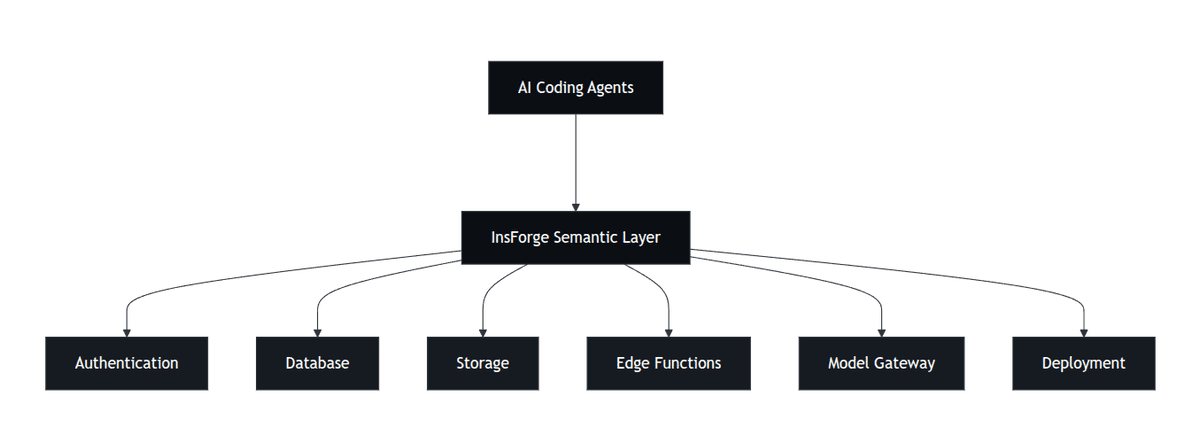
The linked GitHub repository adds a little more shape. Its summary describes InsForge as an "AI-native" alternative to Supabase, focused on helping agents build and manage full-stack applications. That suggests the 2.0 story is not just database scaffolding, but a broader attempt to package backend primitives in a form agents can operate directly.
What technical signal is available so far?
The evidence is still early and mostly comes from InsForge-linked promotion rather than a changelog or benchmark. Even so, the repo summary post points to concrete implementation signals: backend code, documentation, assets, and Docker initialization scripts are already present in the repository, which implies this is meant to be deployable software rather than a concept demo.
What is missing from the current evidence matters too. There are no API examples, latency numbers, compatibility details, or before-and-after workflow measurements in the supplied sources. For engineers, the practical takeaway is narrower: InsForge 2.0 looks aimed at removing backend scaffolding as a blocker in agent workflows, but the current public material supports the direction more clearly than it proves operational performance.