
Next.js 16.2 ships AGENTS.md defaults and next-browser for agent debugging
Next.js 16.2 adds version-matched AGENTS.md docs, a terminal browser for inspecting running apps, browser-error forwarding, and a dev-server lock file. It gives coding agents better frontend context and cuts duplicate-server and client-side debugging waste.
TL;DR
- Next.js 16.2 packages several agent-facing defaults at once: a Next.js-aware browser tool,
AGENTS.mdincreate-next-app, browser-error forwarding, and a dev-server lock file, according to the 16.2 thread. - The new default
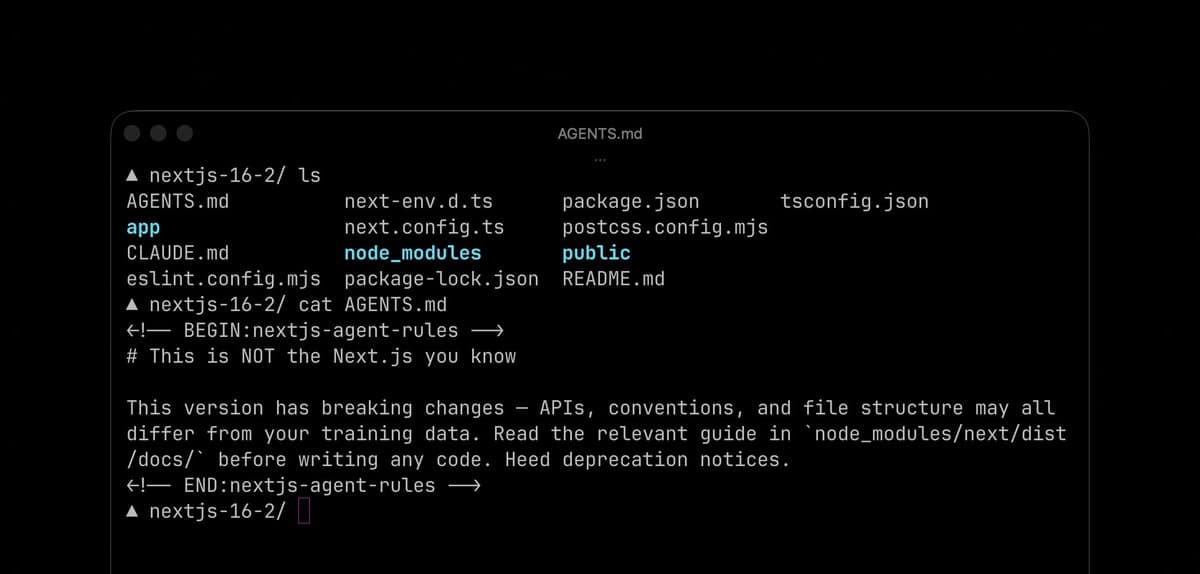
AGENTS.mdpoints coding agents at version-matched docs bundled innode_modules, and Next.js says that setup reached a “100% eval pass rate” versus 79% for “skill-based approaches” the AGENTS.md post. - Vercel's next-browser demo shows agents inspecting a live app from the terminal with component trees, PPR shells, screenshots, and network requests, then changing Suspense boundaries to improve static prerendering.
- On the debugging side, the browser-error update says client-side errors now surface in the terminal, while the lock-file post says
next devrecords PID, port, and URL to stop duplicate dev servers cleanly.
What shipped for agent-assisted development
The headline feature is @vercel/next-browser, which gives agents terminal access to a running Next.js app instead of forcing them to guess from source alone. In the product demo, the framework team says agents can inspect “component trees, PPR shells, screenshots, network requests,” which is a meaningful jump in frontend context for coding agents that usually operate blind.
Next.js paired that with a default AGENTS.md in create-next-app. As the AGENTS.md announcement describes it, the file points agents to version-matched framework docs bundled in node_modules, so the model sees the exact docs for the app's installed version rather than generic or stale guidance. The same post claims this setup hit “100% eval pass rate” versus 79% for “skill-based approaches,” a concrete delta even if Next.js did not publish the eval details in the thread. The fuller release write-up is linked in the 16.2 blog post.
What changes in day-to-day debugging
Next.js 16.2 also removes two common failure modes in agent-driven local development. First, the browser-error update says all browser errors now get forwarded to the terminal during development, so agents and human developers can catch client-side failures without bouncing into the browser console.
Second, the lock-file update says next dev now writes a lock file containing the server's PID, port, and URL. When a second server starts, the process has enough information to identify and resolve the conflict “in one shot,” which should cut a familiar class of duplicate-server confusion in local workflows. Vercel CEO Guillermo Rauch framed the broader goal in his launch reaction as making Next.js “an agent-native framework,” with agents finding frontend optimizations that engineers had missed.