
OpenAI connects ChatGPT for Healthcare to Epic
OpenAI says ChatGPT for Healthcare can receive authorized Epic patient context in ChatGPT or within the patient chart. The release also adds a public-data plugin for nine healthcare sources and reports 99.1% safety in its evaluation.
TL;DR
- Authorized patient context from supported Epic environments can now appear in ChatGPT for Healthcare or within supported EHR layouts, as the EHR details describe.
- The Healthcare Public Data plugin provides structured access to nine official sources, including PubMed, ClinicalTrials.gov, DailyMed, CMS data, openFDA, and RxNorm, according to the plugin announcement.
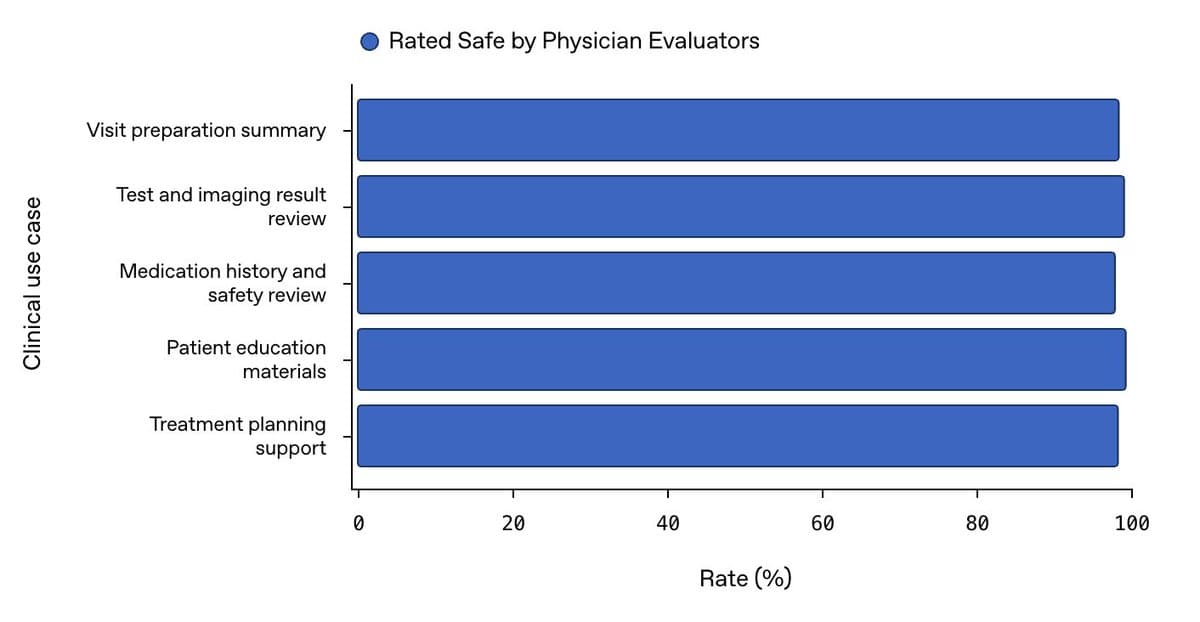
- Physicians rated 99.1% of responses safe across 4,363 ratings in 27 connected-EHR use cases, per the evaluation results.
- EHR access requires a workspace administrator, while the public-data plugin is available to ChatGPT for Healthcare and ChatGPT for Clinicians users, as the availability note says.
The official announcement describes matching a patient record against actively recruiting trials and comparing eligibility criteria. It also describes pharmacy teams checking the latest DailyMed label, while chart-based answers link back to supporting information.
What shipped
These are capability-scope deltas, rather than before-and-after clinical performance measurements.
- Announced Epic integrations: 0 → 1, +1 integration, per the launch post.
- Announced patient-context workflow modes: 0 → 2, +2 modes, as the EHR details describe.
- Healthcare Public Data plugin sources: 0 → 9, +9 sources, according to the plugin announcement.
Epic contexts
The two modes separate chart review in ChatGPT from work performed inside the EHR.
- EHR context in ChatGPT: authorized patient information is brought into ChatGPT to review history, identify changes, and prepare for an appointment.
- ChatGPT in the EHR workflow: ChatGPT sits in an EHR layout for AI-assisted work without leaving the chart.
OpenAI says the system retrieves relevant material from the authorized record and points back to supporting chart information in its product description. For thekaransinghal, the design constraint is meeting clinicians in their existing workflow under real-world clinical constraints.
Public data plugin
The plugin exposes structured records, fields, identifiers, and versions, rather than only a general clinical-search result.
OpenAI names six of the nine sources across its announcement and launch thread:
- PubMed
- ClinicalTrials.gov
- DailyMed
- CMS Coverage data
- openFDA
- RxNorm
The official description calls out trial eligibility criteria, medication identifiers, coverage-policy versions, and provider records as targets for cross-source comparison. The remaining three sources are not enumerated in the written announcement.
Benchmarks and evaluation
OpenAI's connected-EHR evaluation covers 27 use cases, including pre-visit review, clinical timelines, medication review, and handoff summaries.
- Connected EHR context: physicians marked 99.1% of responses safe across 4,363 ratings.
- Connected public data: a separate two-round review of hundreds of responses found more than 93% rated “good” or better for accuracy at each of five tested sources.
The evaluation section says OpenAI works with hundreds of physicians across 60 countries, 49 languages, and 26 specialties, who have reviewed more than 700,000 model responses to date.
Regressions and limitations
The publication reports evaluator ratings only. Its launch write-up supplies no pre-release baseline, clinician-without-tool comparator, patient-outcome metric, or error breakdown.
The EHR integration is limited to ChatGPT for Healthcare workspaces where an administrator enables it. Eligible U.S. individual ChatGPT for Clinicians users can install the public-data plugin, but cannot use the EHR integration; Enterprise customers must confirm eligibility and configure a Regulated Workspace.
OpenAI describes role-based access, single sign-on, and audit logs as workspace controls. With an applicable Business Associate Agreement, it says customers can use ChatGPT Work, Codex, apps, and plugins in workflows intended to support HIPAA compliance.