
WSJ reports OpenAI plans desktop app to merge ChatGPT, Codex, and browser
WSJ reported that OpenAI is consolidating ChatGPT, Codex, and its browser into a single desktop app to simplify heavy-use workflows. If it ships, developers would get one workspace for chat, coding, and browsing instead of today's fragmented clients.
TL;DR
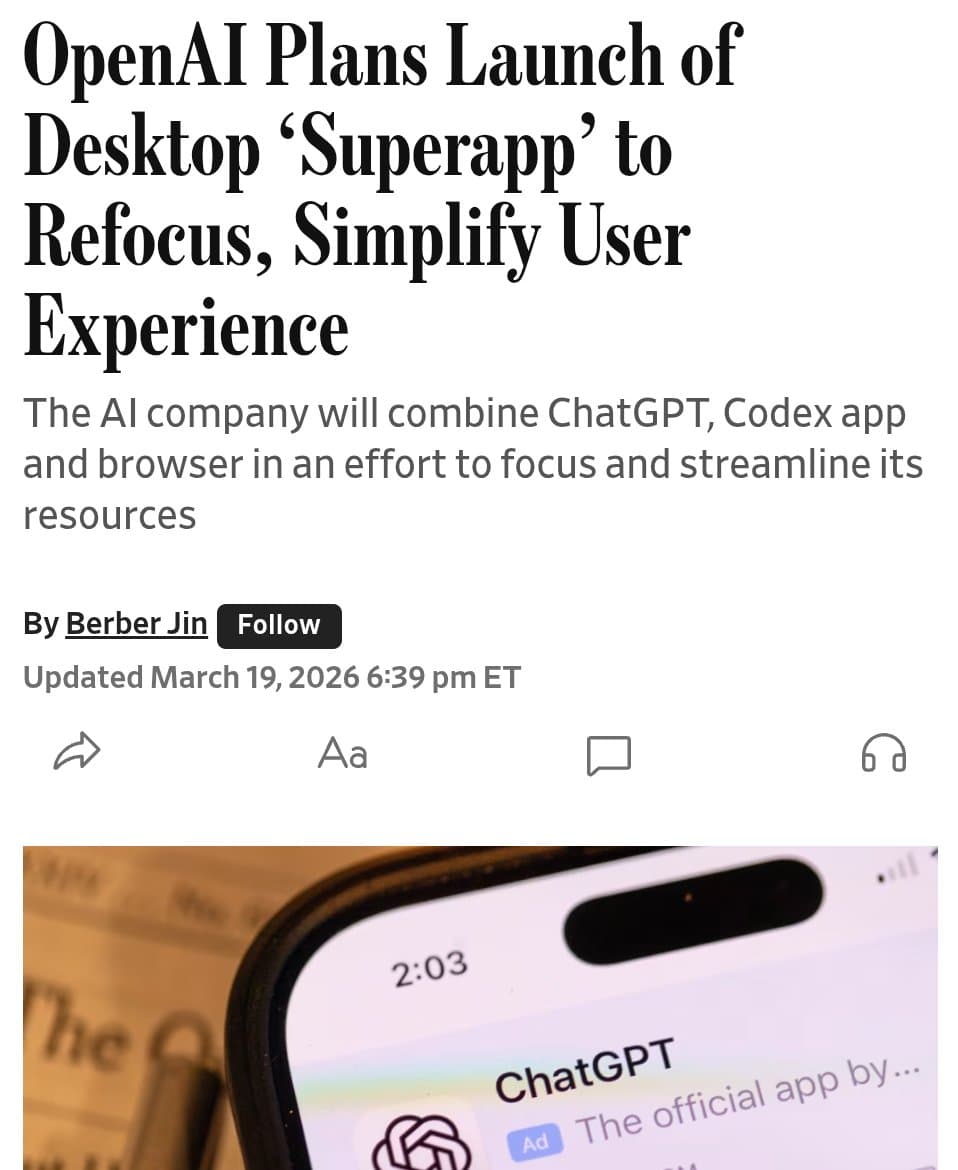
- The core news is the WSJ screenshot: OpenAI is reportedly planning a desktop “superapp” that combines ChatGPT, the Codex app, and its browser into one client.
- A second writeup of the same report says the goal is to stop making users jump between separate apps for chat, coding, and browsing, and instead offer “a single workspace” aimed at heavy enterprise and developer use pivot summary.
- The current shape of that product is still unconfirmed, but community screenshots circulating alongside the report consistently frame it as a merged ChatGPT, Codex, and Atlas experience stage mockup.
- If the plan ships as described, the practical change for engineers is fewer context switches: one desktop surface for prompting, editing code, and web research instead of today’s fragmented tools workflow framing.
What is OpenAI reportedly building?
The reported product is a desktop app that would “combine ChatGPT, Codex app and browser,” according to the WSJ screenshot. That is a packaging change more than a new model launch, but it matters operationally because OpenAI’s current product surface is split across separate chat, coding, and browsing experiences.
A parallel summary from Wes Roth’s post says OpenAI is “moving to consolidate its fragmented product lineup” into a unified desktop workspace for “heavy enterprise and developer use.” Taken together, the consistent claim is not just feature bundling but a client strategy: one native app that keeps conversation, code work, and web context in the same session.
Why does this matter for engineers?
For engineers, the interesting part is workflow consolidation. The developer reaction describes the target use cases as writing, coding, research, and task automation in a single interface, which matches the reported ChatGPT-plus-Codex-plus-browser stack. If OpenAI actually merges those surfaces, it could reduce the handoff friction between asking for code, editing or running it, and pulling in browser context.
The community’s mockups also show how people already expect the product to expand beyond three icons. One edited stage image adds Sora and Prism to the same launcher expanded mockup, suggesting developers are reading this as a possible umbrella desktop shell for multiple OpenAI tools, not just a convenience wrapper. That broader interpretation is still speculation; the only confirmed reporting in this evidence set is the narrower plan to merge ChatGPT, Codex, and the browser.