
OpenRouter adds multi-key BYOK routing with fallback tiers
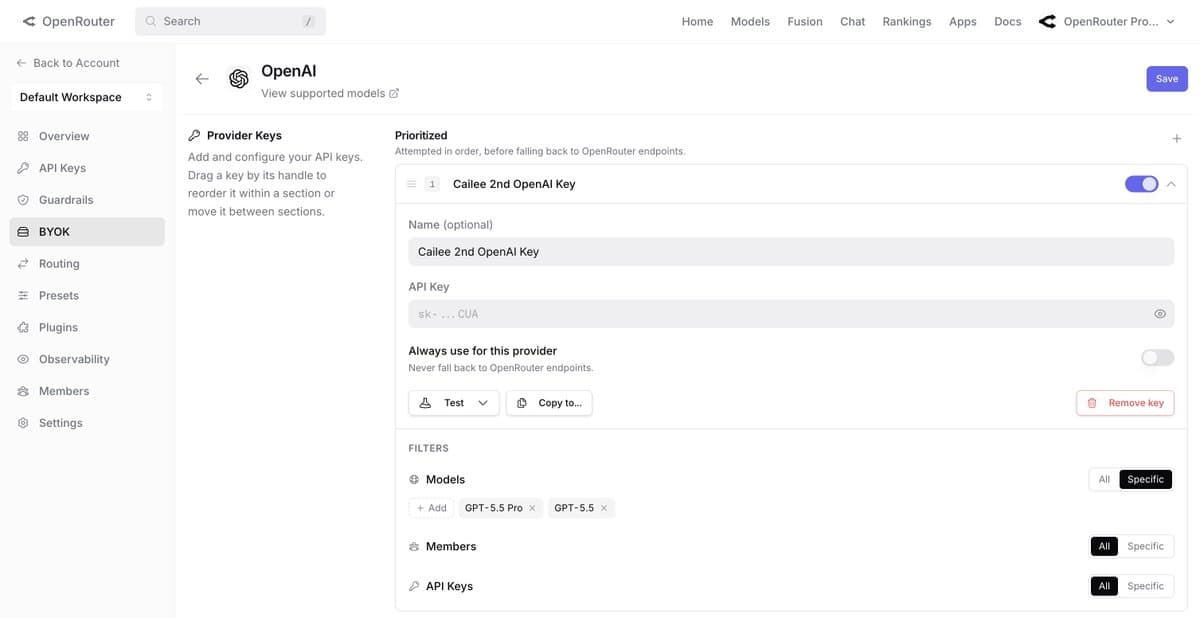
OpenRouter updated BYOK workspaces so teams can attach multiple provider keys, scope them to specific models or users, and choose prioritized versus fallback use. It changes how rate-limit isolation, dev and prod separation, and failover routing are handled inside one workspace.
TL;DR
- OpenRouter's BYOK update lets one workspace attach multiple keys for the same provider and control the order they are tried, according to OpenRouter's launch thread.
- The new scoping layer can bind a key to specific models, specific OpenRouter API keys, or specific users, as OpenRouter's filtering post describes.
- OpenRouter also added two execution tiers: a prioritized tier that spends OpenRouter credits first, and a fallback tier that only activates after those credits run out, per OpenRouter's fallback-tier post.
- The docs link in OpenRouter's docs post frames the change as a BYOK workspace feature, not a separate routing product, via the BYOK guide.
OpenRouter tucked three practical routing controls into one BYOK update: multiple same-provider keys, per-key filters, and prioritized versus fallback execution. The linked BYOK docs are where the product surface lives.
Workspace key pools
The first change is simple and useful: a single workspace can now hold multiple keys for the same provider, with an explicit try order.
That turns BYOK from a one-key attachment into a small routing table. OpenRouter's examples in the launch thread center on three concrete uses: rotating across rate limits, separating dev and prod credentials, and spreading usage across team accounts.
Routing filters
The second change adds per-key scoping. Each key can be limited by model, by OpenRouter API key, or by user.
OpenRouter's own examples make the intended workflow pretty clear:
- sandbox an intern's key
- route premium traffic through a dedicated account
- keep evals isolated from production
Those are all listed in OpenRouter's filtering post, and they move the feature beyond raw failover into policy control inside one workspace.
Prioritized and fallback tiers
The third change is the most operationally specific. OpenRouter says each key can run either before OpenRouter endpoints or only as fallback after OpenRouter credits are exhausted.
In OpenRouter's wording, the prioritized tier uses your credits first, while the fallback tier only kicks in when reliability demands it, according to the fallback-tier post. The docs post links this behavior back to the main BYOK guide, which is the canonical reference tied to the announcement.