
PJ Accetturo reports a $102,725 budget for his AI episode
PJ Accetturo says his 15–20-minute AI episode cost $102,725 and took 45 days to produce. Labor accounted for 80% of the budget, and the released video is only the first part.
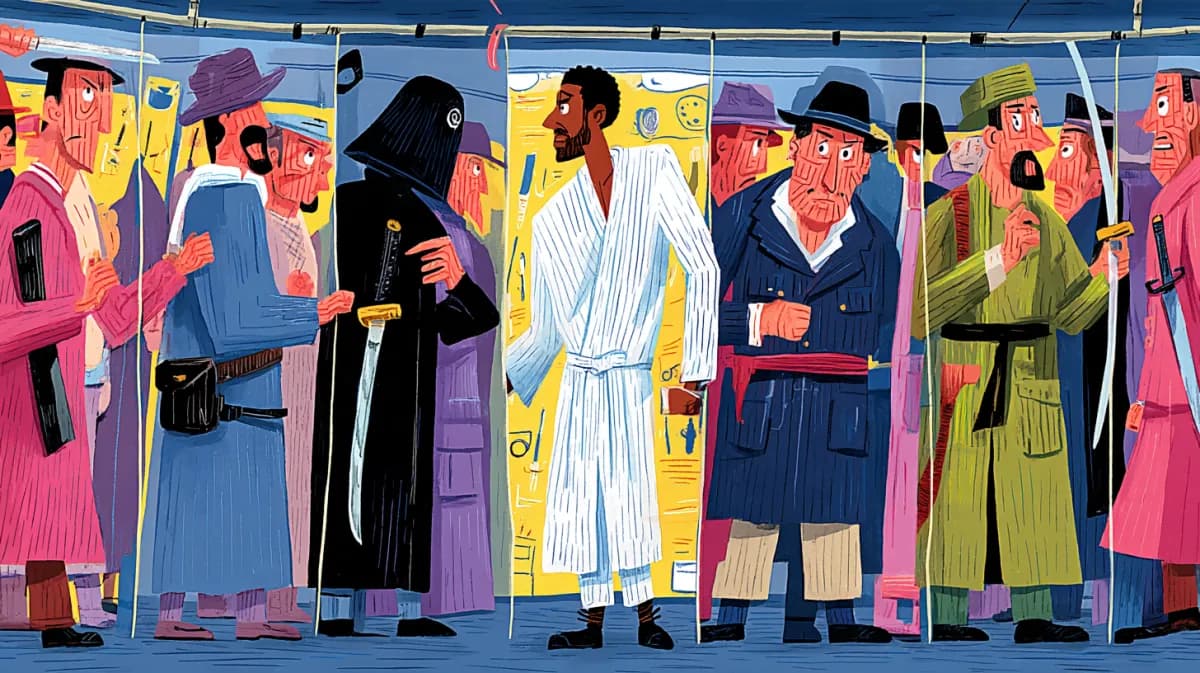
TL;DR
- The $102,725 budget covers a three-part Nexus episode, not just the released 4:40 film. Accetturo’s later clarification puts the complete episode at 15–20 minutes; his release post reports 45 days of production.
- Labor accounted for 80% of spending, with animation taking 20%, according to his budget split.
- The workflow combined Claude-written prompts, image reference sheets and screenshot-anchored second passes for closer coverage, as described in his production breakdown.
- Each 30-second sequence took three to seven runs at roughly $15–25 per run, Accetturo said in a reply.
One mechanics-bay prompt specifies the exact shot when a character may pick up his goggles. A bombing-run prompt asks for 11 cuts in 28 seconds, all on a 100mm lens, while keeping an enormous creature almost entirely underground.
A $102,725 episode in three parts
PJ Accetturo, creator and executive producer of Nexus, calls Prison Break a Nausicaä of the Valley of the Wind homage. Episode 8 brings together Anika from the first episode and Jace from the fourth, beginning a connected narrative after seven episodes spent testing characters and plots.
His reported $102,725 budget and 45-day production cover the complete episode. The released Part I runs 4:40; he clarified that the three parts together would run approximately 15–20 minutes.
Nexus: Prison Break, Part I (4:40)
Applying his reported cost split to that total gives approximately:
- Labor: 80%, or $82,000.
- Animation: 20%, or $21,000.
Dreamina funded the episode, Accetturo confirmed in another reply. He scheduled Parts II and III for the following two weeks.
Claude and the reference sheets
Animators supplied creative requirements, including particular moments and camera angles; Claude wrote the detailed generation prompts. Accetturo described the asset-preparation stage in three steps:
- Inventory: Claude lists the characters, props and vehicles requiring reference sheets.
- Explore: The team generates dozens of variations in a canvas, going “wide” with what Accetturo calls “gpt 2.5 sunburst.”
- Refine: Selected designs are rebuilt at higher resolution with Seedream 5.5.
21:9 location plates
The team generated location plates in Seedream 5.5 at 21:9, loading the prompts with anamorphic descriptors. Accetturo credits these background images with establishing much of the film’s “anamorphic emulation” look in his location-plate breakdown.
Screenshot-anchored coverage
Once the ingredients and locations were ready, Claude divided the script into scenes and roughly 30-second sequences. The team’s coverage process worked like this:
- Generate an initial Seedance pass with multiple angles to establish where everyone stands.
- Capture selected frames from the preferred angles.
- Use those screenshots as references for a second animation pass with tighter coverage in the same positions.
That screenshot handoff is a tidy continuity hack. Accetturo says some scenes needed only one pass.
Scenes lived on a shared canvas, where animators took responsibility for different scenes and Beau, the episode’s director, gave feedback in real time. The team chose the ingredients-based approach because 3D workflows were too complicated for this production; Accetturo separately confirmed that the episode used no Blender or other 3D workflow.
Continuity locks for eight shots
The mechanics-bay prompt specifies eight shots across 28 seconds as Anika and Jace change into mechanics’ uniforms. Its constraints include:
- Reference authority: The room image controls architecture, materials and lighting, but not framing. The prison-ship image supplies the design of a wall map; the actual ship must never appear in this scene.
- Cast and blocking: Only Anika and Jace may appear. Anika starts facing the wall map, with Jace behind her by a schematics table.
- Prop continuity: Anika’s bracelet stays on her left wrist, Jace’s on his right. His goggles remain on the table until Shot 6.
- Costume timing: Jace zips up his jumpsuit in Shot 6. Anika’s final costume must match its reference, with no zipper movement from her.
- Dialogue: Exactly six specified lines, in order, with no ad-libs, repetitions or extra speech between them.
Performance directions go down to individual reactions: Jace’s attraction turns into curiosity when he notices Anika’s scars, with the change carried through his eyes while his mouth stays neutral.
A 100mm bombing run
The separate flying-sequence prompt specifies 11 cuts in 28 seconds. Its camera and geography rules are unusually tight:
- One focal length: Every cut uses the same 100mm lens, including cockpit close-ups and ground-level views.
- Continuous direction: Aircraft travel screen left to right, with propellers visibly spinning. The explosion stays behind them as they depart.
- Partial framing: Propeller discs, canopy frames, wings, insects and mist obstruct the view; the requested handheld movement includes vibration and late corrections.
- Restricted creature reveal: Trees lean and roots lift along one continuous underground path. Only one brief patch of armored scales breaks the surface; the head and full body remain hidden.
The prompt also distinguishes the creature’s movement from the explosion’s shockwave, preventing two separate story events from collapsing into the same effect.
Character audio and the unfinished guide
The published mechanics-bay prompt assigns distinct vocal profiles:
- Anika: General American accent, low alto, dry and practical.
- Jace: Working-class British Estuary accent, warm mid-range delivery, with anxious lines speeding up rather than becoming louder.
Its sound directions include machinery, steam, clothing, footsteps and muffled combat through the hull, with no music. These are the disclosed prompt-level instructions; Accetturo said the separate guide and Claude skill for consistent character audio were still being written.
Three to seven runs per sequence
Accetturo reported three to seven attempts for each 30-second sequence, costing about $15–25 per run depending on unspecified factors. That implies roughly $45–175 in generation spending per sequence before labor, using the endpoints of his quoted ranges.
ByteDance documents 30-second audio-video generation and multi-round extensions for Seedance 2.5. Accetturo names Seedance in this breakdown without specifying a version.
The budget dispute
The argument extended beyond whether viewers had mistaken Part I for the entire episode:
- Value: AIandDesign asked whether even a hypothetical 30-minute version would justify $100,000.
- Paid labor: chrisfirst pointed to 45 days of salaries across multiple employees, adding that some AI creators charge more than $10,000 per finished minute.
- Platform funding: AIandDesign offered to make multiple long-form Rawkhaus TV episodes for a few thousand dollars in credits, pitching Dreamina directly.
Clickbait and the hybrid feature
Accetturo said the budget headline was deliberately provocative. Hostile reposts of an earlier release had generated 10 million views and helped secure more funding for season two, he claimed.
He describes the Nexus business model as platform-funded original shorts that generate little profit themselves while building an audience and team, alongside writing and packaging a Hollywood project.
The planned feature would combine filmed actors with AI VFX. Accetturo expects that hybrid production to cost millions, potentially low tens of millions with A-list talent.