
PJ Accetturo says a 15-minute episode costs about $102,725 to produce
PJ Accetturo says the $102,725 budget covers a full 15-minute episode made by ten people over 45 days. Critics dispute the economics, and he says the team makes little money on these productions.
TL;DR
- The $102,725 budget covers all three parts of a roughly 15-minute Nexus episode, according to the creator’s clarification.
- Labor accounts for 80% of the budget, with animation costs making up 20%, in his cost split.
- A ten-person team made the production, and its creator says they make little money on these episodes.
- The team’s published workflow uses Claude for planning and screenshots from an initial Seedance pass to anchor closer coverage.
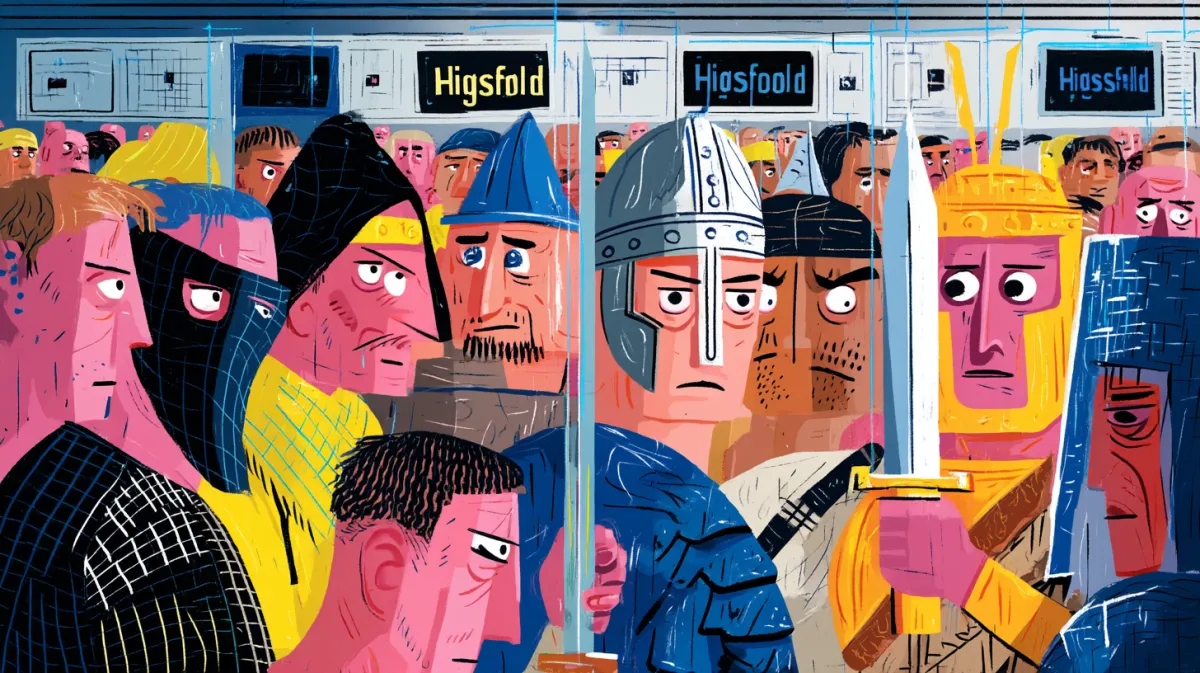
The Prison Break installment reunites characters from earlier Nexus shorts aboard an imperial prison ship. Its location workflow starts the anamorphic look in 21:9 background images, before animation. Accetturo also released a Claude skill for consistent character audio.
Budget and runtime
PJ Accetturo, creator and executive producer of Nexus, announced a $102,725 production made over 45 days. The published Part I runs about four minutes and 40 seconds.
Nexus: Prison Break, Part I
The budget covers the complete three-part episode, which Accetturo described as 15 minutes in one reply and 15–20 minutes in another. Parts II and III were scheduled for the following two weeks.
Applying his stated cost split to the announced total gives:
- Labor: approximately $82,180.
- Animation costs: approximately $20,545.
Generation costs
Each 30-second sequence gets three to seven runs, costing about $15–$25 per run, Accetturo said. That implies $45–$175 per sequence before labor.
Thirty such sequences would cost $1,350–$5,250 in CellCog’s calculation, before extra coverage or unused footage. The published budget split comes without line items explaining the full animation subtotal.
A competing estimate from dustinhollywood put generation costs for a 90-minute Seedance feature at $15,000–$20,000, allowing eight attempts per shot. That estimate concerns generation spending, while Accetturo’s total includes paid production labor.
Two-pass Seedance coverage
The screenshot-anchored second pass is the keeper in Accetturo’s production breakdown. The team described this sequence:
- Inventory the script. Claude lists the characters, props and vehicles needing reference sheets.
- Explore designs. The team generates dozens of variations, then remakes selected assets at higher resolution with Seedream 5.5.
- Build location plates. Seedream 5.5 produces 21:9 backgrounds with anamorphic descriptors baked into the prompt.
- Divide the action. Claude breaks the script into scenes, then roughly 30-second sequences and prompts.
- Generate coverage. Seedance produces an initial pass from multiple angles. Screenshots of selected angles anchor a second pass for closer coverage while retaining character positions. Some scenes need only one pass.
- Coordinate on a canvas. Animators take responsibility for different scenes, with director Beau giving feedback in real time.
The team skipped a 3D workflow for this episode because Accetturo said the ingredient-based approach was easier to coordinate across a large team.
Visible quality and creator pay
AIandDesign questioned whether the finished short looked sufficiently different from lower-budget solo work, while agreeing that creators should charge properly for their time.
Charging only for generation credits leaves out the creator’s knowledge and working time, chrisfirst argued. He also reported knowing AI creators earning more than $10,000 per finished minute.
Accetturo said his team also frequently makes 30–60-second advertisements with $100,000 budgets, a separate reference point from the episodic production.
Dreamina funding and clickbait
Dreamina funds the episodes, Accetturo said in a reply about the budget. The company’s Originals proposal form advertises computing credits, tools and industry resources spanning production through distribution.
The sponsorship drew a separate criticism: dustinhollywood argued that Dreamina was buying Accetturo’s audience reach, and that such spending should be distinguished from commissioning artistic talent.
Accetturo openly described the price-tag framing as deliberate clickbait. He said it provokes anti-AI reposts, and that an earlier wave reaching 10 million views helped secure funding for season two.