
AI agents generate playable 3D game demos in Blender and Godot
New Opus 5, Codex, and Fable demos showed agents creating 3D worlds, Blender assets, Godot ports, and one-shot games. Pushback focused on whether the clips become games worth playing.
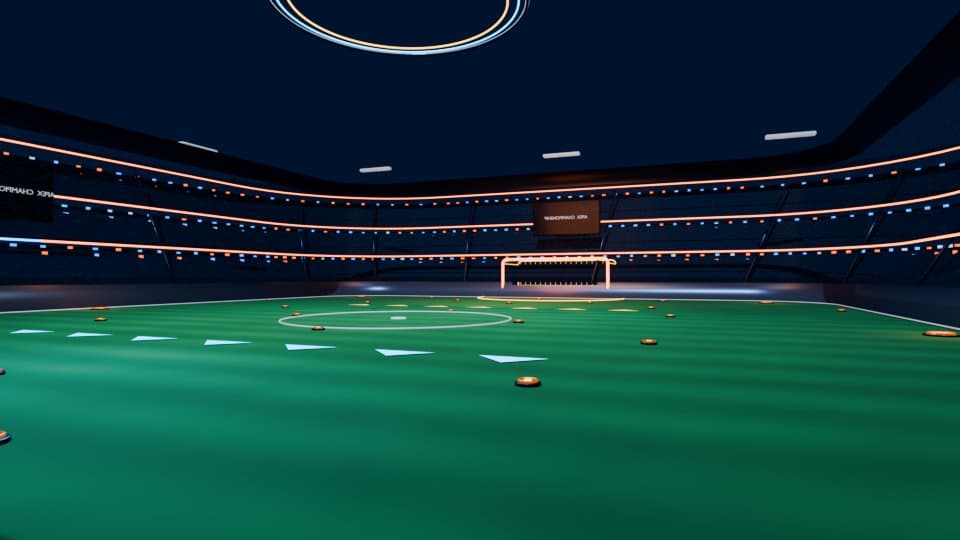
TL;DR
- Opus 5 landed inside Claude Code and the Claude Platform, with high effort as the default and a fast mode that ClaudeDevs says is about 2.5x faster at 2x base price.
- The strongest game demos came with inspectable artifacts: Meng To pointed to both the prompt and source for a detailed Opus 5 game, while LLMJunky's Rocket Arena demo shipped as a playable browser project.
- Blender and Godot are becoming the higher-signal tests: LLMJunky used Codex with Sol Extra High to build an Octane model in Blender, and Danny Limanseta used Grok 4.5 in Cursor to redesign enemies, cards, and VFX in a Godot game.
- The pushback was about depth, not screenshots: game polish takes more time, AIandDesign argued, and Om Patel's side-by-side test found Opus 5 produced bigger builds while Fable stayed cleaner on proportions and text.
- A full concept-to-game loop is forming around video, briefs, mockups, and code: kaigani started with Seedance 2, then Claude Code built the result into a playable QLOBE Kids game.
The Claude-of-Duty repo says the browser FPS is roughly 55k lines across 11 subsystems with no art, image, model, HDRI, or audio files. The rl-opus repo documents a Rocket League-style browser game with Three.js rendering, Rapier physics, bots, controller support, and online rooms. Anthropic's Opus 5 docs add the boring-but-important bits: claude-opus-5, 1M context, 128k max output, thinking on by default, and mid-conversation tool changes.
Opus 5 in Claude Code
Anthropic's launch post positions Opus 5 as near Fable 5 intelligence at half the price, with stronger coding and knowledge-work scores than Opus 4.8.
For creators, the operational details mattered more than the chart:
- Access: Claude Code and Claude Platform on day one, according to ClaudeDevs' launch thread.
- Model string:
claude-opus-5, which ClaudeDevs' usage note says works in the API and via/model claude-opus-5in Claude Code. - Effort: high by default in Claude Code and Platform, with lower settings available for faster, cheaper turns, per ClaudeDevs' effort note.
- Tooling: Opus 5 supports mid-conversation tool changes without invalidating prompt cache, according to ClaudeDevs' platform note.
- Migration: existing workloads can run
/claude-api migrate, and ClaudeDevs' migration note says the built-in skill updates model strings and suggests Opus 5 prompt improvements.
Procedural browser games
The cleanest Opus 5 game demos were not just videos. They came with prompts, source, hosted builds, or repo docs.
The Claude-of-Duty repo describes a browser FPS built with Three.js r180 and WebGL2, roughly 55k lines across 11 subsystems, with every texture, mesh, animation, and sound generated procedurally at load time. Its README says the only runtime dependency is three.
Rocket Arena went further into playability. LLMJunky said Opus 5 built a Rocket League-style game using 27% of a 5x Max subscription, then shared a playable build and open source code through the thread.
The repo details explain why the clip spread: the rl-opus project uses Three.js, Rapier, Vite, bots, remappable keyboard and controller controls, and online rooms. LLMJunky later clarified that the project was pure TypeScript with no external assets.
The demo kept moving after the first post. Multiplayer worked with Xbox, PS5, and Steam controllers in LLMJunky's room test, then a follow-up blamed lag on free Cloudflare hosting and closed the room.
Blender assets and arena maps
Blender became the next flex after browser Three.js demos. LLMJunky said Codex with GPT 5.6 Sol Extra High used existing sketches and meshes as reference material to recreate Octane, a task he said would otherwise require mesh modeling, topology, symmetry, UVs, and hard-surface shading.
The same thread moved from a car to level design. LLMJunky said the first map pass was not imported and was being created by Codex, while his Opus map test showed a separate run on map design.
LLMJunky framed Blender and Unreal as the next meaningful benchmark in a reply, after saying current one-shot games were starting to get good but still had much more fidelity to gain.
Godot ports and production polish
The Godot evidence was slower and more useful. It showed the difference between a viral one-minute clip and a game loop with repeated polish passes.
AIandDesign's Terminus Breach update listed a Mac, PC, and Android build with controller support, more enemies, better VFX and lighting, Midjourney-generated backdrops, better difficulty curves, easy mode, and hardcore mode. In one reply, AIandDesign said LLMs seem very good at coding with Godot.
Danny Limanseta's Cook The Dungeon update was a production log, not a stunt:
- Dungeon visuals became more atmospheric.
- 18 enemies were redesigned with attack and hurt poses.
- 86 cards were redesigned one by one with Grok guiding the process.
- Combat VFX were reworked to feel juicier.
The game is on Steam, via the Cook The Dungeon page attached to Limanseta's post. Limanseta said it is built in Godot, and another reply said Grok 4.5 in Cursor can work on the project through code without opening the editor.
The art pipeline was hybrid. Limanseta said he vibe-coded a custom art generation tool hooked up to ChatGPT Images 2.0 and still manually cleaned assets in Photoshop.
Bigger, cleaner, cheaper
The day-one model debate split along a useful fault line: more detail versus cleaner output.
Om Patel's block-building comparison said Opus 5 produced more complex builds and even put interiors inside buildings, while Fable produced cleaner proportions, better text, and lower cost. The same post said Opus 5 sometimes failed by burning output tokens on thinking.
Anthropic's own launch chart, reposted by minchoi, gave Opus 5 a 43.3% score on Frontier-Bench v0.1 versus 33.7% for Fable 5 and 21.1% for Opus 4.8. On DeepSWE v1.1, the same chart showed Opus 5 behind Fable 5 and GPT-5.6 Sol.
A separate Godot benchmark from Ziva gave Claude Opus 5, GPT 5.6 Sol, and GPT 5.6 Terra one prompt each to build a 3D vampire survivor in Godot. Ziva called Opus 5 the only one that felt like a game, but said it cost 7x more and took 2x longer than Sol.
One-shot fatigue
The strongest critique came from builders who were also impressed.
levelsio's 1660 New Amsterdam demo was mostly one-shotted and did its own research from historical maps, but his post listed the remaining problems: weird canal artifacts, open house edges, and a windmill that did not look very Dutch.
AIandDesign put the skepticism plainly: most demos are shallow and impress in a one-minute video, while games worth playing take more time, according to his reply. LLMJunky put his own Opus game somewhere between Minecraft and a more polished indie game after comparing it with higher-fidelity games.
That fatigue did not kill the thread. It made the better demos easier to spot: playable links, source code, controller support, multiplayer tests, engine ports, and visible iteration logs.
Tool bridges
The recurring workflow pattern was not a single magic prompt. It was model plus creative bridge plus inspectable output.
Meng To open-sourced a Three.js game-dev skills package with camera controls, VFX, audio, monster assets, and combat systems. In a reply, he said the workflow used the img2threejs library.
Opus 5 also showed up outside games. Amir Mushich paired Claude Opus 5 with Moda MCP and claimed a one-prompt, five-minute motion design result with editable layers, keyframes, and details.
The Blender side had the same shape. LLMJunky confirmed MCP was part of the Blender workflow, and another reply separated browser TypeScript rendering from Blender asset generation.
Seedance to playable kids game
kaigani showed the most explicit cross-model creative chain:
- Start with a category and one-line game idea in Seedance 2, as his first post did with My Puppet Band.
- Have Gemini watch the video and create a game design brief.
- Have ChatGPT via Codex turn key screens into mockups.
- Give the brief and screen designs to Claude Code, which kaigani said built the game into his QLOBE Kids collection.
The result was not left as a concept video. kaigani shared a playable My Puppet Band link, and the page presents a tap-to-play music game for kids.