
GitHub skill turns property photos into walkable Unreal Engine scenes
Amir Mushich released a GitHub skill and installation guide that uses GPT-6 Astra or Claude Opus 5.5 to turn real-estate photos into walkable 3D spaces. The workflow targets Unreal Engine scene creation.
TL;DR
- A public-beta GitHub skill turns room, apartment, and house photographs into a reviewable, walkable Unreal Engine project, according to AmirMushich's release post and the Unreal Home Wizard README.
- The advertised GPT-6 Astra or Opus 5.5 framing sits on top of a Codex install path: AmirMushich's model-labelled post directs users to a
SKILL.md, while the repository instructs them to install it in Codex. - The workflow checks hardware and project readiness, then creates Unreal Editor Python scripts only after authorization, as the project documentation specifies.
- Image count has no fixed answer. Camera, lighting, and depth of field change whether photos are sufficient, AmirMushich's input-quality reply says.
- No reconstruction-accuracy, completion-time, or conversion-lift result is published. AmirMushich is still asking practitioners for calculable listing-conversion data.
The README offers a one-line Codex install followed by $unreal-home-wizard - start a new project from scratch. Its less flashy detail is more useful: Windows passed a UE 5.8 smoke test, while the macOS Unreal launch path remains beta.
Codex installation
The release materials promise a photo-to-walkthrough workflow, but the install instructions name Codex Desktop or CLI as the working surface. They do not specify a required model for the construction step.
Before the release, AmirMushich asked followers whether Claude Opus 5.5 or GPT-6 Astra would be better for version two. The repository instead describes a local Codex skill that inspects the machine and calls Unreal Editor automation.
AmirMushich credits the engine directly in a reply about Unreal Engine. Unreal 5.8 exposes an experimental Python API, which is the documented automation surface the skill uses.
Twenty listing photos
The earlier demo said it converted 20 OLX property-listing photos into a walkable interior and used Google Maps panoramas at relevant coordinates for the exterior, according to AmirMushich's original property demo. It creates a navigable scene from listing imagery, 2D → 3D; the README makes no measured-geometry claim.
The repo labels the result a reviewable Unreal project. Its README explicitly withholds a promise of a measured digital twin from photographs alone.
Preflight, authorization, QA
The skill breaks construction into four visible operations:
- Preflight: inspect Windows or macOS, Codex, Unreal, disk, memory, GPU, and project setup.
- Authorization: create and run reviewed Unreal Editor Python scripts only after the user approves them.
- Evidence: organize references, matched cameras, defects, and results.
- Validation: repeat photo-matching and physical-logic QA.
That sequence is inspect → authorize → run, per the project README. It also keeps the consequential steps outside the agent: Epic sign-in, engine installation, third-party assets, publication rights, rough layout, and final result all need user approval.
The how-to appeared after people asked for the process. AmirMushich said he had shared his workflow, while one follow-up and another follow-up sent individual requesters to the newly shipped skill. For the demo video, AmirMushich's production note says the team recorded a screencast and edited it in After Effects, with CapCut offered as an alternative.
Benchmarks that moved
First-party
- Terminal-Bench 4.0: 52.3% → 66.4%, +14.1 points, per Anthropic's Opus 5.5 chart.
- FrontierCode v1.1 Main: 48.0% → 54.4%, +6.4 points, per Anthropic's Opus 5.5 chart.
- CursorBench 4.0: 46.6% → 57.8%, +11.2 points, per Anthropic's Opus 5.5 chart.
Third-party evaluators
- Home Wizard reconstruction accuracy: no external baseline → no external score, no point delta reported. The public repository cites no independent evaluation of the skill.
Customer-reported
- Listing conversion: no before figure → no after figure, no conversion delta reported. AmirMushich is asking practitioners for calculable conversion data.
Where it regressed
Opus 5.5 adds four migration boundaries for code already running on Opus 5, according to Anthropic's model overview:
- Thinking cannot be disabled.
- Forced tool use returns an error.
- Thinking blocks are tied to the model and the conversation.
- On Claude API and Google Cloud, the earlier
computer_20251124computer-use tool is rejected.
Home Wizard carries separate workflow limits. The macOS shell path has native CI coverage, but its Unreal launch remains beta until it completes the same UE 5.8 smoke test on an Apple Silicon Mac. The Windows route recommends 32 GB RAM, at least 8 GB of GPU memory, a DirectX 12-capable GPU, current drivers, and ample SSD space.
A rough demo is still a rough demo. AmirMushich said the team had not polished the video or consulted professional 3D artists, and that performance could improve. The repository also excludes the client project, client photographs, paid assets, and local caches, so the public code cannot reproduce that exact property.
The one-shot record store
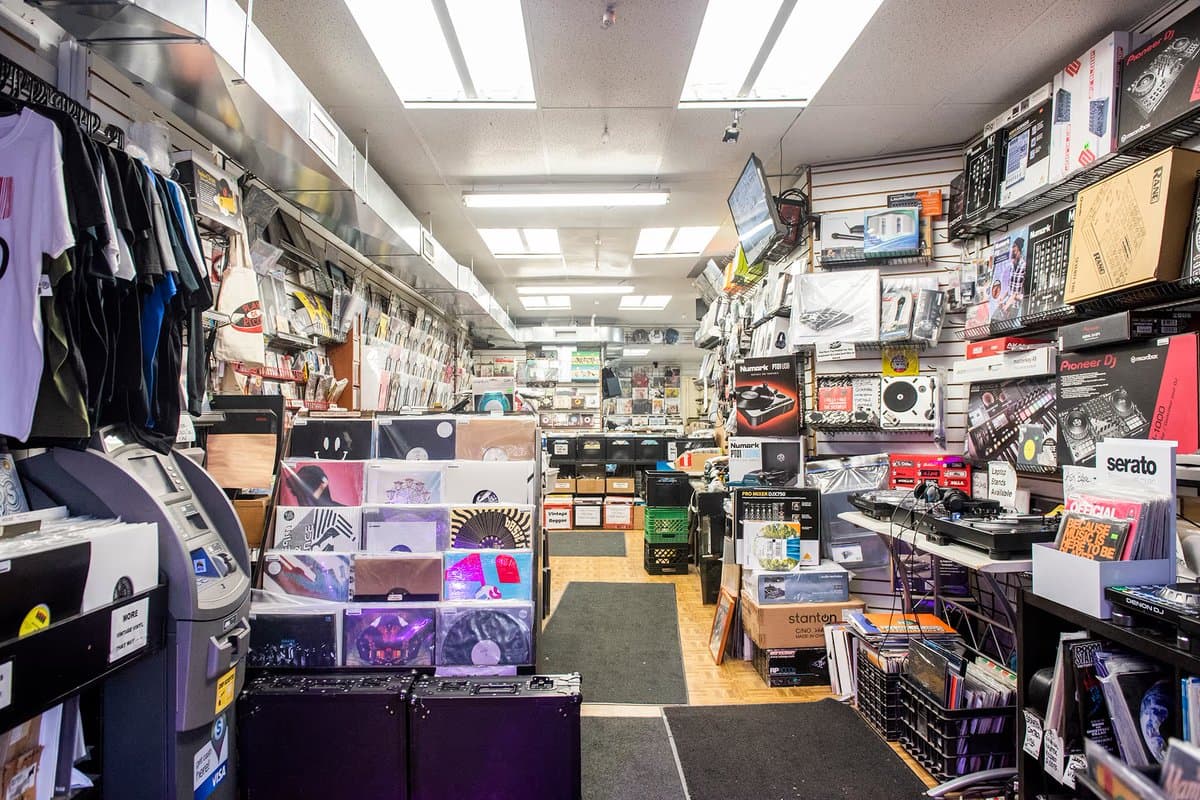
A separate Opus 5.5 experiment shows the other end of the immersive-web spectrum. illscience's full prompt asks for a Habbo Hotel-style 1990s record shop, record browsing, real-song previews, a shared turntable, DJ-like characters, and permission to use remote GPU rendering.
The finished Play De Claude prototype makes the interaction layer concrete: visitors browse crates, preview records, put a selection on decks for the whole room, chat, dance, and wave. Its reported Apple Music previews and shared playback turn a modeled storefront into a social music venue, a distinct input and output pattern from Home Wizard's photo set and Unreal QA trail.