
Chris First documents Cruise Control, an agent-built game costing $5,900 in compute
Chris First reports four days of work and $5,900 in compute at API list prices for Cruise Control. Claude Code crews built and tested Unreal scenes, but he says visual bugs and gameplay problems remain.
TL;DR
- Cruise Control took four days to build, with compute valued at $5,900 at API list prices, according to the creator's project thread.
- Claude Code coordinated up to 20 subagents at once, using Python and screenshots to build inside Unreal Engine, as described in his workflow breakdown.
- Agents drove their own missions with real keypresses and repaired an unwinnable chase, according to an overnight update.
- The game still needed visual fixes and gameplay improvements when its creator promised a release that week.
An agent traced a one-frame-per-second estate to a hedge placed 14,000 times. Chris First also picked a hill redesign from his phone while the overnight crew was working.
Six takes on one island
First describes this as his first game in Unreal Engine, built for Epic's AI MegaJam. He streamed the final day's work from San Francisco and tagged his posts #EpicPartner.
Players work as stunt drivers in Cruise Control, with the jam's “Director's Cut” theme expressed as six film takes:
- The Getaway: escape a bank with police in pursuit through a closed film set.
- The Boat Jump: clear a passing 68-metre superyacht.
- Gunship Run: climb the mansion road and jump over an attack helicopter's rotor.
- The Midway: outrun a 38-metre Ferris wheel that breaks loose.
- T-Minus: race along a causeway as a rocket launches beside the road, then drive aboard a departing spaceship.
- The Moon: leave the ship and drive through quarter-Earth gravity.
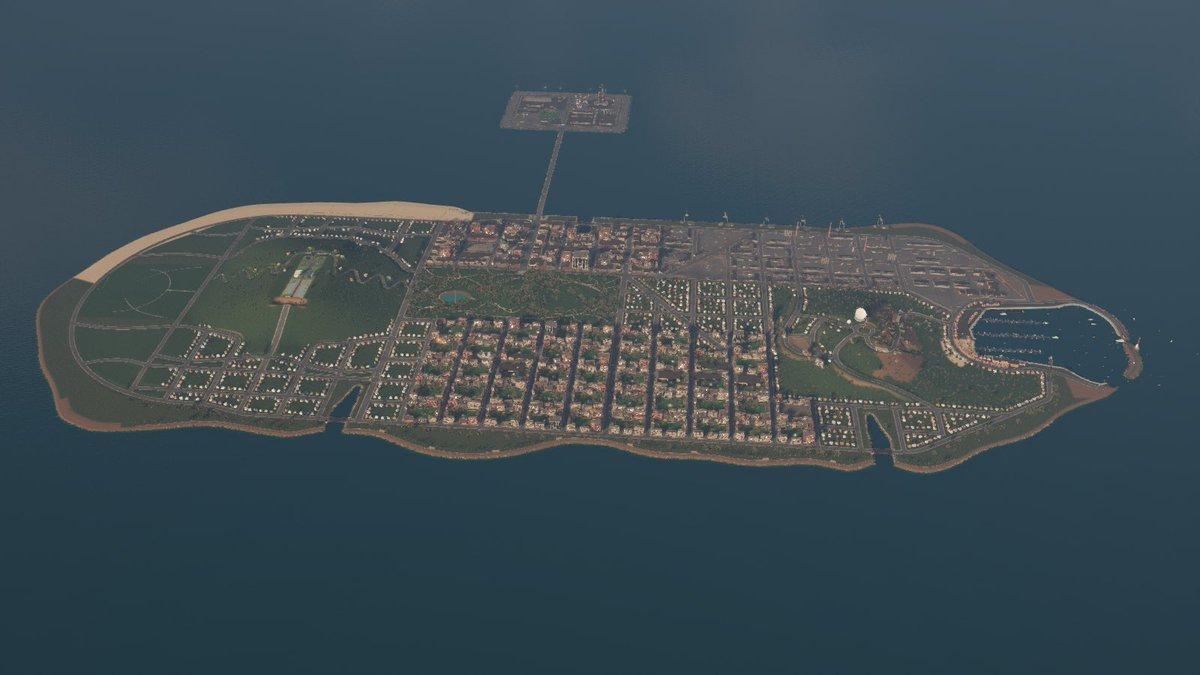
The island measures approximately 5 km by 2.4 km, with free driving between takes.
Overnight builder and critic crews
First used Unreal Assistant for some map modifications, alongside a lead Claude Code agent running crews of up to 20 subagents. Those crews controlled the editor through Python, inspected their own screenshots and reported back, according to his account of the setup.
For one overnight run, he supplied a brief and a 6 a.m. deadline. The work followed three roles:
- Lead agent: coordinated the build.
- Builder agents: each handled a district.
- Cheaper critic agents: scored every area out of 10 and required revisions.
Epic's 5.9 Preview release notes document the underlying editor access: external agents can connect through Unreal MCP.
An earlier overnight attempt stopped during a Claude outage, leaving First's city broken halfway through a rebuild.
Art direction from a phone
First woke twice to redirect the overnight work. When he disliked the hills, agents produced four Regatta Hill concepts; his phone selection became a cliff road, radio mast and large dish in the level an hour later.
His later feedback loop was to play a build, screenshot a problem and send notes. The instructions in his art-direction examples were blunt:
- “The fence looks stupid.”
- “They are too far behind now.”
- “can we make the lighthouse look better?”
Reference-image HUD
First supplied a reference image for the game's HUD. Agents implemented:
- Viewfinder corners.
- REC timecode.
- A minimap.
- A speed panel.
A bug-reporting camera
First also added a tiny, excellent production tool: a free camera in the cheat menu. It displays his location and viewing direction; pressing Space copies those details to the clipboard for pasting into a message to an agent.
Keypress playtests
The agents play-tested missions by driving jumps with real keypresses, reading results and fixing failures. First says one chase went from unwinnable at 2 a.m. to playable by 4 a.m.
The hedge bottleneck
Performance demands were slowing First's live build sessions. In one estate, an agent identified a hedge model containing 2.5 million triangles that had been placed 14,000 times.
After replacing the hedge, First reported island frame times dropping from 60–200 milliseconds to roughly 25–40 milliseconds.
Blender props and game code
The project combined Fab assets with Blender-generated objects. First broke down the implementation into:
- 33,066 lines of C++: traffic, police, pedestrians and breakable objects.
- About 317,000 lines of Python: island construction and testing, including 174 Blender scripts.
- 52 automated tests.
- 227 director voice lines: generated with ElevenLabs.
An agent-written Blender script produced the gunship mission's original 171,000-triangle helicopter, he says.
The asset accounting changed during development. An earlier update said nothing had been bought; in a later reply, First said he had purchased a Fab car-control pack.
That pack needed compatibility work for Unreal 5.9. Under the jam deadline, he had Claude write the driving physics instead.
Cached tokens and compute costs
First counted the following from his session logs and project in his compute accounting:
- 11.5 billion tokens across models.
- 943 agents across the build.
- 49,797 tool calls.
- 291 agent-hours.
- 303 messages from First.
- About 350,000 lines of code.
His accompanying graphic attributes 97% of the tokens to agents rereading cached context. The $5,900 figure values compute at API list prices.
Claude Code resends the conversation and tool history on each API request. Anthropic's caching documentation explains how unchanged prefixes are reused and billed at the cached-token rate.
Release status
After the overnight build, First reported about 30 fps in a progress update and said he had not yet heard the audio mix.
He promised a release soon, then said he aimed to have it out that week, with visual bugs remaining and gameplay improvements needed “for it to be fun.”
Epic offers the engine's 5.9 MegaJam Preview through the Epic Games Launcher and GitHub.