
Claude Opus 5.5 powers a creator's five-day build of a playable Fallout-style browser game
A creator used Claude Opus 5.5 to build Fallout: New York, a browser game with quests, dialogue trees and a Pip-Boy. The creator reports a five-day build with visuals and sound generated in code; play currently requires a desktop.
TL;DR
- Fallout: New York is a free browser game with V.A.T.S., dialogue trees and a Pip-Boy, shown in chrisfirst's gameplay demo.
- The creator says he directed Claude Opus 5.5 and specialist agents through a five-day build, according to his build thread.
- Its visuals and audio are generated by code rather than packaged texture or sound files; the creator's file breakdown puts the game in one 21 MB HTML file.
- The public build requires a desktop and mouse and keyboard, as the play link and the platform clarification make clear.
Chris First had already shown a one-prompt Fallout browser prototype in July. For this version, he used Matt Shumer's Gauntlet Loop, while the live game's patch notes now claim start-to-finish testing of 113 quests.
Fallout on a browser tab
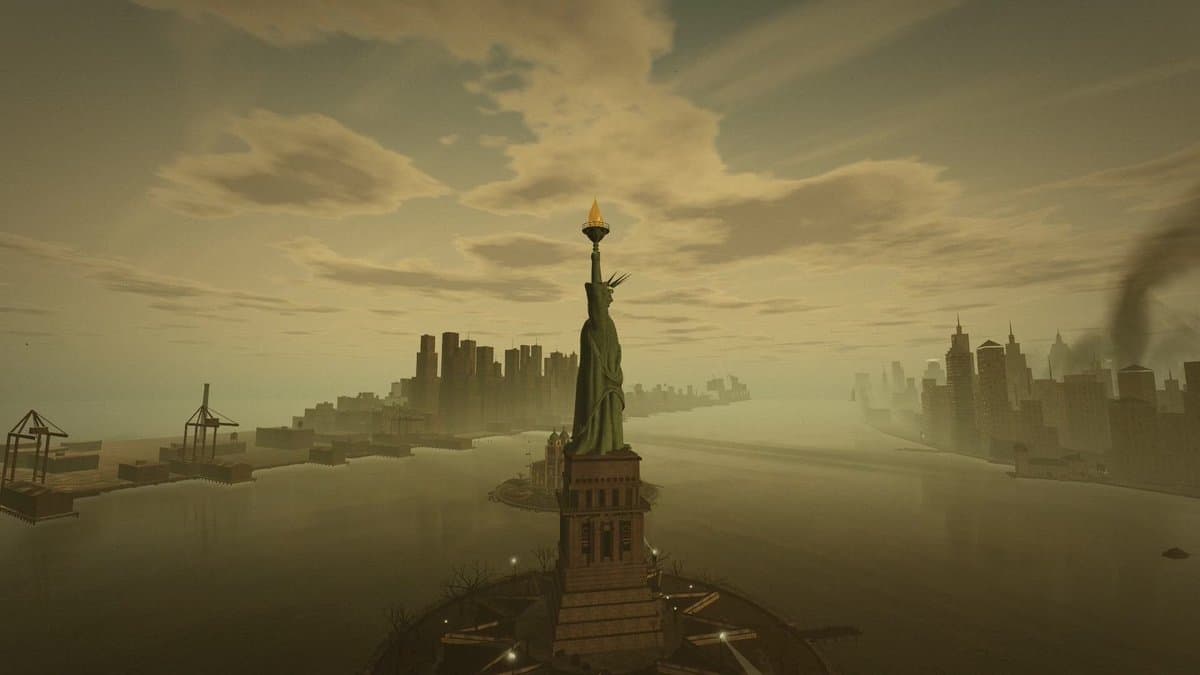
The September build sets a Fallout-style game in New York, with exploration, combat, dialogue and a working Pip-Boy. The creator's initial brief explicitly called for familiar systems such as S.P.E.C.I.A.L., terminals and lockpicking.
The game is playable at fallout.nyc, the destination in the creator's play link.
A studio of specialist agents
The creator says one initial request launched the build, followed by prompts to add places in his workflow reply. Claude wrote a shared contract before agents built 45 modules, including 26 point-of-interest packs; up to 12 ran at once, across roughly 580 agent runs and 20 workflows, per his production breakdown.
His agent workflow divided each round into roles:
- Builder: writes a module.
- Critics: capture screenshots and score it.
- Reviser: fixes what the critics found.
- Verifier: checks the fixes before integration and another review.
The first critics scored Fallout fidelity 6.5/10, visuals 5/10 and gameplay 6/10; characters looked like “mannequins or dolls up close,” the creator reported in his review notes. Shumer's published Gauntlet Loop method likewise gives builders and critics separate contexts rather than letting the builder grade its own work.
Textures and sound made from code
The creator says the game ships without store models, photo textures, music files or sound files. Its single HTML file is 21 MB, or about 6 MB transferred, according to his asset breakdown. That HTML file still has to download; the asset-free claim concerns separate media files.
About 93 texture recipes paint brick, asphalt, metal and wallpaper as the game loads, while code draws the in-world ads, per the texture explanation. Audio uses roughly 220 sound recipes across seven radio stations and 38 songs; the creator disliked the synthesized voice-overs and turned them off in his audio note.
A compressed Manhattan
The creator mapped 99 landmark buildings onto a compressed version of Manhattan's street grid, with 105 map locations and 112 points of interest in his city breakdown. He said most places are in approximately the right location, without attempting a one-to-one reconstruction in a location reply.
- Interiors: 86 separate cells sit outside the city; street doors teleport players in and return them to the matching exit, according to the interior breakdown.
- Characters: generated bodies, faces, outfits and animations include blinking, lip-sync and about 28 creature and robot types in the character update.
- The Neon: Times Square became a ghoul-run trade town with 18 places to visit during three days of revisions in the before-and-after post.
Survey sheets and a drowned city
Agents checked their world with survey sheets placing roads, buildings, collision walls and doors beside aerial and street-level views. That exposed misplaced buildings and doors opening into walls, the creator explained in his inspection post.
A layout cleanup later left Manhattan underwater. The team rolled it back and added an automated playthrough plus a world-sanity check for dry land and a dry player in the flood post.
Perks, quests and parking tickets
The creator's gameplay inventory lists:
- S.P.E.C.I.A.L., 73 perks and V.A.T.S.
- 44 weapons, including Lady Liberty's Torch and the Broadway Slugger.
- Roughly 70 quests at the time of the thread, including six main quests.
- Terminal hacking, lockpicking and bartering.
One side quest follows MUNI-7, a protectron still writing parking tickets for wrecked Fifth Avenue cars after 200 years in the creator's quest note.
Quest fixes and desktop access
The creator acknowledged bugs and said he had added a report option under P, with player reports to be fed back into Claude in a bug-report reply. The release post also lists F8 for reports in the play instructions; the game site says those reports attach a screenshot automatically.
The project is free, unofficial and non-commercial, with no Bethesda affiliation, according to the release disclaimer and the creator's reply. The September 29 update says all 113 quests were played through, repairs around 50 doors that led into walls, and replaces the earlier fake rooms behind windows with visible furnished interiors. It also confirms desktop-only play and text in place of voice-overs.