
Flova adds story-driven video workflow: spec, storyboard, and final assembly
Independent creator demos showed Flova turning a script and references into spec, storyboard, character sheets, shot batches, audio, and final assembly around Seedance 2. Treat the posts as workflow evidence for Flova's pitch as a skill-based video agent rather than a clip generator.
TL;DR
- Flova is pitching itself as a skill-based video agent, not a one-shot clip generator, and Anima_Labs' demo post framed the shift as packaging visual direction, editing logic, and production workflow into reusable skills.
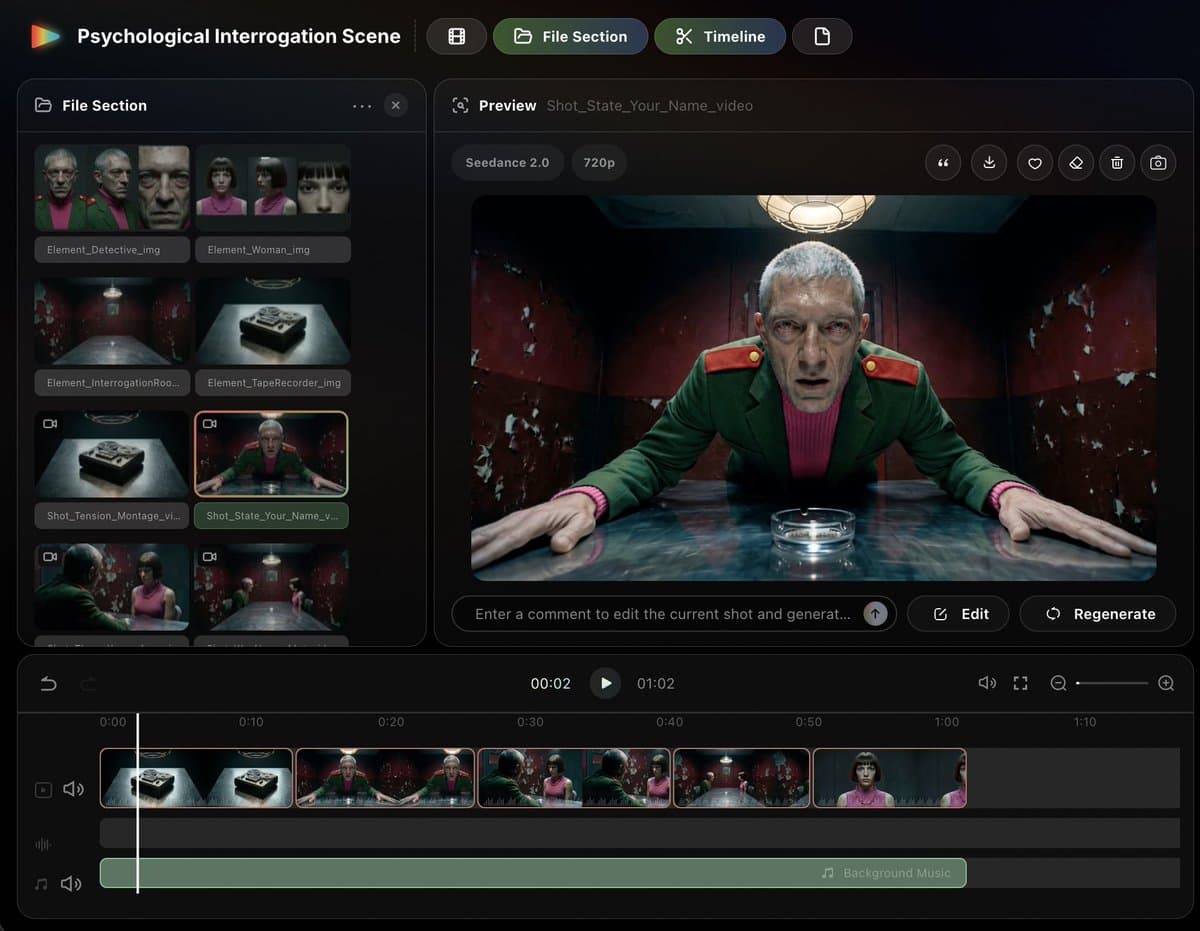
- In egeberkina's hands-on thread, a one-minute interrogation short started with natural-language direction, then ran through Flova's built-in Story Driven Video skill.
- egeberkina's stage breakdown says that skill turns a project into seven reviewable steps: spec, storyboard, character references, prop references, shot videos, audio, and final assembly.
- Before generating shots, egeberkina's asset post says Flova created consistency assets for characters and props, then batched five shots through Seedance 2.0.
- The workflow lands in a broader creator shift toward storyboard-first, multi-tool pipelines, with higgsfield_ai's Claude workflow, AIwithSynthia's storyboard example, and AllaAisling's OpenArt run all showing creators chaining image, video, and finishing tools instead of prompting a single clip.
Anima_Labs linked Flova here, and the useful reveal in the creator thread is the structure: the Story Driven Video skill starts from script plus references, the agent pauses at each stage for review, and it builds consistency sheets before shot generation. Outside Flova, Higgsfield's Claude pipeline and AIwithSynthia's storyboard-led posts show the same creative center of gravity moving upstream, toward planning boards, character sheets, and shot packages.
Skills
The core product claim in Flova's own posts is that a creator should be able to reuse a filmmaking workflow, not rebuild it prompt by prompt. Anima_Labs described those reusable units as skills that can hold taste, visual direction, camera language, editing logic, and production steps.
That framing matches the product surface in Anima_Labs' link post, which points straight to Flova's site rather than to a single-shot demo page. For this story, the interesting part is not whether Flova can make a good clip. It is whether the skill abstraction can hold the boring but essential preproduction structure that usually leaks across half a dozen tools.
Story Driven Video
In egeberkina's demo, the input was unusually small: natural-language back and forth, a script, and a few character and environment references. The next post in the thread says the creator opened Flova's Story Driven Video skill, selected Seedance 2.0 as the video model, uploaded references, pasted the script, and let the pipeline start.
That matters because the workflow boundary sits above the model choice. Seedance 2.0 is the renderer here, but the thing being demoed is the agent wrapper that decides what has to happen before rendering starts.
Stages
The clearest evidence in the thread is egeberkina's stage list, which breaks the run into seven parts:
- Spec
- Storyboard
- Character references
- Prop references
- Shot videos
- Audio
- Final assembly
The same post says Flova paused for review at each step. That is a useful product distinction because it turns the workflow into checkpoints instead of a black box run.
egeberkina's workflow-stage breakdown also claims the system analyzed uploaded characters and mapped them into the storyboard automatically. If that holds up beyond the demo, it pushes Flova closer to preproduction software than to a prompt box with a render button.
Consistency assets
Before shot generation, egeberkina's thread says Flova generated consistency assets for the detective, the woman, the interrogation room, and the tape recorder. Only after those sheets were in place did the workflow move to a batched "Generate all 5 shots" step through Seedance 2.0.
That order is the whole workflow thesis in miniature:
- lock characters first
- lock props and environment next
- generate shots after the references are stable
- add dialogue, soundtrack, and assembly inside the same run
By the final post in the thread, the output was a roughly one-minute short with dialogue, internal cuts, tension pacing, soundtrack generation, and final assembly inside one workflow. The claim is less about raw speed than about keeping preproduction, generation, and finishing in one surface.
Storyboard-first pipelines
Flova is arriving into a creator market that already looks more like a production stack than a single model playground. In higgsfield_ai's post, Claude writes the story, Nano Banana Pro handles character sheets and storyboard work, Seedance 2.0 animates the cut, and Higgsfield MCP routes the chain.
The same planning-first pattern shows up in AIwithSynthia's moodboard post, which starts from a six-shot storyboard with camera notes, lens labels, mood keywords, and lighting references before the video step. AllaAisling's OpenArt example pushes the same logic from the other end, using Prompt Studio with Seedance 2.0 and then upscaling the result in Topaz for a finished 4K pass.
What the Flova thread adds is a claim that these upstream planning layers can be bundled as one reusable skill. The demos still read as creator evidence, not a full product teardown, but they are concrete enough to show where AI video tooling is heading: fewer isolated prompts, more prebuilt production flows.