
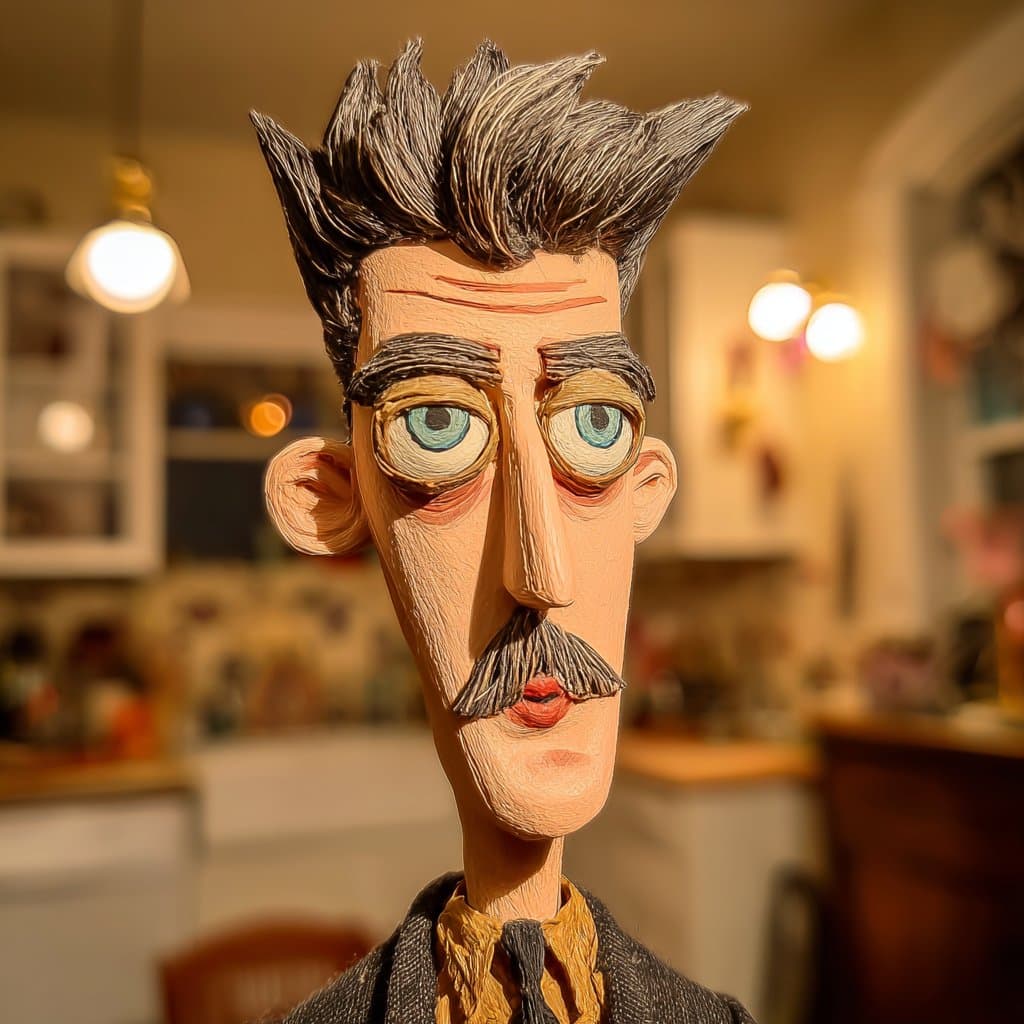
Midjourney tests SREF packs 2089396866 and 2833757731 for stop-motion and Franco-Belgian comics
Creators shared new Midjourney SREF codes for stop-motion puppets, Franco-Belgian comics, soft collage, neon anime, and children’s-book watercolor looks. Save the codes as art-direction starting points instead of rebuilding styles from scratch.
TL;DR
- Midjourney creators spent the weekend sharing a fresh batch of SREF looks, led by a new stop-motion code for handcrafted puppets and a Franco-Belgian comics code tuned to heavy-line European cartooning.
- The drop also widened the usable range beyond character styles: one collage SREF pushes fashion-editorial mixed media, one niji 6 recipe leans neon anime pop, and one soft-painting preset targets delicate premium illustration.
- For children’s publishing and nostalgic illustration work, a British watercolor code explicitly points at classic ink-and-wash storybook art associated with Winnie-the-Pooh-era visuals.
- Creators are treating these less as one-click finished aesthetics than as reusable art-direction blocks, with combo posts like Pink Punk Forest and a trending Ghibli-impressionist mix showing how multiple SREFs and profiles can be stacked into a house look.
What shipped
The clearest new additions are two narrowly defined style packs. Artedeingenio’s stop-motion post introduces --sref 2089396866 as a handcrafted puppet look with expressionist caricature faces, miniature-set lighting, and the kind of tactile texture you’d expect from indie stop-motion films; the attached frames show exaggerated eyes, wrinkled fabric, and deliberately imperfect sculpted surfaces. In the same run, the Franco-Belgian comics post tags --sref 2833757731 to the Spirou/Gaston lineage, with thick contour lines, elastic facial acting, and busy comic-panel staging.
The rest of the pack broadens the palette rather than repeating it. According to promptsref’s breakdown, --sref 3700911257 --v 7 --sv6 produces a surreal editorial collage with red geometric fields and mixed-media layering, while its neon-anime recipe pairs --sref 3920949925 with --niji 6 for pink-blue contrast, clean linework, and grain that keeps the result from feeling overly synthetic. At the softer end, another promptsref post says --sref 4089868573 --v 6.1 --sv4 blends Impressionism and soft realism for miniature-painting warmth.
How creators are combining codes
Single SREFs are only half the story. Posts from VVSVS show the more advanced pattern: stack four SREFs, add --profile, keep --stylize 500, then push mood with --exp 20 and --quality 2. The “pink punk forest” clip uses exactly that recipe, turning a simple scene prompt into a consistent magenta-lit world via 1313617211 4026975374 3796511843 3262620248 plus a saved profile.
A separate promptsref trend post points to --sref 2466513093 --v 7 --sv6 as a current favorite for blending contemporary impressionism with Ghibli-like warmth. Even when the posts market individual codes, the practical takeaway is that creators are now assembling SREF libraries the way filmmakers keep LUTs or photographers keep lens presets. Supporting examples like “dry bones” and “Instinct” reinforce that mood-led prompts can stay minimal when the style stack is doing most of the art direction.
Where the looks fit
For commercial use, these codes divide cleanly by job. The children’s-book watercolor SREF is the most literal publishing fit: --sref 972728021 aims at classic British ink-and-watercolor illustration, with loose brush color and pale paper backgrounds that suit picture books, packaging, and gentle editorial scenes. The soft-realism preset hits a similar market, but with a more polished, boutique finish for cards, lifestyle posts, and premium brand visuals.
The louder looks map to campaign work. The collage code is built for posters, album art, and fashion promos where scale contrast and cut-paper texture matter more than realism, while the neon anime setup looks ready for music branding, indie game art, and youth-facing packaging. The stop-motion and Franco-Belgian codes sit in the middle: specific enough to suggest a narrative universe fast, but broad enough to serve storyboards, pitch frames, or recurring character worlds without rebuilding the visual language from scratch.