
Nano Banana supports bento-grid brand mockups with single-variable prompt swaps
Creators are reusing one Nano Banana prompt skeleton for ecommerce and fintech boards, swapping only brand, era, or category variables. Use the pattern to speed up concept comps before moving into final design or build.
TL;DR
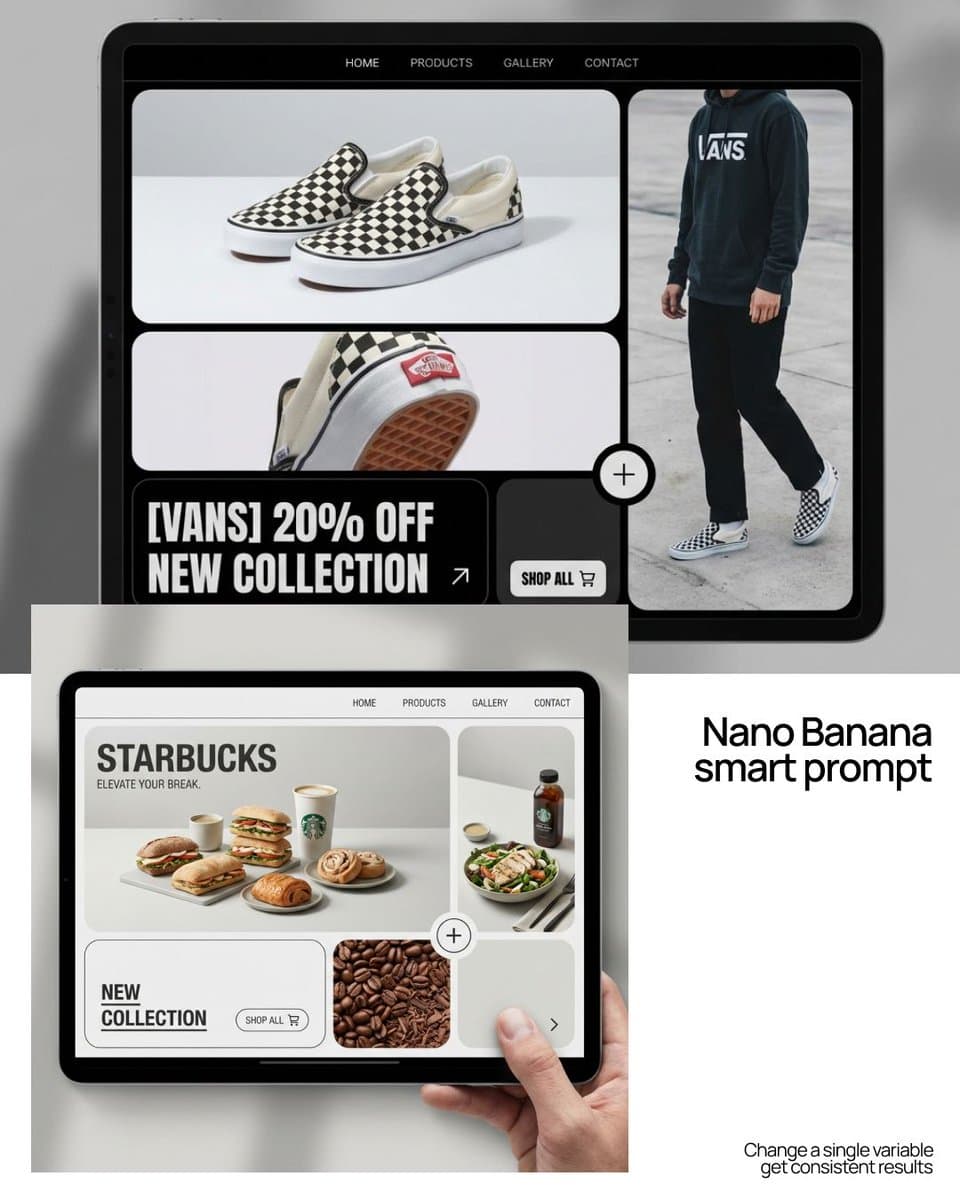
- A reusable Nano Banana prompt skeleton is emerging for brand mockups: creators keep the same bento-grid structure and swap brand or category variables to generate consistent ecommerce concepts, as shown in Amir Mushich's prompt and the matching Columbia remix in his follow-up post.
- The same one-prompt pattern is expanding beyond storefronts into campaign systems; Ege Berkina's fintech board maps a full launch grid with app screens, merch, billboards, and palette tiles from one editable template.
- Style transfer is becoming another variable, not a new workflow: Your AI Pulse's prompt reimagines the same ecommerce layout across Art Deco, retro, psychedelic, neon, grunge, and Y2K looks while keeping modern products and UI blocks intact.
- The appeal for designers is speed. Amir Mushich's workflow post says a scroll-based 3D website breakdown took about two hours, framing these prompts as concept-comp tools rather than long build cycles.
What stays fixed in the prompt pattern
The core recipe is less about one brand and more about a stable layout system. In the Nano Banana prompt, the grid, rounded tiles, top nav, hero product panel, vertical detail shot, close-up texture tile, promo tag, and “SHOP ALL” CTA all stay locked while only variables like brand name and category change. The attached examples show the same composition holding up for Vans and Starbucks, with the food and apparel imagery swapped in without rewriting the whole art direction.
That consistency is the main creative win. Amir's later post reuses the same concept-board logic for a Columbia outerwear page, reinforcing the idea that these are fast pre-build mockups for direction-setting, not final frontend output.
How creators are stretching it into campaigns and era remixes
The pattern now reaches beyond product pages. Ege Berkina's prompt turns the variable-swap approach into a fintech campaign board: one brand name, color system, app name, and slogan generate a mixed grid of abstract hero art, smartwatch and phone UI, merch, a lifestyle scene, and an outdoor billboard. The sample PayMint board keeps every tile visually coherent while each one plays a different campaign role.
A second extension is stylistic rather than structural. Your AI Pulse's template keeps the same bento ecommerce wireframe but swaps the era token—1920s Art Deco through Y2K—so typography, texture, and color language change while the brand and products remain current. That makes the prompt useful for moodboarding multiple directions before any design system gets built.