
GCES opens with AI-made film at 1,300-person Hamburg summit
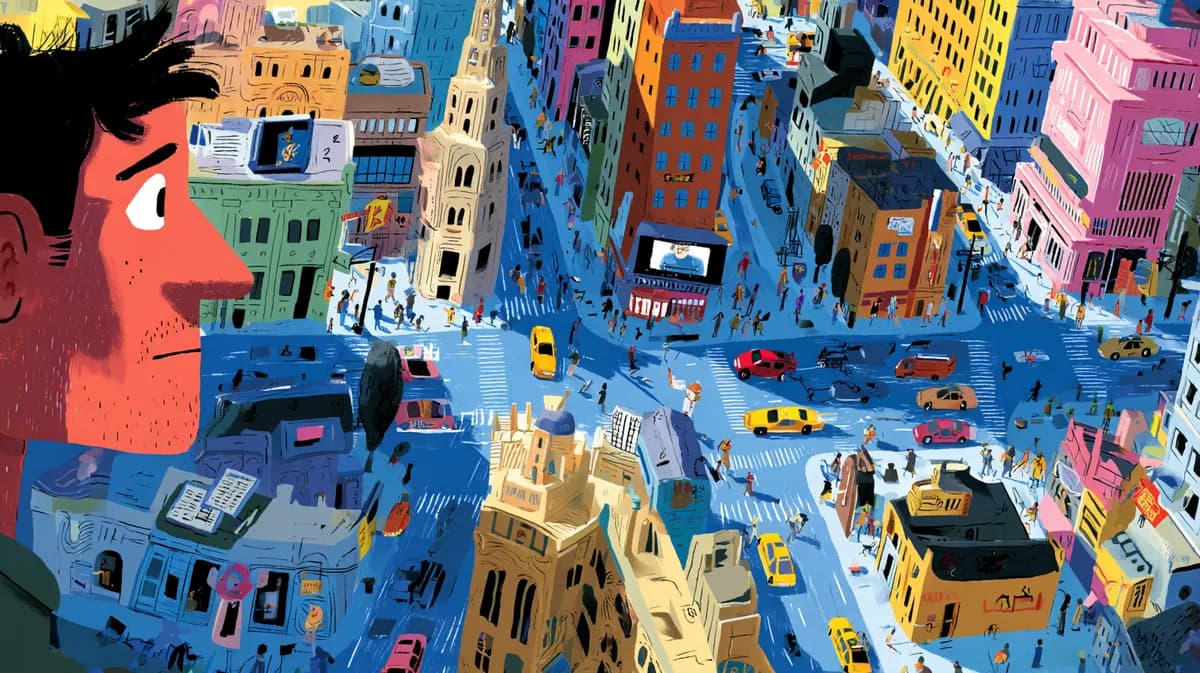
Gizakdag and egeberkina said they made the opening film for the German Creative Economy Summit 2026, blending architecture, music, film, games, and visual art into one AI-led piece. The commission puts AI-generated motion work inside a formal cross-discipline industry event.
TL;DR
- gizakdag's post says the opening film for the German Creative Economy Summit 2026 was made for a 1,300-person event in Hamburg spanning architecture, literature, music, performing arts, visual arts, film, and games.
- According to gizakdag, the brief followed GCES's 2026 theme, "Artificial Intelligence and Digital Economies," and framed the piece around what AI can express, not only what it can do.
- egeberkina's post describes the project as an attempt to translate how architecture, music, film, and art feel when AI enters the process, which gives the commission a cross-discipline angle rather than a single-medium demo.
- The strongest creative signal in the released film clip is mood, not productization: abstract morphing textures and organic forms carry the opener instead of a literal explainer about AI.
You can watch the released film clip, read egeberkina's note on the brief, and see a separate still-image thread where gizakdag posted jewel-heavy statues and mannequins in a similar high-fashion, synthetic-art register.
Opening film
The core news is simple: this was not a personal side experiment. gizakdag framed it as the opening film for GCES 2026, a formal summit commission for a room of 1,300 creatives.
The attached video leans on flowing surfaces, bodily forms, and shifting materials. That makes the opener feel closer to title-sequence worldbuilding than to the usual AI showcase reel.
Cross-discipline brief
According to egeberkina, the team was trying to translate what different creative disciplines feel like once AI becomes part of the process. The list in gizakdag's post is unusually broad for one commission: architecture, literature, music, performing arts, visual arts, film, and games.
That scope matters because the piece is being used as connective tissue across subsectors, not as a tool demo for one niche. The language in egeberkina's post treats AI as a shared visual grammar for multiple practices.
Summit framing
GCES's stated 2026 theme, as quoted by gizakdag, was "Artificial Intelligence and Digital Economies." The film's framing followed that brief with three concrete choices:
- one visual narrative instead of separate discipline-specific segments, per gizakdag's post
- experimentation, emotion, and storytelling as the organizing terms, again in gizakdag's wording
- an emphasis on expression over utility, with gizakdag explicitly contrasting what AI can express with what it can do
For creative readers, the interesting part is where the commission landed: not on workflow screenshots or capabilities claims, but on aesthetic synthesis.
Styling thread
The same day, gizakdag's reposted thread surfaced a separate image set built around statues, mannequin hands, rhinestones, chains, and hard color backdrops. It is a different artifact from the summit opener, but it helps place the visual instincts around the film release.
Those stills push the same blend of synthetic surface design and art-direction-first image making that shows up in the video. For a summit about AI and digital economies, that is a clean closing note: the public-facing artifact was motion, while the adjacent work pointed to a fashion-editorial image language.