
Seedance 2.0 adds 15-second single-shot and FPV workflows in creator tests
Creators used Seedance 2.0 for 15-second single takes, FPV camera paths, anime action, and ad-style sequences across Mitte, Runway, InVideo, and SocialSight. Use storyboard or character art plus structured prompts for camera beats, dialogue, and motion instead of short text-only prompts.
TL;DR
- Seedance 2.0 creator tests converged on the same party trick: 15-second continuous shots with explicit beat-by-beat camera and performance directions, as in Artedeingenio's bakery prompt and Artedeingenio's Mad Max prompt.
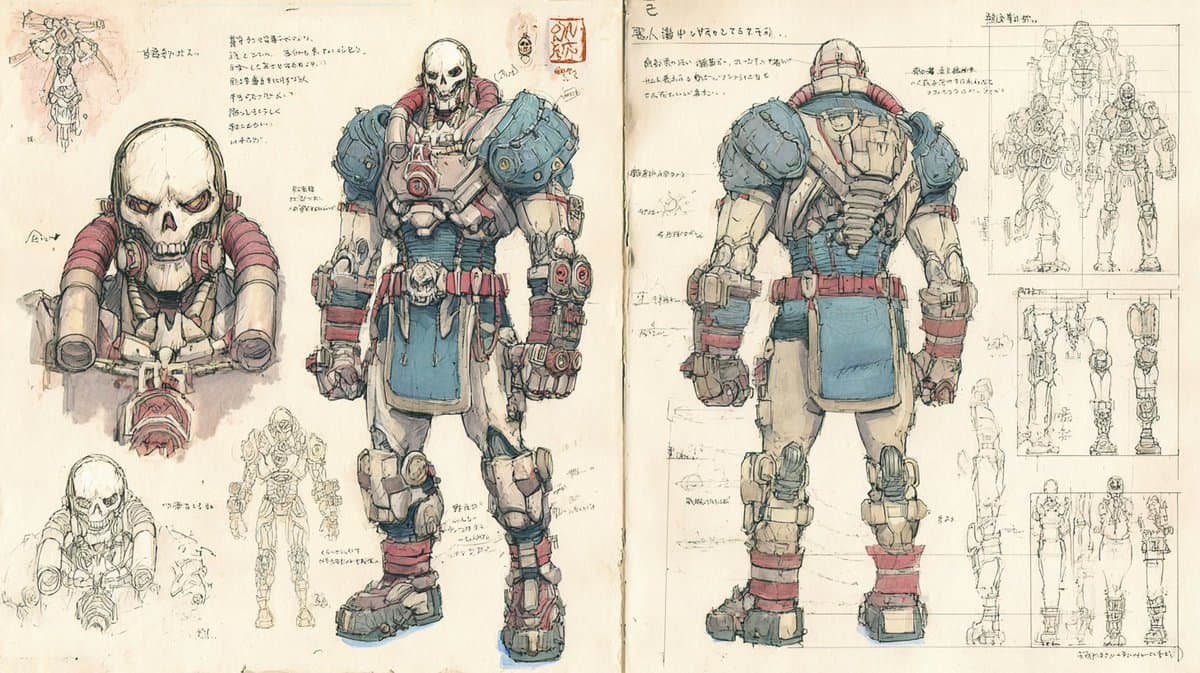
- The strongest workflows were rarely text-only. Artedeingenio's Moebius storyboard post, KingNyalTut's 4-panel continuity prompt, and AIwithSynthia's outfit-board workflow all used boards, grids, or character sheets as the shot plan.
- FPV-style motion became its own prompting pattern, with CharaspowerAI's FPV tip arguing for detailed trajectory prompts over drawn paths, while AIwithSynthia's red-line path demo turned a storyboard path into a hidden motion guide.
- The model's style range showed up in public tests, from CharaspowerAI's anime action clip and Artedeingenio's charcoal-painting 300 short to AllarHaltsonen's Lucid spec ad.
- Official docs line up with the tweet evidence: ByteDance's Seedance 2.0 launch post says the model accepts text, image, audio, and video inputs, while the Runway API changelog lists text-to-video, image-to-video, and video-to-video modes from 4 to 15 seconds.
You can read ByteDance's launch post, check Runway's API changelog, and inspect fal's reference-to-video docs, which spell out the 9-image, 3-video, 3-audio reference limits. The interesting bit in the creator examples is how quickly people standardized on shot lists, storyboard grids, and camera choreography instead of short prompt blurbs. Even this short-film guide from MindStudio describes Seedance as the video step inside a larger preproduction stack of scripts, reference frames, and voice tools.
15-second single-shot prompts
The recurring format in creator tests was almost screenplay-like: declare a 15-second single take, ban cuts, then script the camera and action in 3 to 4 second blocks.
The prompts shared a tight structure:
- format line: "15-second continuous single-shot. No cuts. No scene transitions."
- style block: aesthetic references, lighting, animation treatment, sometimes sound design
- timed beats: 0 to 3s, 3 to 6s, 6 to 9s, and so on
- final frame: the exact ending composition
- negative prompt: motion, anatomy, subtitle, and artifact bans
That format shows up in cozy character acting from Artedeingenio's bakery scene, environmental worldbuilding from Artedeingenio's Moebius interior, and full action spectacle in Artedeingenio's wasteland chase. ByteDance's official launch post describes the underlying reason more broadly: mixed text, image, audio, and video references feeding a single audio-video generation stack.
Storyboards and character sheets
A lot of the public output looked less like "prompt engineering" and more like previs.
Three patterns stood out:
- Storyboard as shot order. KingNyalTut's prompt tells Seedance to treat a 4x1 board as one continuous scene, preserve eyelines and screen direction, and turn each panel into a shot.
- Grid layout as motion map. AIwithSynthia's outfit-board thread keeps the layout fixed while the model and boxed accessories rotate in sync, which turns a static fashion board into a moving catalog.
- Reference art as identity lock. Artedeingenio's Moebius workflow starts with a Midjourney storyboard image, then uses Seedance to animate the exact environment and camera progression.
The same split shows up in community commentary. CharaspowerAI's workflow poll described two camps: full character sheets plus storyboards, or character sheets plus heavy prompting. ByteDance's product page frames this as multimodal reference and editing, but the tweets make the operational change clearer: creators are feeding the model planning documents, not just descriptions.
FPV camera paths
FPV became a recognizable Seedance subgenre in about two days.
The methods were different, but both were really about camera control:
- CharaspowerAI's tip argues that drawing a trajectory onto the input image can overconstrain the result, and that a detailed path description unlocks better motion.
- AIwithSynthia's penthouse prompt uses a red path in the storyboard as an exact camera route, but tells the model the line is only a hidden guide and must not appear in the final render.
- AIwithSynthia's Tokyo grid prompt applies the same logic to a 13-frame travel collage, turning a messy phone-camera board into a guided montage.
This is where the official tooling catches up with what creators are already doing. Runway's API changelog says Seedance 2.0 supports keyframe control, reference images, and reference videos, while fal's reference-to-video docs describe cinematic camera control plus multimodal inputs in one generation.
Style transfer and spec ads
The most convincing examples were not chasing one house style. People were using the same workflow skeleton to jump between animation modes, concept-art looks, and polished ad language.
The visible clusters in the evidence pool:
- Sketchbook and painted looks. Artedeingenio's sketch-background animation, the charcoal-painting 300 short, and the Mad Max concept-art clip all start from image-led style development, then animate inside that aesthetic.
- Anime action. CharaspowerAI's demon-slayer clip and the cyber-assassin rooftop chase lean on speed ramps, whip pans, impact flashes, and exaggerated motion smears.
- Commercial spec work. AllarHaltsonen's Lucid ad and AllaAisling's bounty hunter sequence show Seedance drifting toward ad-previs and music-video language, not just fantasy shorts.
- Transformation edits. underwoodxie96's costume-transition workflow says the dressing sequence still produced artifacts, so the final version hid bad frames in edit. That is a useful reminder that the slick outputs are often half generation, half cleanup.
One of the clearest takeaways from the tweet set is that Seedance's look is becoming prompt-defined rather than model-defined. The same engine can read like a European storybook, an anime fight reel, or a glossy auto spot depending on the board and shot instructions you feed it.
Access and export
The rollout story is also a distribution story. Public examples in this set ran through Mitte, Hailuo, Runway, InVideo, SocialSight, OpenArt, PixVerse, Dreamina, and Runway's API instead of one canonical front end.
A few concrete facts surfaced across docs and creator posts:
- Runway added Seedance 2.0 to its API on May 28, with text-to-video, image-to-video, and video-to-video support, keyframe control, reference inputs, generated audio, and 4 to 15 second durations, per the Runway changelog.
- ByteDance says Seedance 2.0 can combine up to 9 images, 3 videos, and 3 audio clips in one generation in its launch post. fal's API docs repeat the same limits and add practical file constraints.
- CharaspowerAI's Topaz workflow pairs Seedance 2 with Starlight Precise 2.5 for HDR export, which suggests creators are already treating the model as one stage in a finishing pipeline.
- Artedeingenio's discount post points to Mitte as a cheaper access route, which matches the broader pattern in the tweets: creators are shopping for surfaces, credits, and export options as much as model quality.
That last point may be the more durable one. The prompt grammar is stabilizing, but the product layer around Seedance is still fragmented, spread across wrappers, APIs, and post-processing stacks.