
Seedance 2.5 prompts use timed end states for shot control
Creators specify visible outcomes, time ranges, and elements that remain in motion to guide Seedance 2.5 shots. Examples hold a candle flame steady before a gust and isolate a frozen-wave effect.
TL;DR
- Timed end states, rather than a broad action description, held a candle flame motionless for its first four seconds before a gust arrived, according to GlennHasABeard's candle test.
- A windshield focus pull worked when GlennHasABeard's wiper test described the street snapping into focus behind the blade, then returning to rain on glass.
- A transformation can isolate its target: GlennHasABeard's frozen-wave test gave the freeze a two-second window and named snow and mist as motion that continued afterward.
- A 30-second continuous take stayed coherent when GlennHasABeard's spiral-stair test split it into three changes with a visible end state for each stage.
One 15-second windshield test treats a focus pull as a change in what the viewer sees. A frozen-wave experiment lets mist survive the transformation. The spiral-stair descent was rendered at 480p, then upscaled to 4K.
End states
GlennHasABeard divided a 15-second candle clip into four timed stages, with an end state after each range. He credited that structure with keeping the flame steady for the first four seconds, rather than making it flicker throughout.
The quoted beat is unusually spare: “4-5 seconds” introduces a breath from the left, makes the flame lean hard right and nearly die. The preceding state is part of the direction, not empty runway before the action.
That produces a compact shot grammar:
- Time range: when the change happens.
- Visible event: what enters the frame and what it does.
- End state: the image that must be true when that range closes.
Visible results
The wiper prompt says “behind the blade the street snaps into focus,” then returns the eye to the rain-covered glass. GlennHasABeard said naming the visible outcome, rather than merely calling for a rack focus, kept the model from blurring the whole frame.
The same approach makes the boundary of an effect explicit. In the wave test, the water turns to pale-blue ice in one fast sweep from crest to base; everything afterward is specified as stillness, except for snow and mist, which remain in motion.
The usable structure is a three-part inventory:
- What changes: liquid wave to ice.
- What holds: the frozen water and sky.
- What keeps moving: mist and snow.
That last line carries the trick. Effects become cleaner when the prompt also identifies the parts of the frame they must leave alone.
Thirty-second continuity
For a 30-second, no-cut descent down a spiral staircase, GlennHasABeard used three stages, one change per stage, and a visible end state for each. He said the pattern kept the rider consistent from the top to the bottom, then upscaled a 480p render with Topaz Starlight Precise 2.6.
BytePlus publishes a Seedance 2.5 prompt guide and tutorial; an independent comparison lists 30 seconds as 2.5's maximum single-generation length.
The creator examples frame duration as a sequencing constraint. The candle uses four small states inside 15 seconds; the stair shot reduces a longer take to three legible changes.
3D motion reference
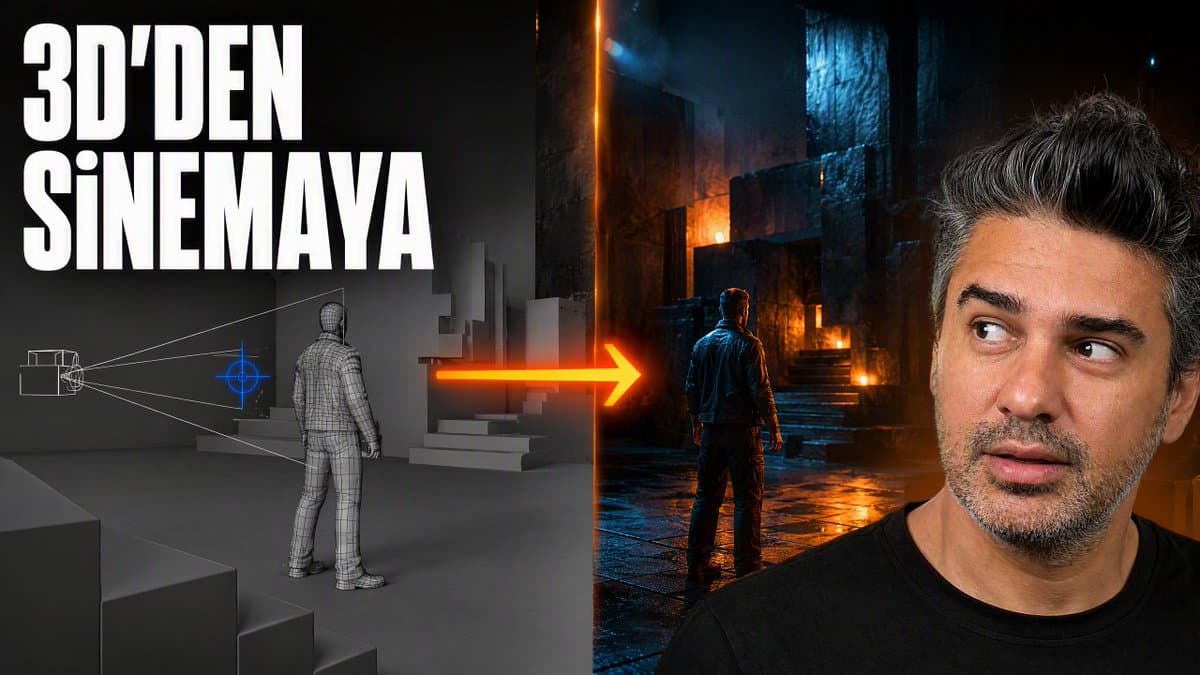
Magnific said a bowling shot that tracks the ball, holds on the strike and whips back for the reaction was blocked in 3D, then passed to Seedance 2.5 as a motion reference instead of being described solely in prose.
Its workflow has four parts:
- Pin the camera at the starting position, move it, then pin it again.
- Record the move in AR on a phone as another input path.
- Combine multiple shots in one take.
- Keep the scene description in the text prompt, because the motion reference controls movement rather than content.
A 3D Shot Composer walkthrough similarly stages characters and multiple cameras, captures the camera views, then feeds those images into a sequence prompt. Ozan Sihay's multi-camera re-cut prompt adds a different kind of constraint: hard cuts every 2.5 seconds, with each position at least 40 degrees from the last and a full shot-size change.