
Opus 5 reportedly builds playable Godot car-soccer prototype in 1.5 days
LLMJunky demoed Slopet League, a Rocket League-style prototype in Godot, saying Opus 5 made the map, physics, effects, and animations. He says GPT 5.6 Sol made car meshes and the build took about 1.5 days.
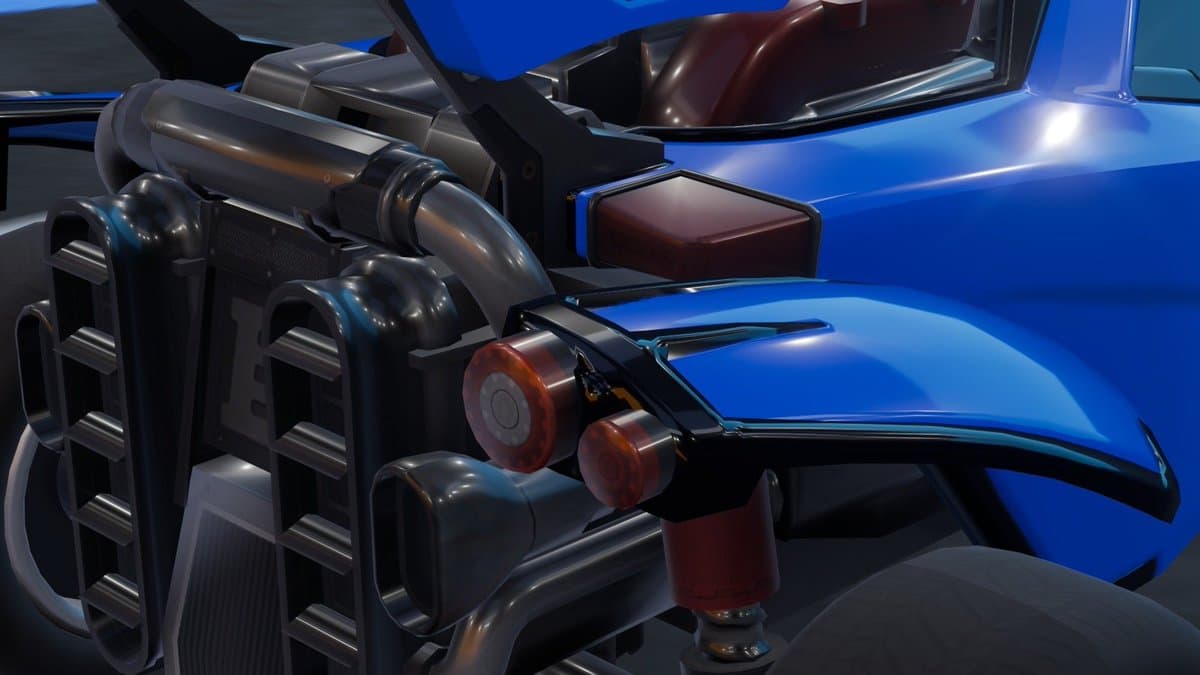
TL;DR
- Slopet League ran in a real game engine, not a web mockup: LLMJunky's launch post says the Rocket League-style prototype took about a day and a half and maybe 25 prompts, while his engine reply identifies the engine as Godot.
- The build split work across models: LLMJunky's launch post says Opus 5 generated the balls, map, effects, physics, and animations, while GPT 5.6 Sol handled car meshes.
- The most useful workflow detail was the self-test loop: LLMJunky's process post says the model researched, tested, adversarially reviewed itself, fixed itself, and compared the result to Rocket League.
- The creator-scale burn was roughly $150: LLMJunky's cost reply gives that estimate, and his usage reply says it used 60% of one Anthropic Max x5 weekly allowance plus some Codex.
- The prototype was framed as a capability proof, not a product: LLMJunky's clarification says he did not post a Steam link, while his IP reply says selling it would touch Epic Games IP.
Anthropic's Opus 5 announcement highlights stronger agentic coding and a 3D FreeCAD reconstruction task. OpenAI's GPT-5.6 release notes frame Sol as a paid flagship model for complex coding, research, computer use, and design. Godot's VehicleBody3D docs describe a car-simulation body built on a raycast vehicle system, while Rocket League has unusually rich public reference material, including RLBot's boost-pad values and smish.dev's car-ball collision writeup.
The 100-second Godot demo
LLMJunky posted a 99.8-second gameplay clip of cars, boost trails, a giant ball, saves, goals, and a polished arena. He said the prototype was built in about a day and a half, with most of that time spent waiting for Opus 5 generation runs.
Asked what engine was used, he answered Godot in one reply and again in another engine reply. That distinction matters for the claim: the demo is presented as a real-engine game prototype, not an HTML canvas trick.
The asset split
The build artifacts point to a car-first, arena-next pipeline:
- Car mesh: LLMJunky showed Sol in Codex recreating the Octane in Blender, and his later Blender post said GPT 5.6 Sol Extra High used existing sketches and meshes as reference material.
- Arena: LLMJunky's map pass said the first map was not imported and was being created by Codex; his Sol xHigh post showed a later map-design pass; his Opus map post tested Opus for the arena.
- Final prototype: LLMJunky's launch post credited Opus 5 with the balls, map, effects, physics, and animations, while GPT 5.6 Sol handled car meshes.
He also flagged the legal edge early. One reply about the Octane said the car would “guarantee a DMCA,” and his IP reply called the project a fun frontier-model test around Epic Games IP rather than something he would sell.
The physics loop
LLMJunky described the physics workflow as a closed loop:
- Research the public documentation.
- Test the implementation.
- Adversarially review the result.
- Fix mismatches.
- Compare against the original game.
His confidence came from play feel, not an external eval. LLMJunky's Rocket League reply says he has about 3,000 hours in Rocket League, while a later reply puts the number around 3,500 and says the physics were “basically perfect already.”
The documentation claim checks out at the ecosystem level. Epic's support page lists Rocket League's six hitbox classes, RLBot's wiki publishes boost-pad counts, refill times, hitbox dimensions, and field coordinates, and smish.dev walks through a model of Rocket League car-ball collision physics.
The prototype boundary
LLMJunky repeatedly called Slopet League a proof of capability. In his POC reply, he said the run benefited from the amount of vehicle, field, physics, and car documentation available, and he described the result as a one-day proof of concept with limitations.
He pushed back on people judging it as a commercial launch. One reply says the point was to show what was possible, another reply frames it as a Rocket League homage, and his longer clarification says he was not trying to get players.
The $150 burn
The resource numbers were small enough to feel dangerous for indie prototyping. LLMJunky's cost reply estimated the run at about $150, and his usage reply said it used 60% of one weekly Anthropic Max x5 allowance plus a little Codex usage.
Earlier in the asset thread, LLMJunky's plan reply said he was on a $200 plan and attached a usage screenshot. The cost story is still self-reported, but it matches the rough shape of the build: many long 3D generation and coding passes, with the creator waiting on Opus rather than hand-building the game.
Godot as the testbed
This demo landed inside a wider Godot moment for AI game makers. AIandDesign said LLMs seem very good at coding with Godot in a reply to LLMJunky, while the same thread included a Godot port of “Terminus Breach” running on Mac, PC, and Android with controllers.
A separate Ziva Godot benchmark gave Claude Opus 5, GPT 5.6 Sol, and GPT 5.6 Terra one prompt each to build a 3D vampire-survivor game in Godot. Ziva's result: Opus 5 was the only one that “feels like a game,” though it cost 7x more and took 2x longer than Sol.
LLMJunky chose a scope that plays to current model strengths. His reply about game choice describes the target as “soccer with cars,” while his earlier comparison says prior AI game output sat somewhere between Minecraft and a more polished indie game, with real engines as the next benchmark.
The promised breakdown
LLMJunky said the public response was “nuts” and that he plans to teach people how he made the prototype. In an earlier reply, he put it more theatrically: he would explain the process after he “break[s] the internet.”
That future breakdown is the missing artifact. The current evidence shows the demo, the asset trail, the engine, the self-testing loop, and the reported cost, but not the exact prompts or project files.