
GPT-5.6 Sol demos add Blender, After Effects, Three.js, and SQL DOOM builds
Min Choi collected early GPT-5.6 Sol builds spanning Blender scenes, After Effects automation, Three.js characters, UI cloning, SQL DOOM, and Claude Code tests. Meng To also published a video-to-HTML workflow.
TL;DR
- GPT-5.6 Sol's first-week creative demos clustered around design automation: MengTo used it for one-shot video-to-HTML and published the skills behind the workflow MengTo's walkthrough.
- minchoi's roundup collected builds across Blender, After Effects, Three.js, SQL DOOM, UI cloning, Claude Code, and reinforcement-learning experiments minchoi's roundup.
- The strongest workflows treated Sol as an agent operator: MengTo had it plan 20+ steps and spawn isolated threads, while rainisto used MCP Blender as a controllable 3D blockout stage MengTo's agent workflow rainisto's 3D pipeline.
- The edge cases were real: stevibe found 5.6 stronger at multi-step UI orchestration but weaker than GPT-5.5 on some physics prompts, while goodside found Sol hallucinating text from meaningless scribbles stevibe's canvas tests goodside's scribble test.
OpenAI's GPT-5.6 launch post says Sol shipped with stronger design judgment, computer use, Codex support, API access, and an ultra setting that coordinates parallel agents. MengTo's Skills repo turns reference capture, video analysis, and frontend prompting into reusable agent playbooks. Magnific's MCP page now lists ChatGPT, Claude, Cursor, Codex, VS Code, Gemini, and other clients as places to run image, video, audio, vector, and 3D generation from chat.
Video-to-HTML
MengTo called one-shot video-to-HTML Sol's real superpower, with a 10-minute walkthrough and an open-sourced Skills repo behind the workflow. In a reply, he framed it as the new screenshot-to-HTML for animations and interactions MengTo's follow-up.
The repo matters because it packages prompts as reusable agent skills, not one-off chat tricks. Its README describes agent skills for designers and builders using Codex, Claude, Cursor, and other coding agents, with workflows for video-to-super-prompt, HTML-to-interaction prompts, full-page captures, and UI inspiration capture.
First-week build inventory
minchoi dated the wave to less than five days after GPT-5.6 dropped. The list reads like a cross-app stress test:
- Roblox aimbot, via minchoi's first example.
- Floating MacBook in Blender, via minchoi's Blender example.
- 7,500 LEGO bricks assembling the Millennium Falcon, via minchoi's LEGO example.
- After Effects automation that produced an animation in minutes, via minchoi's After Effects example.
- DOOM using SQL, described as a full game engine inside a database, via minchoi's SQL DOOM example.
- A rigged, animated 3D character running in Three.js, via minchoi's Three.js example.
- A Blender scene built with almost no human help, via minchoi's second Blender example.
- Screen recording to polished app UI, via minchoi's UI clone example.
- Developers testing GPT-5.6 inside Claude Code, via minchoi's Claude Code example.
- Early reinforcement-learning experiments, via minchoi's RL example.
The useful pattern is breadth: Sol was not just being tested as a text model. People were using it as a controller for creative software, browser code, databases, and coding-agent shells.
Infinite canvas
MengTo's bigger demo was an infinite canvas for HTML and React designs with layers, an inspector, and real-time collaboration. He said Sol Ultra mostly one-shotted it with planning plus sub-agents, burned through his limits, and left him with little manual fixing MengTo's demo.
The raw prompt came through voice while he was waiting in line at Universal Studios Japan. It asked for a Figma-like canvas with multiple websites, HTML or React generation, image and video items, layers on the left, inspector on the right, and a proper plan before implementation MengTo's prompt.
That prompt is messy in the exact way real creative direction is messy. Sol's job was to convert it into product structure.
Team of focused workers
MengTo described his Codex workflow as a delegation pattern:
- Keep the prompt pinned in an open Codex side browser, with a screenshot for context.
- Stay general while giving enough context.
- Ask the agent to make the plan.
- Let Sol break one goal into 20+ concrete steps.
- Spawn a thread for each step.
- Commit, review, and roll back each isolated task independently.
The same split showed up in other builders' stacks. petergyang used Fable to create plan.html with design guidelines, Claude Design to make components and screens, then GPT-5.6 to build petergyang's project flow. minchoi's model router put Grok on realtime research and day-to-day coding, Fable on planning and frontend, and GPT-5.6 Sol XHigh on complex coding and debugging minchoi's model workflow.
Prompt directors
Magnific compared GPT-5.6 Sol and Fable 5 by asking assistants to generate video prompts, then rendering the outputs through the Magnific MCP. The Sol fantasy prompt specified character design, macro eye shots, low ground tracking, projectiles, motion blur, a canyon flight path, 24 fps, and no dialogue, text, or logos Magnific's Sol prompt.
A second Magnific test used Seedance 2.0 for the render and kept the concept fixed: a pilot riding a stealth jet through an anime action sequence. Fable's prompt used five numbered shots plus a final stable hold Magnific's Fable prompt, while Sol's prompt leaned into low-angle camera language, visor close-ups, side tracking, whip pans, parallax, and a final wide shot Magnific's Sol anime prompt.
Magnific's setup post said connecting the MCP to ChatGPT or Claude lets users create videos like these from inside the chat environment Magnific's MCP note.
3D blockouts
rainisto used Sol as a Blender operator first, then passed the primitive render into an image model for polish. The pipeline was MCP Blender to basic blocking image to image refinement pass, producing reference or start frames with exact control over camera position rainisto's pipeline note.
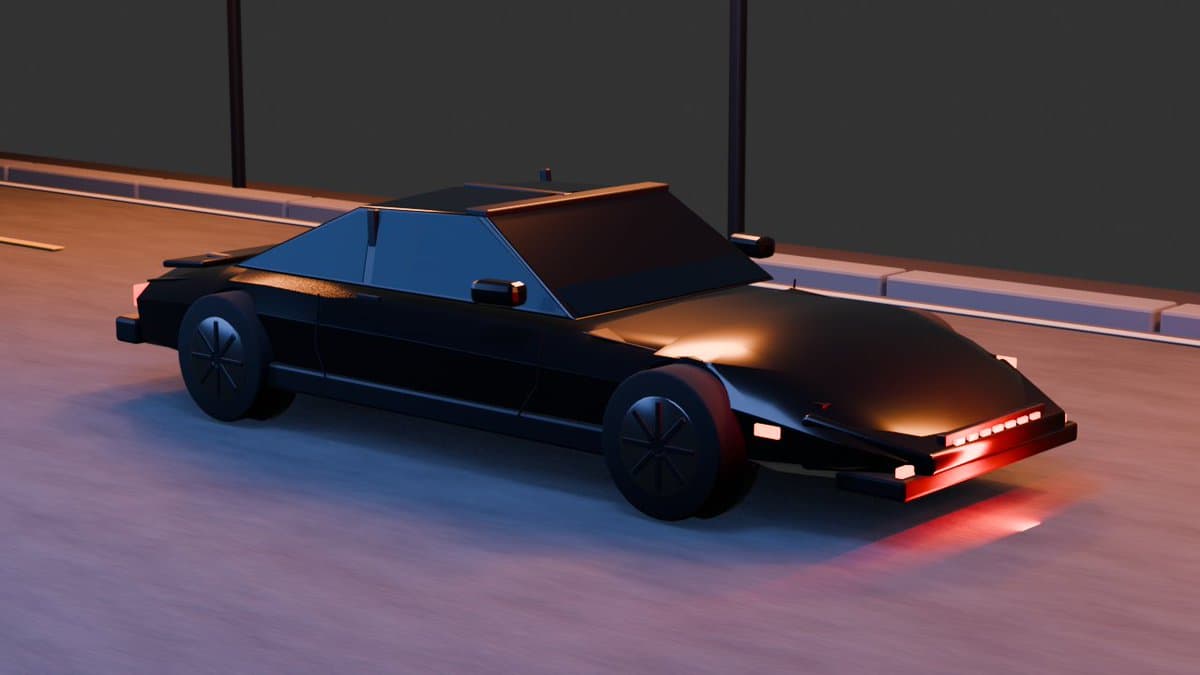
The same workflow showed up in a Pontiac Firebird test: Sol controlled MCP Blender to create a PS2-style car blockout, then a separate image pass polished the render into a stronger reference frame rainisto's Firebird blockout.
Token burn
The agent-team style had a cost story. shannholmberg listed six levers for running Fable and GPT-5.6 without hitting limits:
- Context: trim
CLAUDE.md,AGENTS.md, skills, and enabled tools. - Reasoning level: reserve max effort for harder problems.
- Stop points: add gates between plan and build.
- Subagents: lower inherited reasoning levels for spawned agents.
- Orchestration: use a cheaper model to steer and call the expensive one for hard reasoning.
- Usage: inspect what a single message costs.
LLMJunky said Codex raised its baseline auto-compaction from 262K to 353K and that GPT-5.6 has a 1M context window, while warning that long computer and browser automations can make compaction lossy because accessibility trees flood the context LLMJunky's compaction note. His example command set model_auto_compact_token_limit=900000 for a project-level run LLMJunky's compaction note.
Small benches and visual weirdness
stevibe shrank frontend comparison to a CTA button bench: nine Design Arena models, 12 named styles, the same Get Started label, and required hover, active, and focus states. That produced 108 buttons across styles like glassmorphism, brutalist, neumorphic, retro terminal, cyberpunk neon, material, and luxury serif stevibe's CTA bench.
A separate canvas test compared Sol Ultra, Terra Ultra, Luna Max, and GPT-5.5 XHigh across cursive handwriting, fireball-water interaction, burning wet paper, and a ChatGPT app UI. stevibe's result: GPT-5.6 pulled ahead on instruction-following and multi-step orchestration, while GPT-5.5 still won two raw physics prompts stevibe's canvas tests.
goodside found the visual side could hallucinate hard. In one test, GPT-5.6 Sol and Claude Fable 5 tried to read meaningless red scribbles, with Sol returning fabricated phrases and Fable pushing back in one screenshot goodside's scribble test. In another, Sol read I LOVE YOU from a 1024x1024 random binary-noise image that goodside said he made himself and knew contained no hidden message goodside's random-noise test.
Sol also read a Ghost Font clip after goodside told it which direction the letter pixels were moving, producing RILEY WAS HERE goodside's Ghost Font test. The weird part was not that Sol solved every visual puzzle; it was that a small hint could flip it from hallucination-prone search into successful decoding.