
Topaz launches Image Web in browsers: 50% off ends today
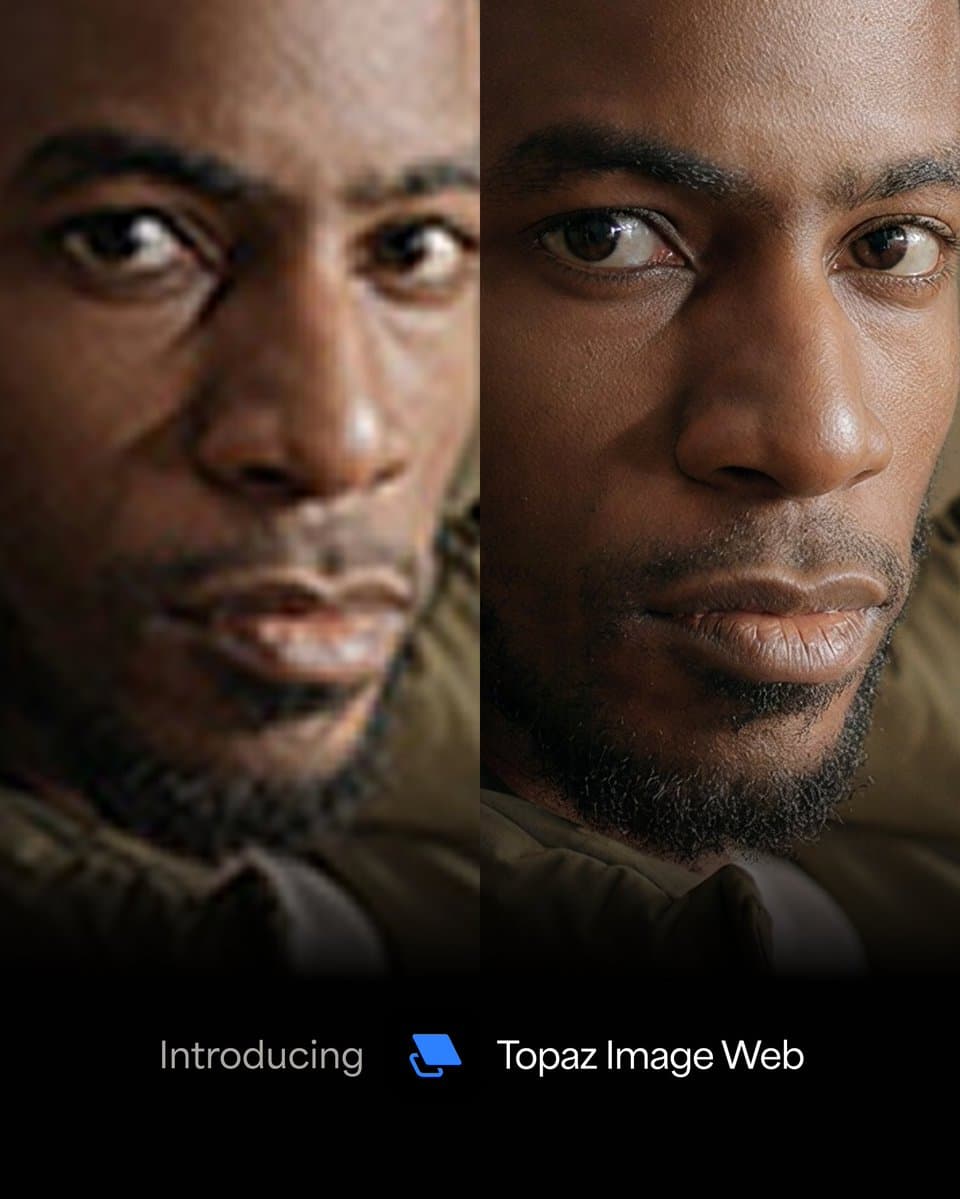
Topaz says its AI models now run in the browser through Topaz Image Web and is discounting access 50% through today. Separate creator posts show Astra and Precise Starlight already being used to finish Seedance and OpenArt outputs, which makes the web rollout relevant to AI video upscaling workflows.
TL;DR
- Topaz says its AI models now run in the browser through Topaz Image Web, according to topazlabs' launch post.
- The launch thread also pushes a same-day discount, with topazlabs' offer post linking to Topaz Image and saying 50% off ends today.
- Creator examples already place Topaz in AI video finishing workflows, with awesome_visuals' workflow note saying a Seedance 2.0 travel clip was upscaled with Astra.
- A separate cinematic example from AllaAisling's post uses Precise Starlight 2.5 to take a Seedance 2.0 scene to 4K.
- In a side-by-side restoration test, CuriousRefuge's comparison says Astra 2 looked smoother, but sometimes drifted further from the source image and texture.
You can jump straight to Topaz Image, see topazlabs' browser launch post, and the early creative use cases already lean less on stills than on finishing video generated elsewhere. awesome_visuals used Astra on a Seedance vlog, AllaAisling used Precise Starlight 2.5 for a 4K sci-fi scene, and CuriousRefuge's comparison gives a rare side-by-side note on when Astra's smoothing starts to look too clean.
Topaz Image Web
Topaz framed the release in one line: its AI models now work in your web browser.
The thread's linked product page is Topaz Image, and topazlabs' sales post says access is 50% off through the end of the day. The tweet evidence does not spell out a feature matrix, but the pitch is clear: Topaz is moving browser access to the same enhancement stack it was previously known for on desktop.
Seedance finishing workflow
The most concrete creator example in the evidence pool comes from awesome_visuals' workflow note, which says a travel vlog was made with Seedance 2.0 on Hailuo and then upscaled with Astra on Topaz.
That matters because it pins Topaz's browser move to an existing workflow: generation in one tool, finishing in another. The clip itself is the useful proof point, because it shows Topaz showing up at the post-processing stage rather than the generation stage.
4K upscaling with Precise Starlight 2.5
AllaAisling posted a second workflow that is even more specific about the model choice: Seedance 2.0 in OpenArt, then Topaz Precise Starlight 2.5 for 4K upscaling.
The prompt block is unusually detailed, which makes the post useful as a reproducible recipe as much as a showcase. It also widens the picture beyond Astra, because Topaz's web pitch lands alongside creators already naming individual Topaz upscalers for different looks.
Astra 2's tradeoff on archival footage
Curious Refuge compared Seedance 2.0, Astra 2, and Magnific on the same low-quality home-movie style clip. According to CuriousRefuge's comparison, Seedance reduced shakiness and distortion while staying fairly authentic, Astra 2 made the footage smoother overall, and Magnific preserved more of the original imperfections and color character.
The useful detail is the failure mode: Curious Refuge says Astra 2 sometimes drifted too far from the original image and texture. That gives the story one concrete caveat, not just launch hype, and it introduces a different use case from the Seedance-to-Topaz showcase posts: restoration instead of cinematic finishing.