
OpenAI lets partner apps use ChatGPT subscription allowances
Sign in with ChatGPT lets subscribers use included plan allowances in partner tools such as Pi, Warp and Devin. Devin documents quota controls, while Amp says higher-capacity use carries separate charges.
TL;DR
- OpenAI is letting eligible Plus and Pro subscribers spend included ChatGPT Work and Codex usage in partner tools, including Pi and Warp, according to Pi's announcement and Warp's launch post.
- Sign-in and plan usage require separate permissions; partner requests consume an existing allowance, with per-app caps in ChatGPT settings, as Pi's reply describes.
- Devin charges the OpenAI-model portion of a cloud session to the connected ChatGPT plan and other models to Devin's quota, per Cognition's explanation.
- Partner pricing still applies: Amp's launch post reserves separate charges for its higher-capacity modes, while a Devin announcement comes with a paid Devin-plan requirement.
Kilo's launch post says its cloud agents can draw from the same ChatGPT plan as its IDE extensions. Cognition's Devin post says connecting that plan changes which models Devin chooses during a session. OpenAI's usage guide makes each app's limit a percentage of the subscriber's shared weekly allowance.
Identity and inference permissions
The OpenAI quickstart separates openid profile email sign-in from optional Responses API scopes for plan-funded inference. An app gets an account identifier and basic profile information through identity scopes; using the subscriber's plan needs additional consent. OpenAI's help page says sign-in alone shares neither conversations nor memory.
Pi described the launch as a unified way to access OpenAI subscriptions and credits, and clarified that the combination is OpenAI models running in the Pi harness, according to Pi's reply. That distinction matters for coding-agent integrations: the subscriber brings model usage, while the partner supplies its own workflow.
Pi, Warp and the partner surfaces
Warp added ChatGPT sign-in to its terminal and Agent CLI, with a browser confirmation flow shown in Warp's demo. The partner launches cover different kinds of agent work:
- Conductor: Codex subscription usage after ChatGPT sign-in, per Conductor's launch post.
- Kilo: VS Code, JetBrains, CLI, cloud agents, code reviews and mobile, per Kilo's announcement and Kilo's writeup.
- Hermes Agent: ChatGPT plan access through Nous Portal, with linked-account controls in settings, per Nous Research's announcement.
- v0: Plus and Pro account connection for building, according to v0's demo.
- Amp: ChatGPT subscription and credit usage in its coding agent, per Amp's launch post.
Devin's two quota buckets
Devin supports the connection in Cloud, Desktop and CLI. In Cloud's Lite, Normal, Ultra and Fusion modes, OpenAI models draw from the connected ChatGPT allowance while other models draw from Devin's included quota, according to Cognition's thread and its billing explanation. Cognition says Devin also leans more heavily on OpenAI models once a plan is connected. On Desktop and CLI, the user selects the model directly.
When the app-specific ChatGPT limit is reached, Cognition says sessions continue using Devin usage until the limit resets. Access requires a Devin Pro, Max or Teams plan; a Devin reply put the entry price at $20 a month.
Shared caps and separate charges
The OpenAI usage guide lists 10% to 100% weekly per-app caps in Settings > Usage. A cap limits how much of the existing weekly plan allowance an app can consume; it does not reserve extra capacity. The same page says apps can have their own fees and shows a separate switch for allowing apps to use credits after included limits.
Amp says ChatGPT sign-in can cover its basic use while Megawatt and Gigawatt consume separately purchased orbs, according to Amp's launch post. Amp also says orbs can be used alongside the ChatGPT subscription, as its follow-up clarified. Existing Amp connections continue working while it prepares reauthorization instructions, per another Amp reply.
Sixteen named partners and a commercial trial
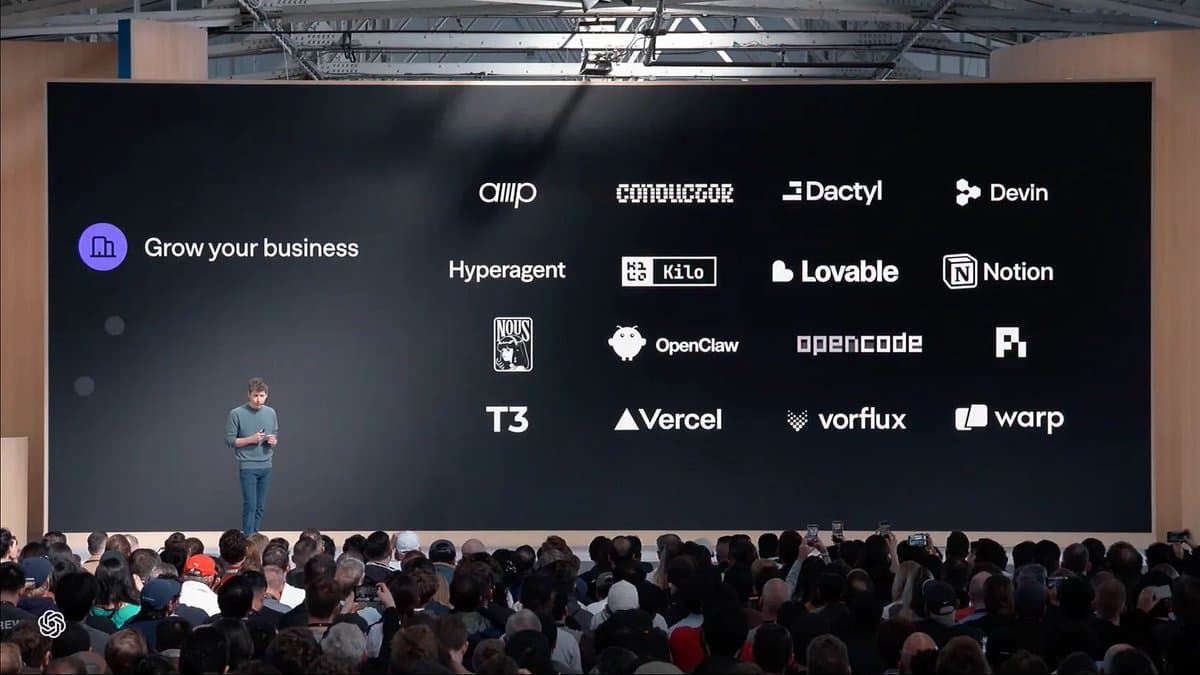
OpenAI's partner list names 11 commercial apps with plan usage, four open-source integrations (OpenClaw, OpenCode, Pi and T3), and Lovable as coming soon. It separately names five identity-only apps, including GitLab and Supabase. That breakdown qualifies a launch-day post saying the subscription works in more than 16 partner products; v0 also announced an integration but is absent from the listed plan-usage partners.
The developer quickstart says commercial sign-in remains a limited trial for selected partners, while plan usage is available to open-source partners and selected private clients. A developer's documentation find caught the commercial waitlist language: a company building a hosted app cannot assume the login option is open for self-service integration.
Responses API preview constraints
The open-source integration guide describes a dynamically registered OAuth client bound to a user and workspace, with a distinct persistent host ID for each laptop or self-hosted VM. The app receives an OAuth access token for eligible Responses API requests, rather than asking the subscriber to supply an API key.
The preview limitations make the request route unusually specific:
- Set
store: falseandstream: true, and resend conversation history ininputfor HTTP requests. - Use
instructionsor developer messages; explicit system-role message items are rejected. - Hosted image generation, file search, Code Interpreter, native computer use and hosted MCP tools are unsupported on this route.
- Text, image and file inputs depend on model support; audio and video inputs are unsupported.
Local shell and MCP tools can still run through Codex app-server, the same documentation says. Its hosted-tool exclusions apply to the subscription-backed Responses route, not to every tool in a partner's agent harness.