
Claude Code users report unexpectedly fast quota use
Claude Code users report unusually high quota consumption. Boris Cherny says Anthropic made no changes, asks users to share /usage output, and suggests disabling the up-coder plugin to test its impact.
TL;DR
- Five-hour allowances are reportedly disappearing within an hour, according to one user; Anthropic says it made no changes.
- The up-coder plugin appeared to consume most of one user's tokens, prompting a request to test with it disabled.
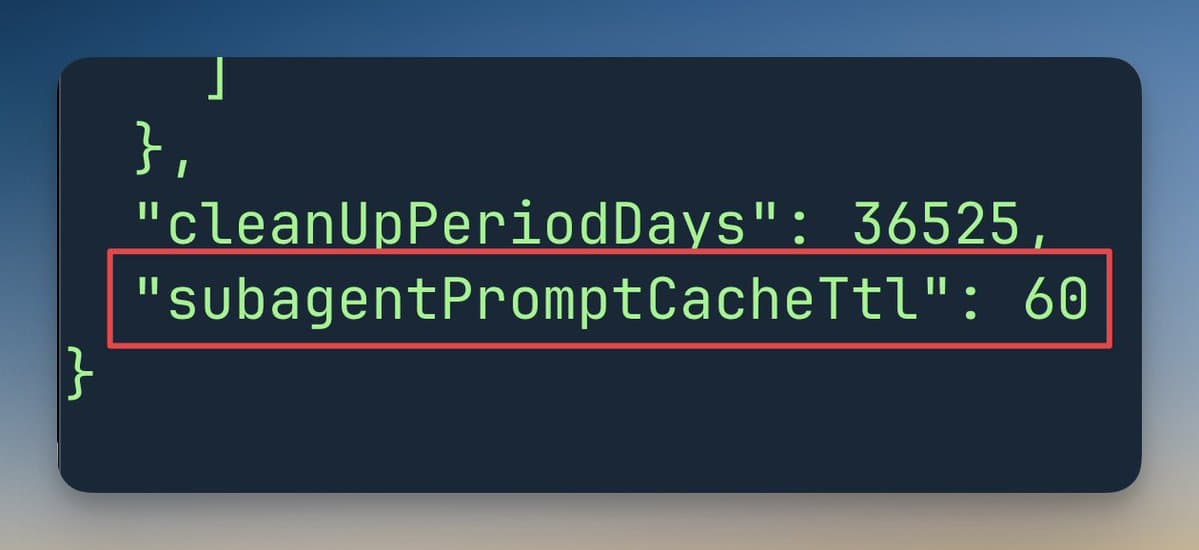
- The proposed subagent cache setting was corrected from numeric
60to the string"1h"in a follow-up. - One workload dropped from roughly 438K to 99K tokens per request after several changes, according to the user's diagnosis.
Claude Code's usage breakdown can attribute consumption to individual plugins. Anthropic's API caching docs start the expiry clock when a request begins, so response generation itself eats into a five-minute cache window. Fast mode charges separate usage credits even when subscription quota remains.
Five-hour quota complaints
Users describe shorter working windows without a corresponding increase in activity. One person cycling through three Max 20x accounts said two required their first-ever resets that morning, despite no proportional increase in their own usage.
HCSolakoglu reported repeatedly hitting five-hour limits over several days and blamed Claude for Startups for the change.
The /usage investigation
Boris Cherny, head of Claude Code at Anthropic, said “No changes on our end” in his initial reply, then repeated the answer in another exchange. He requested this command's output:
Cherny subsequently asked for the full /usage output when a pasted sample was unclear, then said another sample was not Claude Code output. Separately, theo requested npx t3 triage to investigate another usage spike.
The official usage documentation describes several distinct measurements:
- Attribution: percentages of recent usage assigned to skills, subagents, plugins, and individual MCP servers.
- Behavior flags: long contexts and cache misses, flagged when a behavior accounts for at least 10% of recent usage.
- History scope: 24-hour and seven-day views, computed approximately from local sessions on that machine. Other devices and claude.ai are excluded.
- Main-conversation cache stats: request count, cached-input share, misses, and warm or cold status, available from v2.1.251. These exclude subagents.
The up-coder plugin
Cherny singled out up-coder as apparently consuming most of one user's tokens. He suggested disabling the plugin to see whether consumption changed, without claiming it explained the other reports.
Subagent cache TTL
Subagents idle beyond five minutes lose cache pricing, daniel_mac8 warned in the original post. His proposed configuration initially used numeric 60; the correction uses a string:
Claude Code's cache-lifetime documentation separates the defaults:
- Main subscription conversation: one hour while using included plan usage.
- Main conversation on API billing or usage credits: five minutes.
- Subagents and other requests: five minutes by default, with some helper requests using one hour on subscriptions.
- TTL settings: accept
"5m"or"1h".
Longer cache lifetimes carry a write premium. Anthropic's API pricing table prices five-minute cache writes at 1.25 times base input rates and one-hour writes at twice base input rates; cache reads refresh the lifetime without another write charge.
Cherny said API workloads commonly resemble Agent SDK runs, where a one-hour TTL costs more on average. Interactive usage defaults to one hour because it is cheaper on average for those workflows.
The 438K-to-99K workload
One account-pooler diagnosis is the thread's best debugging receipt. kevinkern attributed repeated cache rebuilding to a pooler using a five-minute cache instead of a one-hour cache, combined with huge agent contexts and pauses between turns.
He described four changes in a follow-up:
- Addressed the pooler's five-minute versus one-hour cache mismatch.
- Set compaction to 200K tokens.
- Reduced parallel Opus coordinators.
- Moved more implementation work to Codex.
He reported approximately 99K tokens processed per request afterward, down from 438K. Four knobs changed together, so the post does not isolate any one's contribution.
Fast-mode credits
Fast mode uses credits rather than included subscription limits, a distinction theo emphasized while responding to claims that it was included.
The official fast-mode docs confirm that subscription users pay through usage credits. The Session dollar figure in /usage is separately an estimated API cost, not a subscription bill, according to the usage docs.
Enabling fast mode also changes a cache-key header. The first request with that header rereads the conversation history without cache hits and bills those input tokens at fast-mode rates, as the caching docs explain.
Interrupted subagents
Quota exhaustion stopped one reported seven-agent run three times before the agents delivered final reports. The attached run summary says their artifacts remained in lookdev/wip/, with recorded deviations in AMENDMENTS.md, even as teortaxesTex complained about lost mid-run progress.