
LangChain launches Building Reliable Agents course with LangSmith loops
LangChain published a free course on taking agents from first run to production-ready systems with LangSmith loops for observability and evals. The timing lines up with new NVIDIA integration messaging, so teams can study process and stack choices together.
TL;DR
- LangChain has launched a free Building Reliable Agents course that focuses on taking an agent from “first run to production-ready system” with iterative improvement loops in LangSmith for “observing, evaluating, and deploying agents” course launch.
- The course is positioned around a practical reliability problem: agents are “non-deterministic models,” and adding “multi-step reasoning, tool use, and real user traffic” makes production behavior harder to debug than traditional software reliability framing.
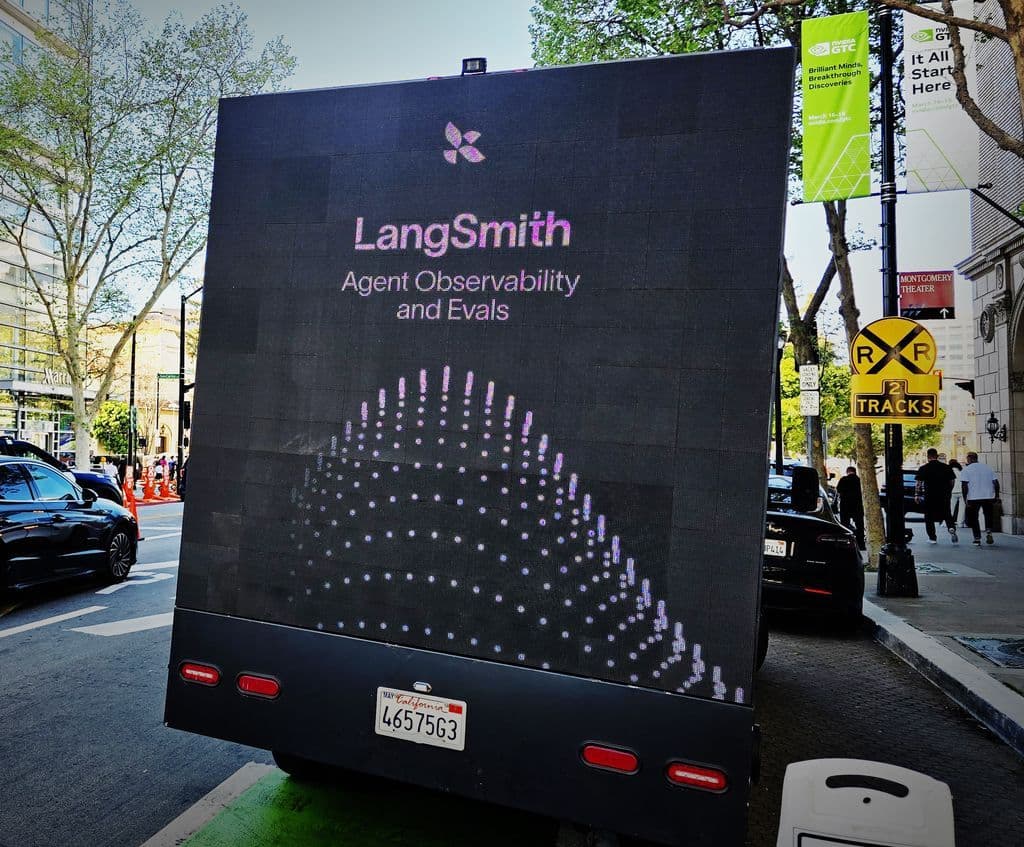
- The release landed alongside LangChain’s GTC messaging around an enterprise agent stack with NVIDIA, where LangGraph and Deep Agents connect to Nemotron 3 via NIM microservices, NeMo Guardrails, NeMo Agent Toolkit, and LangSmith observability GTC stack post.
- LangChain is also amplifying adjacent community work on agent execution recording and model diagnostics, including “signed .epi” execution captures and a scikit-learn diagnostic layer for failure detection EPI spotlight diagnostics spotlight.
What does the course actually teach?
LangChain’s pitch is narrower than a general intro to agents. The new course is about reliability engineering for agent systems: how to move from an initial prototype into a production workflow through repeated observe-evaluate-improve cycles in LangSmith. The announcement explicitly frames the problem as operating software built on “non-deterministic models,” where failures do not reduce to a single bad code path and where “tool use” and “real user traffic” complicate debugging course video.
That matters because the course is not just teaching prompt design. LangChain says teams will learn to use LangSmith as an “agent engineering platform” for observation, evaluation, and deployment LangSmith workflow. In parallel, LangChain has been boosting ecosystem projects that fit the same production theme, including EPI spotlight on a “Flight Recorder for AI Agents” that captures executions into signed trace files, and diagnostics spotlight on an “intelligent diagnostic layer” for scikit-learn model failures.
How does this fit LangChain’s broader stack push?
The timing suggests LangChain wants the course to land as process guidance for a larger deployment story. In its GTC recap, the company said its enterprise agentic AI platform is built with NVIDIA: LangGraph and Deep Agents plug into NVIDIA tooling, agents can use “Nemotron 3 models deployed with NIM microservices,” NeMo Guardrails handles security controls for agentic apps, NeMo Agent Toolkit is used for optimization, and LangSmith provides monitoring and observability NVIDIA integration.
That pairing gives engineers two layers at once: the course explains how to build “reliable agents,” while the GTC post sketches the reference stack LangChain wants those agents to run on. LangChain also used the week to signal ecosystem momentum, saying from Jensen Huang’s keynote that its frameworks have crossed “1B downloads” downloads claim.