
LangSmith launches Fleet with agent identity, approvals, and audit trails
LangSmith Fleet introduces shared agents with edit and run permissions, agent identity, human approvals, and tracing. That matters because enterprise agent rollout is shifting from single-user demos to governed, auditable deployment surfaces.
TL;DR
- LangSmith has launched Fleet launch Fleet, a shared-agent surface that lets teams build agents in natural language, control who can edit, run, or clone them, and add both agent identity and human approval gates.
- The launch pushes LangSmith beyond single-user prototyping: according to the launch thread, Fleet also routes actions into LangSmith Observability so teams can track and audit what agents did after deployment.
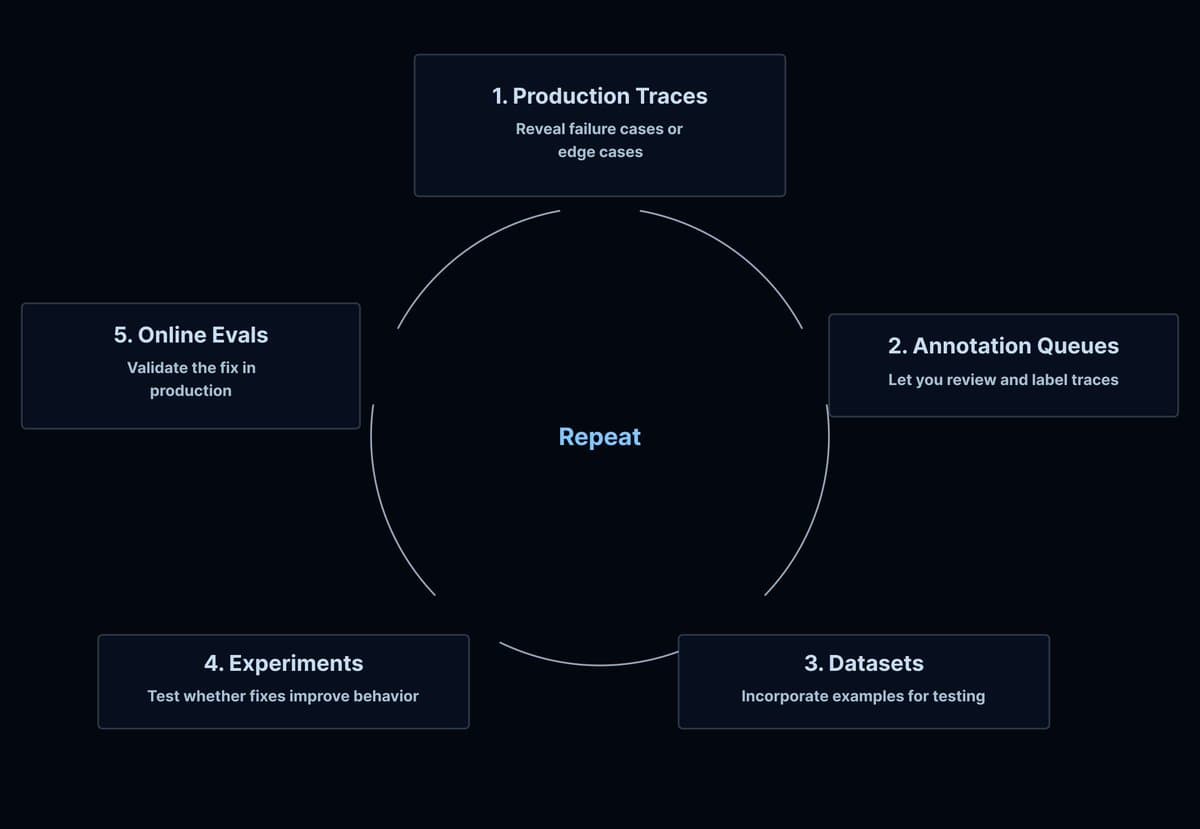
- LangChain framed the release against a broader operations problem in its observability guide: with agents, “you don’t know what your agent will do until it’s in production,” so tracing, annotation, experiments, and online evals matter more than traditional stack-trace debugging.
- LangChain’s NVIDIA integration post also shows where this is headed in enterprise deployments: deep and shallow research agents tied to internal data, frontier models, and monitoring hooks, which makes governance and auditability more central than a demo-only agent builder.
What shipped in Fleet
Fleet packages several controls that usually get bolted on after an agent demo. LangSmith says teams can “build agents with natural language,” then share them with explicit permissions over who can edit, run, or clone each agent Fleet launch. The same post says authentication is handled with “agent identity,” which suggests actions can execute under a managed service identity rather than a single developer’s credentials.
The other two launch details are the ones most relevant to production rollout. LangSmith says Fleet supports “approve actions with human-in-the-loop” and “track and audit actions with tracing in LangSmith Observability” launch thread. In practice, that puts approvals and post-hoc trace review in the same product surface as agent authoring, instead of leaving governance to custom app logic. LangChain links directly to the Fleet product page from the announcement.
Why LangSmith is framing this as a production problem
LangChain’s new guide makes the operational argument explicit: “natural language input is unbounded,” “LLMs are sensitive to subtle prompt variations,” and multi-step agent chains are “hard to anticipate in dev” guide thread. The attached
lays out a five-step loop of production traces, annotation queues, datasets, experiments, and online evals, which is a much stronger signal about intended usage than a generic launch graphic.
That framing also matches LangChain’s NVIDIA integration post with NVIDIA AI-Q and Deep Agents. The post describes enterprise search agents that connect internal data sources through NeMo Agent Toolkit tools, switch between shallow and deep research modes, and monitor traces and performance with LangSmith plus NVIDIA tooling integration details. Read together, the announcement and follow-on materials position Fleet less as a chatbot workspace and more as a governed deployment layer for teams shipping agents into enterprise systems.